Interoperability is a topic that has long been of interest to me. How networks, platforms, and devices work with each other–or sometimes fail to–is an important engineering, business, and policy issue. Back in 2012, I spilled out over 5,000 words on the topic when reviewing John Palfrey and Urs Gasser’s excellent book, Interop: The Promise and Perils of Highly Interconnected Systems.
I’ve always struggled with the interoperability issues, however, and often avoided them became of the sheer complexity of it all. Some interesting recent essays by sci-fi author and digital activist Cory Doctorow remind me that I need to get back on top of the issue. His latest essay is a call-to-arms in favor of what he calls “adversarial interoperability.” “[T]hat’s when you create a new product or service that plugs into the existing ones without the permission of the companies that make them,” he says. “Think of third-party printer ink, alternative app stores, or independent repair shops that use compatible parts from rival manufacturers to fix your car or your phone or your tractor.”
Doctorow is a vociferous defender of expanded digital access rights of many flavors and his latest essays on interoperability expand upon his previous advocacy for open access and a general freedom to tinker. He does much of this work with the Electronic Frontier Foundation (EFF), which shares his commitment to expanded digital access and interoperability rights in various contexts.
I’m in league with Doctorow and EFF on some of these things, but also find myself thinking they go much too far in other ways. At root, their work and advocacy raise a profound question: should there be any general right to exclude on digital platforms? Although he doesn’t always come right out and say it, Doctorow’s work often seems like an outright rejection of any sort of property rights in networks or platforms. Generally speaking, he does not want the law to recognize any right for tech platforms to exclude using digital fences of any sort. Continue reading →
I’ve been working on a new book that explores the rise of evasive entrepreneurialism and technological civil disobedience in our modern world. Following the publication of my last book, Permissionless Innovation: The Continuing Case for Comprehensive Technological Freedom, people started bringing examples of evasive entrepreneurialism and technological civil disobedience to my attention and asked how they were related to the concept of permissionless innovation. As I started exploring and cataloging these cases studies, I realized I could probably write an entire book about these developments and their consequences.
Hopefully that book will be wrapped up shortly. In the meantime, I am going to start rolling out some short essays based on content from the book. To begin, I will state the general purpose of the book and define the key concepts discussed therein. In coming weeks and months, I’ll build on these themes, explain why they are on the rise, explore the effect they are having on society and technological governance efforts, and more fully develop some relevant case studies. Continue reading →
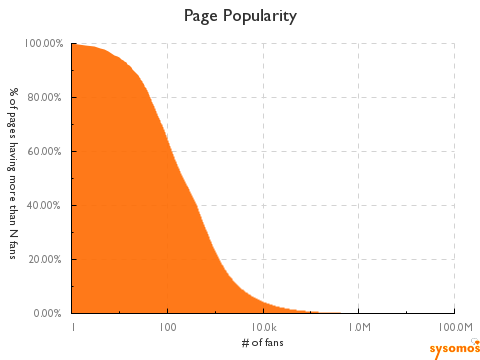 Perfect media equality is impossible. There has never been anything close to “equal outcomes” when it comes to the distribution or relative success of old media: books, magazines, music, movies, book, theater tickets, etc. A small handful of titles have always dominated, usually according to a classic “power law” or “80-20? distribution, with roughly 20% of the titles getting 80% of the traffic / revenue.
But here’s the really interesting thing:
This trend is increasing, not decreasing, for newer and more “democratic” online media. As I pointed out in two previous essays [“YouTube, Power Laws & the Persistence of Media Inequality” & “Cuban on Fragmentation & Attention in the Blogosphere (or Why Power Laws Really Do Govern All Media)”], there is solid evidence that blogs, YouTube, Twitter, and other digital media outlets and platforms not only follow a classic power law distribution but that the distribution is even more heavily skewed toward the “fat head” of the distribution curve, not “the long tail” of it.
The latest evidence of the persistence of power laws across media comes from Facebook. Erick Schonfeld has a new essay up at TechCrunch (“It’s Not Easy Being Popular. 77 Percent Of Facebook Fan Pages Have Under 1,000 Fans“) highlighting some new findings from an upcoming report by Sysomos, a social media monitoring and analytics firm. Here’s the summary from Schonfeld: Continue reading →
I really appreciate the venture capitalists (VCs) in Silicon Valley subsidizing my soapbox at Twitter. Seriously, it is an absolutely awesome platform for getting a message out to the masses. But at some point I worry that the gravy train will come to an end and that users will have to start picking up part of the tab. After all, will those VCs continue to subsidize Twitter if it never turns a profit? According to the Wikipedia entry about Twitter:
In total, Twitter has raised over US$57 million from venture capitalists. The exact amounts of funding have not been publicly released. Twitter’s first round of funding was for an undisclosed amount that is rumored to have been between $1 million and $5 million. Its B round of funding in 2008 was for $22 million and its C round of funding in 2009 was for $35 million from Institutional Venture Partners and Benchmark Capital along with an undisclosed amount from other investors including Union Square Ventures and Spark Capital. Twitter is backed by Union Square Ventures, Digital Garage, Spark Capital, and Bezos Expeditions.
Again, thank you VCs! But, like them, I do wonder when and how Twitter will bring in some cash. Is there a “freemium” model that could work? Perhaps. “Pro” or corporate accounts have been rumored to be in the works. Getting someone else to pick up the tab that way might bring in enough cash for Twitter to allow the free ride to continue for the rest of us. But what about advertising? It’s been the “mother’s milk” of most online media and platforms for some time now, and Twitter seems perfectly suited to insert a few banner ads or contextual ads here and there. It could be happening sooner than you think. Austin Modine of The Register notes in a new piece, “Twitter ‘Leaves Door Open’ for Targeted Ads,” that: Continue reading →
by Berin Szoka & Adam Thierer
This morning, the House Energy & Commerce Committee will hold a hearing on “Behavioral Advertising: Industry Practices And Consumers’ Expectations.” If nothing else, it promises to be quite entertaining: With full-time Google bashers Jeff Chester and Scott Cleland on the agenda, the likelihood that top Google officials will be burned in effigy appears high!
Chester, self-appointed spokesman for what one might call the People for the Ethical Treatment of Data (PETD) movement, is sure to rant and rave about the impending techno-apocalypse that will, like all his other Chicken-Little scenarios, befall us all if online advertisers were permitted to better tailor ads to consumers’ liking. After all, can you imagine the nightmare of less annoying ads that might actually convey more useful information to consumers? Isn’t serving up “untargeted” dumb banner ads for Viagra to young women and Victoria’s Secret ads to Catholic school kids the pinnacle of modern online advertising? Gods forbid we actually make advertising more relevant and interest-based! (Those Catholic school boys may appreciate the lingerie ads, but few will likely buy bras.)
Anyway, according to National Journal’s Tech Daily Dose, the hearing lineup also includes:
- Charles Curran, Executive Director, Network Advertising Initiative
- Christopher Kelly, Chief Privacy Officer, Facebook
- Edward Felten, Director, Center for IT Policy, Princeton University
- Anne Toth, Chief Privacy Officer & Vice President, Policy, Yahoo!
- Nicole Wong, Deputy General Counsel, Google
That’s an interesting group and we’re sure that they will say interesting things about the issue. Nonetheless, because four of them have a corporate affiliation that fact will inevitably be used by some critics to dismiss what they have to say about the sensibility of more targeted or interest-based forms of online advertising. So, we’d like to offer a few thoughts and pose a few questions to make sure that Committee members understand why, regardless of what it means for any particular online operator,
targeting online advertising is very pro-consumer and essential to the future of online content, culture, and competition. As Wall Street Journal technology columnist Walt Mossberg has noted, “Advertising is the mother’s milk of all the mass media.” Much of the “free speech” we all cherish isn’t really free, but ad-supported!
Continue reading →

 The Technology Liberation Front is the tech policy blog dedicated to keeping politicians' hands off the 'net and everything else related to technology.