The Supreme Court is winding down for the year and last week put out a much awaited decision in
Ohio v. American Express
. Some have rung the alarm with this case, but I think caution is worthwhile. In short, the Court’s analysis wasn’t expansive like some have claimed, but incomplete. There are a lot of important details to this case and the guideposts it has provided will likely be fought over in future litigation over platform regulation. To narrow the scope of this post, I am going to focus on the market definition question and the issue of two-sided platforms in light of the developments in the industrial organization (IO) literature in the past two decades. Continue reading →
Seems like every week the tech rumor mills unveil some new smartphone that’s supposedly going to give the iPhone a run for its money. Over the past couple years, dozens of advanced handsets have been released with much fanfare — the LG Voyager, Palm Pre, Blackberry Storm, Samsung Omnia, to name a few — but time and time again, we end up with a device that can’t hold a candle to the iPhone’s amazing browser, massive app store, and sleek multi-touch interface.
But all this could change later this year. A number of handsets are due for release on several major networks over the next few months that run on Android, Google’s open source mobile operating system. Android is currently available on only a single device, the HTC G1. It’s a decent phone, but it lacks the polish of the iPhone and is only available with a contract from T-Mobile, which lags behind Sprint, AT&T, and Verizon in terms of 3G coverage.
I’m especially excited about the Android 2.0-based Motorola “Sholes,” a great-looking phone that’s supposedly due for release in November 2009 from Verizon. If rumors pan out, the Sholes should come with a slide-out keyboard, an extremely high-res display, a 5MP camera, and all-around solid specs. Via Android and Me:
Continue reading →
Just when you thought the FCC’s investigation of the wireless industry couldn’t get any stranger, TechCrunch reports that the Commission has sent letters to AT&T, Apple, and Google inquiring about Apple’s recent decision to reject the Google Voice app from the iPhone App Store (as Berin discussed yesterday).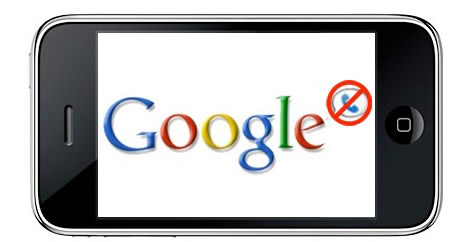
It’s been over two years since the original iPhone was launched, but it seems the FCC still doesn’t get it: the iPhone is very clearly a closed platform — a prototypical walled garden — and Apple has the final say on what applications users can install. When you buy an iPhone, you’re not simply buying a piece of hardware, but actually a package deal that includes software, hardware, and a wireless contract. Is this anti-consumer? 26 million consumers don’t think so. The iPhone 3GS, the latest version of the phone, is selling so fast that Apple’s CFO says they can’t make enough to meet demand!
Of course, the iPhone model isn’t for everyone. I, for one, don’t own one because I’m an obsessive tinkerer and prefer a phone that’s as open as possible. But not everyone shares my preferences. As mentioned above, over 26 million iPhones have been sold since June 2007, so openness clearly isn’t make-or-break for a lot of consumers. Who knows, maybe some people actually trust Apple and like the comfort of knowing that every app they can get comes with a seal of approval from Cupertino.
The FCC’s letter to Apple demands an explanation for why Google Voice was rejected. If Apple’s explanation doesn’t satisfy the FCC’s criteria — which, by the way, are entirely unclear — then what? Will the FCC force Apple to accept Google Voice? Say what you will about Apple’s app store track record, but the prospect of federal regulators having the final word on which applications smartphone owners can install hardly seems pro-consumer. The FCC can’t even figure out how to run its own website!
In some ways, the iPhone has perhaps been too successful for its own good. It’s so popular that many consumers seem to no longer view it as just another product but instead as an item to which they are entitled. Thus, bureaucrats and Congresscritters in search of political points are making a big fuss over the fact that the iPhone isn’t everything to everyone. Why can’t it be wide open? Why isn’t in available on every carrier nationwide? Why is it so expensive to purchase without a service contract?
Continue reading →
How much platform competition is too much competition? For example, what is the optimal number of mobile operating systems or video game consoles that will spur competition and innovation in those respective sectors?
It is an interesting business question, but it also has some policy implications since some might propose laws or regulations to remedy a perceived lack of platform competition in various sectors. After all, many people would answer the above question by saying that there is
never such a thing as too much competition. The more platforms the better. But there can be costs associated with too much competition. Let’s consider those two case studies mentioned above: mobile operating systems or video game consoles.
Mobile Operating Systems
As my colleague Berin Szoka has pointed out, we are witnessing the rapid proliferation of mobile operating systems, especially on the open source front. So, we’ve got Apple’s iPhone platform, Microsoft’s Windows Mobile, Symbian, Google’s Android, the LiMo platform, and OpenMoko.
One one hand, all this platform competition sounds great. But as Ben Worthen of the
Wall Street Journal’s “Business Tech Blog” points out in a piece today:
Continue reading →

 The Technology Liberation Front is the tech policy blog dedicated to keeping politicians' hands off the 'net and everything else related to technology.