The endless apocalyptic rhetoric surrounding Net Neutrality and many other tech policy debates proves there’s no downside to gloom-and-doomism as a rhetorical strategy. Being a techno-Jeremiah nets one enormous media exposure and even when such a person has been shown to be laughably wrong, the press comes back for more. Not only is there is no penalty for hyper-pessimistic punditry, but the press actually furthers the cause of such “fear entrepreneurs” by repeatedly showering them with attention and letting them double-down on their doomsday-ism. Bad news sells, for both the pundit and the press.
But what is most remarkable is that the press continues to label these preachers of the techno-apocalypse as “experts” despite a track record of failed predictions. I suppose it’s because, despite all the failed predictions, they are viewed as thoughtful & well-intentioned. It is another reminder that John Stuart Mill’s 1828 observation still holds true today: “I have observed that not the man who hopes when others despair, but the man who despairs when others hope, is admired by a large class of persons as a sage.”
Additional Reading:
How is it that we humans have again and again figured out how to assimilate new technologies into our lives despite how much those technologies “unsettled” so many well-established personal, social, cultural, and legal norms?
In recent years, I’ve spent a fair amount of time thinking through that question in a variety of blog posts (“Are You An Internet Optimist or Pessimist? The Great Debate over Technology’s Impact on Society”), law review articles (“Technopanics, Threat Inflation, and the Danger of an Information Technology Precautionary Principle”), opeds (“Why Do We Always Sell the Next Generation Short?”), and books (See chapter 4 of my new book, “Permissionless Innovation: The Continuing Case for Comprehensive Technological Freedom”).
It’s fair to say that this issue — how individuals, institutions, and cultures adjust to technological change — has become a personal obsession of mine and it is increasingly the unifying theme of much of my ongoing research agenda. The
economic ramifications of technological change are part of this inquiry, of course, but those economic concerns have already been the subject of countless books and essays both today and throughout history. I find that the social issues associated with technological change — including safety, security, and privacy considerations — typically get somewhat less attention, but are equally interesting. That’s why my recent work and my new book narrow the focus to those issues. Continue reading →
 I am pleased to announce the release of my latest book, “Permissionless Innovation: The Continuing Case for Comprehensive Technological Freedom.” It’s a short manifesto (just under 100 pages) that condenses — and attempts to make more accessible — arguments that I have developed in various law review articles, working papers, and blog posts over the past few years. I have two goals with this book.
First, I attempt to show how the central fault line in almost all modern technology policy debates revolves around “the permission question,” which asks:
Must the creators of new technologies seek the blessing of public officials before they develop and deploy their innovations? How that question is answered depends on the disposition one adopts toward new inventions. Two conflicting attitudes are evident.
One disposition is known as the “precautionary principle.” Generally speaking, it refers to the belief that new innovations should be curtailed or disallowed until their developers can prove that they will not cause any harms to individuals, groups, specific entities, cultural norms, or various existing laws, norms, or traditions.
The other vision can be labeled “permissionless innovation.” It refers to the notion that experimentation with new technologies and business models should generally be permitted by default. Unless a compelling case can be made that a new invention will bring serious harm to society, innovation should be allowed to continue unabated and problems, if they develop at all, can be addressed later.
I argue that we are witnessing a grand clash of visions between these two mindsets today in almost all major technology policy discussions today. Continue reading →
Just last week I was discussing the terrifically interesting work of Michael Sacasas who pens The Frailest Thing, a poetic blog about technology and culture. [see: “Information Revolutions & Cultural / Economic Tradeoffs“] I highly recommend you follow his blog even if you struggle to keep up with his brilliance, as I often do. He posted another great essay today entitled, “Nostalgia: The Third Wave,” in which he discusses the work of the late social critic Christopher Lasch and his work on memory and nostalgia. Go read the entire thing since I cannot possible do it justice here. Anyway, I posted a short comment over there that I thought I would just republish here in case others are interested. I find the issue of nostalgia to be quite interesting.
_______
Michael… I’m currently finishing up a paper looking at the causes of various “techno-panics” over time. I try to group together a variety of theories and possible explanations, one of which is labeled “Hyper-Nostalgia, Pessimistic Bias & Soft Ludditism.” I don’t go into anywhere near the detail you do here, but I did unearth a number of interesting things while conducting research. [Update: That paper on “Technopanics, Threat Inflation, and the Danger of an Information Technology Precautionary Principle,” was published by the Minnesota Journal of Law, Science & Technology in early 2013.]
Have you ever come across the book On Longing: Narratives of the Miniature, the Gigantic, the Souvenir, the Collection, by the poet Susan Stewart? She notes that what is ironic about nostalgia is that it is rooted in something typically unknown by the proponent. Consequently, she argues that nostalgia represents “a sadness without an object, a sadness which creates a longing that of necessity is inauthentic because it does not take part in lived experience. Rather, it remains behind and before that experience.” Too often, Stewart observes, “nostalgia wears a distinctly utopian face” and thus becomes a “social disease.”
That’s probably a bit extreme, but it does help explain why some intellectuals, social critics, and policymakers occasionally demonize new mediums, technologies, or forms of culture. If one if suffering from a rather extreme version of what Michael Shermer refers to this as “rosy retrospection bias,” (The Believing Brain, 2011) or “the tendency to remember past events as being more positive than they actually were,” then it would hardly be surprising that they would adopt attitudes and policies that disfavor the new and different. Continue reading →
My thanks to both Maria H. Andersen and Michael Sacasas for their thoughtful responses to my recent Forbes essay on “10 Things Our Kids Will Never Worry About Thanks to the Information Revolution.” They both go point by point through my Top 10 list and offer an alternative way of looking at each of the trends I identify. What their responses share in common is a general unease with the hyper-optimism of my Forbes piece. That’s understandable. Typically in my work on technological “optimism” and “pessimism” — and yes, I admit those labels are overly simplistic — I always try to strike a sensible balance between pollyannism and hyper-pessimism as it pertains to the impact of technological change on our culture and economy. I have called this middle ground position “pragmatic optimism.” In my Forbes essay, however, I was in full-blown pollyanna mode. That doesn’t mean I don’t generally feel very positive about the changes I itemized in that essay, rather, I just didn’t have the space in a 1,000-word column to identify the tradeoffs inherent in each trend. Thus, Andersen and Sacasas are rightfully pushing back against my lack of balance.
But there is a problem with their slightly pessimistic pushback, too. To better explain my own position and respond to Andersen and Sacasas, let me return to the story we hear again and again in discussion about technological change: the well-known allegorical tale from Plato’s
Phaedrus about the dangers of the written word. In the tale, the god Theuth comes to King Thamus and boasts of how Theuth’s invention of writing would improve the wisdom and memory of the masses relative to the oral tradition of learning. King Thamus shot back, “the discoverer of an art is not the best judge of the good or harm which will accrue to those who practice it.” King Thamus then passed judgment himself about the impact of writing on society, saying he feared that the people “will receive a quantity of information without proper instruction, and in consequence be thought very knowledgeable when they are for the most part quite ignorant.”
After recounting Plato’s allegory in my essay, “Are You An Internet Optimist or Pessimist? The Great Debate over Technology’s Impact on Society,” I noted how this same tension has played out in every subsequent debate about the impact of a new technology on culture, values, morals, language, learning, and so on. It is a never-ending cycle. Continue reading →
I’m currently finishing up my next book. It addresses various strands of “Internet pessimism” and attempts to explain why all the gloom and doom theories we hear about the Internet’s impact on modern culture and economy are not generally warranted. A key theme of my book is that most Internet pessimists overlook the importance of human adaptability in the face of technological change. The amazing thing about humans is that we adapt so much better than other creatures. We learn how to use the new tools given to us and make them part of our lives and culture. The worst situations often bring out the most creative, innovative solutions. Media critic Jack Shafer has noted that “the techno-apocalypse never comes” because “cultures tend to assimilate and normalize new technology in ways the fretful never anticipate.”
In a cultural sense, humans have again and again adapted to technological change despite the radical disruptions to their lives, mores, manners, and methods of learning. As Aleks Krotoski recently points out in her new
Guardian essay, “How the Internet Has Changed Our Concept of What Home Is”: Continue reading →
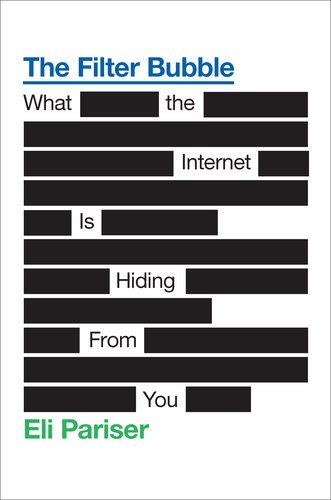 In my latest weekly Forbes column is entitled “The Internet Isn’t Killing Our Culture or Democracy” and it’s a short review of the new book, The Filter Bubble: What the Internet is Hiding from You, by MoveOn.org board president Eli Pariser. As I note in my essay, Pariser’s book covers some very familiar ground already plowed by others in the burgeoning Internet pessimism movement:
[The Filter Bubble] restates a thesis developed a decade ago in both Cass Sunstein’s Republic.com and Andrew L. Shapiro’s The Control Revolution, that increased personalization is breeding a dangerous new creature—Anti-Democratic Man. “Democracy requires citizens to see things from one another’s point of view,” Pariser notes, “but instead we’re more and more enclosed in our own bubbles.” Pariser worries that personalized digital “filters” like Facebook, Google, Twitter, Pandora, and Netflix are narrowing our horizons about news and culture and leaving “less room for the chance encounters that bring insights and learning.” “Technology designed to give us more control over our lives is actually taking control away,” he fears.
Pariser joins a growing brigade of Internet pessimists. Almost every year for the past decade a new book has been published warning that the Internet is making us stupid, debasing our culture, or destroying social interaction. Many of these Net pessimists—whose ranks include Andrew Keen (The Cult of the Amateur), Lee Siegel (Against the Machine), Jaron Lanier (You Are Not a Gadget) and Nicholas Carr (The Shallows)—lament the rise of “The Daily Me,” or the rise of hyper-personalized news, culture, and information. They claim increased information and media customization will lead to close-mindedness, corporate brainwashing, an online echo-chamber, or even the death of deliberative democracy.
If you’ve read anything I’ve written on this topic in recent years, you will not be surprised to hear that I disagree with Pariser and these other Net pessimists when it comes to fears about hyper-personalization and user customization. As I noted in my recent book chapter, ”
The Case for Internet Optimism, Part 1 – Saving the Net From Its Detractors“:
Continue reading →
This is the second of two essays making “The Case for Internet Optimism.” This essay was included in the book, The Next Digital Decade: Essays on the Future of the Internet (2011), which was edited by Berin Szoka and Adam Marcus of TechFreedom. In my previous essay, which I discussed here yesterday, I examined the first variant of Internet pessimism: “Net Skeptics,” who are pessimistic about the Internet improving the lot of mankind. In this second essay, I take on a very different breed of Net pessimists: “Net Lovers” who, though they embrace the Net and digital technologies, argue that they are “dying” due to a lack of sufficient care or collective oversight. In particular, they fear that the “open” Internet and “generative” digital systems are giving way to closed, proprietary systems, typically run by villainous corporations out to erect walled gardens and quash our digital liberties. Thus, they are pessimistic about the long-term survival of the Internet that we currently know and love.
Leading exponents of this theory include noted cyberlaw scholars Lawrence Lessig, Jonathan Zittrain, and Tim Wu. I argue that these scholars tend to significantly overstate the severity of this problem (the supposed decline of openness or generativity, that is) and seem to have very little faith in the ability of such systems to win out in a free market. Moreover, there’s nothing wrong with a hybrid world in which some “closed” devices and platforms remain (or even thrive) alongside “open” ones. Importantly, “openness” is a highly subjective term, and a constantly evolving one. And many “open” systems or devices are as perfectly open as these advocates suggest.
Finally, I argue that it’s likely that the “openness” advocated by these advocates will devolve into expanded government control of cyberspace and digital systems than that unregulated systems will become subject to “perfect control” by the private sector, as they fear. Indeed, the implicit message in the work of all these hyper-pessimistic critics is that markets must be steered in a more sensible direction by those technocratic philosopher kings (although the details of their blueprint for digital salvation are often scarce). Thus, I conclude that the dour, depressing “the-Net-is-about-to-die” fear that seems to fuel this worldview is almost completely unfounded and should be rejected before serious damage is done to the evolutionary Internet through misguided government action.
I’ve embedded the entire essay down below in Scribd reader, but it can also be found on TechFreedom’s Next Digital Decade book website and SSRN.
Continue reading →
Here’s the first of two essays I’ve recently penned making “The Case for Internet Optimism.” This essay was included in the book, The Next Digital Decade: Essays on the Future of the Internet (2011), which was edited by Berin Szoka and Adam Marcus of TechFreedom. In these essays, I identify two schools of Internet pessimism: (1) “Net Skeptics,” who are pessimistic about the Internet improving the lot of mankind; and (2) “Net Lovers,” who appreciate the benefits the Net brings society but who fear those benefits are disappearing, or that the Net or openness are dying. (Regular readers of this blog will be familiar with these themes since I sketched them out in previous essays here such as, “Are You an Internet Optimist or Pessimist?” and “Two Schools of Internet Pessimism.”) The second essay is here.
This essay focuses on the first variant of Internet pessimism, which is rooted in general skepticism about the supposed benefits of cyberspace, digital technologies, and information abundance. The proponents of this pessimistic view often wax nostalgic about some supposed “good ‘ol days” when life was much better (although they can’t seem to agree when those were). At a minimum, they want us to slow down and think twice about life in the Information Age and how it’s personally affecting each of us. Occasionally, however, this pessimism borders on neo-Ludditism, with some proponents recommending steps to curtail what they feel is the destructive impact of the Net or digital technologies on culture or the economy. I identify the leading exponents of this view of Internet pessimism and their major works. I trace their technological pessimism back to Plato but argue that their pessimism is largely unwarranted. Humans are more resilient than pessimists care to admit and we learn how to adapt to technological change and assimilate new tools into our lives over time. Moreover, were we really better off in the scarcity era when we were collectively suffering from information poverty? Generally speaking, despite the challenges it presents society, information abundance is a better dilemma to be facing than information poverty. Nonetheless, I argue, we should not underestimate or belittle the disruptive impacts associated with the Information Revolution. But we need to find ways to better cope with turbulent change in a dynamist fashion instead of attempting to roll back the clock on progress or recapture “the good ‘ol days,” which actually weren’t all that good.
Down below, I have embedded the entire chapter in a Scribd reader, but the essay can also be found on the TechFreedom website for the book as well as on SSRN. I have also includes two updated tables that appeared in my old “optimists vs. pessimists” essay. The first lists some of the leading Internet optimists and pessimists and their books. The second table outlines some of the major lines of disagreement between these two camps and I divided those disagreements into (1) Cultural / Social beliefs vs. (2) Economic / Business beliefs.
Continue reading →
Wow, what a year for cyberlaw and information technology policy books! Both in terms of number of titles and the gravity of the books released, 2010 was one of the biggest years of the past decade (perhaps matched only by 2006 or 2008 in terms of significance). So, here’s my annual list of the Most Important Info-Tech Policy Books of 2010.
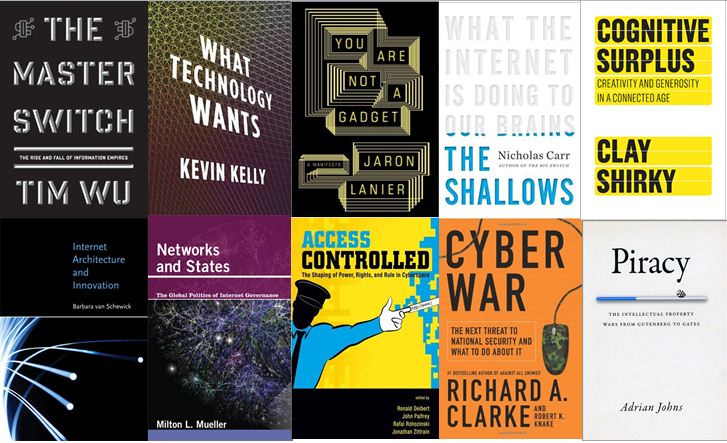 First, however, as is the case each year [see my 2008 & 2009 lists], I need to repeat a few disclaimers. First, what qualifies as an “important” info-tech policy book is highly subjective, but I would define it as a title that many people — especially scholars in the field — are currently discussing and that we will likely be referencing for many years to come. But I “weight” books in the sense that narrowly-focused titles lose a few points. For example, books that deal mostly with privacy issues, copyright law, or antitrust policy do not exactly qualify as the same sort of “info-tech policy book” as other titles that offer a broader exploration of policy issues / concerns. For that reason, “big picture” info-tech policy books tend to rank higher on my lists.
The second caveat: Merely because a book appears on my list
it does not necessarily mean I agree with everything in it. In fact, as was the case in previous years, I found much with which to disagree in my picks for the most important books of 2010 and I find that the cyber-libertarianism I subscribe to has very few fans out there.
With those caveats in mind, here are my choices for the Most Important Info-Tech Policy Books of 2010. Continue reading →


 The Technology Liberation Front is the tech policy blog dedicated to keeping politicians' hands off the 'net and everything else related to technology.