Sen. Amy Klobuchar just released a letter to Facebook demanding the site require “a prominent safety button or link on the profile pages of users under the age of 18″—akin to the so-called “panic button” app launched earlier this week by the UK’s Child Exploitation & Online Protection Centre (CEOP). She doesn’t seem to realize that this app is available to all Facebook users, not just those in the UK. But her focus on empowerment tools and education is admirable, and it’s certainly a fair question to ask what sites like Facebook and MySpace are doing in these areas.
Unfortunately, Klobuchar’s letter also engages in blatant fear-mongering:
Recent research has shown that one in four American teenagers have been victims of a cyber predator. And when teens experience abusive behavior online, only ten percent discuss it with their parents and even fewer report the misconduct to law enforcement. It’s clear that teenagers need to know how to respond to a cyber attack and I believe we need stronger reporting mechanisms to keep our kids safe.
Klobuchar doesn’t actually
cite anything, so it’s not clear what research she’s relying on. The 25% statistic is particularly incendiary, suggesting a nationwide cyber-predation crisis—perhaps leading the public to believe 8 or 9 million teens have been lured into sexual encounters offline. Perhaps the Senator considers every cyber-bully a cyber predator—which might get to the 25% number. But there are two serious problem with that moral equivalence.
First, to equate child predation with peer bullying is to engage in a dangerous game of defining deviancy down. Predation and bullying are
radically different things. The first (sexual abuse) is a clear and heinous crime that can lead to long-term psychological damage. The second might be a crime in certain circumstances, but generally not. And it is even less likely to be a crime when it occurs among young peers, which research shows constitutes the vast majority of cases. As Adam Thierer and I noted in our Congressional testimony last year, there are legitimate concerns about cyberbullying, but it’s something best dealt with by parents and schools rather than prosecutors (like Klobuchar in her pre-Senate career).
Second, a series of official taskforces have concluded that the cyberpredator technopanic is vastly overblown. Continue reading →
On June 29th, The Progress & Freedom Foundation (PFF) and the Family Online Safety Institute (FOSI) will co-host a National Press Club briefing entitled “Sending an Online Safety Message to Congress.” This event will feature a discussion about the recently released report of the Online Safety and Technology Working Group (OSTWG), “Youth Safety on a Living Internet.” OSTWG — a congressionally-mandated blue ribbon working group — analyzed the state of online child safety and offered policymakers and parents a wide array of recommendations for how to keep kids safe and secure in today’s “always-on,” interconnected world. [For more background on OSTWG and our final report, see this post.] Several OSTWG leaders will be on hand to discuss the report and outline the next steps that need to be taken on this front. Here are the details.
| What: |
Sending an Online Safety Message to Congress — A discussion about the OSTWG final report and the future of childrens’ online safety and public policy. |
| When: |
Tuesday, June 29
9:00 a.m. – 10:45 p.m. (breakfast provided) |
| Where: |
National Press Club
First Amendment Lounge, 13th Floor 529 14th Street NW Washington, D.C. 20515 |
| Who: |
Hemanshu Nigam, Founder, SSP Blue, and Co-Chair of OSTWG
Larry Magid, Co-Director, ConnectSafety.org
Michael McKeehan, Executive Director, Internet & Technology Policy, Verizon
Adam Thierer President, The Progress & Freedom Foundation
Stephen Balkam Chief Executive Officer, Family Online Safety Institute, (moderator) |
To Register: Space is limited, so an RSVP is required to attend. Please register here.
The Online Safety and Technology Working Group (OSTWG) has just released its final report to Congress entitled, “Youth Safety on a Living Internet.” As I mentioned here last year, this government task force was established by the “Protecting Children in the 21st Century Act,” (part of the ‘‘Broadband Data Improvement Act’,’ Pub. L. No. 110-385) and its mission was to review and evaluate:
- The status of industry efforts to promote online safety through educational efforts, parental control technology, blocking and filtering software, age-appropriate labels for content or other technologies or initiatives designed to promote a safe online environment for children;
- The status of industry efforts to promote online safety among providers of electronic communications services and remote computing services by reporting apparent child pornography, including any obstacles to such reporting;
- The practices of electronic communications service providers and remote computing service providers related to record retention in connection with crimes against children; and,
- The development of technologies to help parents shield their children from inappropriate material on the Internet.
The task force included over 30 experts from academia, industry, advocacy groups, and think tanks. It was my great honor to be a member of OSTWG and to serve as the chair of 1 of the 4 subcommittees. The four subcommittees addressed: data retention, child pornography reporting, educational efforts, and parental controls technologies. I chaired that last subcommittee on parental controls.
Our conclusions will not be surprising to those who have read previous online safety task force reports, which I have summarized in 2009 white paper, “Five Online Safety Task Forces Agree: Education, Empowerment & Self-Regulation Are the Answer.” Generally speaking, we concluded that there is no silver-bullet technical solution to online child safety concerns. Instead – and again in agreement with previous research and task force reports – we have concluded that a diverse toolbox and a “layered approach” must be brought to bear on these problems and concerns. Here’s how we put it in the report:
Continue reading →
Today’s Online Safety Technical Working Group (OSTWG) meeting included some heated debate about whether online intermediaries should be doing more to assist law enforcement to help track down child predators and those producing and distributing child pornography. (It’s not clear whether or when NTIA will actually put the archived video or a transcript online at this point).
Most interesting was the third panel of the day (agenda), which devolved into a shouting match as Dr. Frank Kardasz (resume) of the Arizona Internet Crimes Against Children (ICAC) Task Force basically accused Internet intermediaries of being willing accomplices in crimes of sexual abuse against children—and suggested that they could be charged as co-defendants in child porn prosecutions. A few industry folks in the room expressed their outrage at such slander. A retired law enforcement officer perhaps put it best when he said that he had never dealt with an ISP that didn’t sincerely want to help law enforcement stop this monstrous crime.
Apart from those pyrotechnics, and a superb morning presentation by the Pew Internet Project’s Amanda Lenhart about “Social Media & Young Adults,” the most interesting part of the day concerned data retention mandates. Even as a debate rages in Washington about how much collection and use of online data should be permitted, Dr. Kardasz suggested online service providers should be required to hold user data for 5 years. A number of attendees noted the staggering costs of such a mandate given the sheer volume of information shared every day by use, especially for startups for whom building monitoring and compliance infrastructure can be a significant barrier to entry. Of course, practical objections are always answered with practical counter-solutions—in this case, several attendees asked why we couldn’t just provide tax incentives or stimulus money to defray such costs. One attendee joked that we’d have to devote the entire state of Montana just to house all the necessary server farms.
But the strongest objection came from John Morris of the Center for Democracy & Technology, who rightly noted that no amount of government subsidies for data retention could prevent leakage of sensitive private data. For this reason and because of the basic civil liberties at stake whenever the government has access to large pools of data about its citizens, Morris argued that we need to strike a balance between how we protect children & the values of free society. Dave McClure of the US Internet Industry Association (USIIA) seconded this point powerfully: If such vast data is retained, it will be abused.
Then the riposte from advocates of data retention mandates: Aren’t online intermediaries
already retaining huge amounts of consumer information? If they can do that, why can’t they retain the data we need to track down child predators and child porn distributors? Continue reading →
Emerson once said that we should do the thing we fear, and then death of fear is certain. Similarly, parents that fear their child’s use of technology can use technology themselves to monitor, filter and block their children’s Internet use.
I’m a member of the NTIA Online Safety and Technology Working Group (OSTWG) along with TLF’s Adam Thierer (Mr. President of PFF). Adam organized our third meeting was on parental controls, child protection technologies and content rating methods. He organized a wealth of speakers to discuss tools available from ISPs, tools existing in operating systems, browsers, and search, and settings that exist in some social networking websites.
Here are the highlights:
- Safety experts praised AOL’s parental tools that don’t report to parents every site that a child visits. Child abuse, contraception, and other sites are the kinds that many people feel children have legitimate privacy (and in abusive situations even safety concerns for their lives) surrounding the sites they visit.
- A representative from the Department of Education asked about “best practices” — a good idea in concept but given the diversity of online sites and services easier said then done.
- It is common to categorize children into age groups for parental controls but there’s data lacking about how children understand advertising and what is the harm, if any.
- Age groups: 7 and below–white list only. 7-12–no white list only but lots of restrictions. 13-17–very permissive, lots of sites accessible. 17+–only porn images blocked.
- Google will soon be launching a national media digital literacy citizenship campaign. Continue reading →
 My friend Larry Magid, the co-director of ConnectSafely.org (with Anne Collier) and founder of SafeKids.com, has a sharp new piece up at CBS News.com entitled, “Stop Cyberbullying with Education,” in which he rightly points out how “we need to be careful with legislation that would outlaw cyberbullying.” He points out that although cyberbullying is “not an epidemic and it’s not killing our children”:
Bullying has always been a problem among adolescents and, sadly, so has suicide. In the few known cases of suicide after cyberbullying, there are other contributing factors. That’s not to diminish the tragedy or suggest that the cyberbullying didn’t play a role but–as with all online youth risk, we need to look at what else was going on in the child’s life. Even when a suicide or other tragic event doesn’t occur, cyberbullying is often accompanied by a pattern of offline bullying and sometimes there are other issues including long-term depression, problems at home, and self-esteem issues.
He goes on to provide some solid advice:
Continue reading →
In an earlier post, I mentioned an important new online child safety task force report that has just been released from the “Point Smart. Click Safe.” Blue Ribbon Working Group. It’s a great report and I encourage you to read the whole thing. It was my great pleasure to serve on this task force, and as we started finalizing our conclusions and recommendations, I started thinking about how much of what we were finding and recommending was consistent with what past online safety task forces had also concluded.
By way of background, over the past decade, five major online safety task forces or blue ribbon commissions have been convened to study online safety issues. Two of these task forces were convened in the United States and issued reports in 2000 (“COPA Commission”) and 2002 (“Thornburgh Commission“). Another was commissioned by the British government in 2007 and issued in a major report in March 2008 (“Byron Review“). Finally, two additional online safety task forces were formed in the U.S. in 2008 and concluded their work, respectively, in January (“Internet Safety Technical Task Force“) and July (“Point Smart. Click Safe.“) of 2009. [And yet another task force — the Online Safety Technology Working Group — was recently formed and has now gotten underway.]
In a new PFF white paper, ”
Five Online Safety Task Forces Agree: Education, Empowerment & Self-Regulation Are the Answer,” I walk through a chronological summary of each of these past task forces [click on covers of each report below to read them in their entirety] and highlight some of the similar themes and recommendations from them.
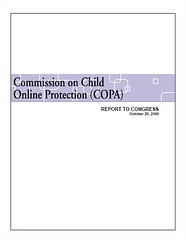
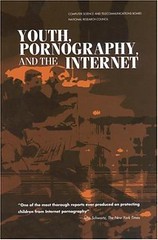
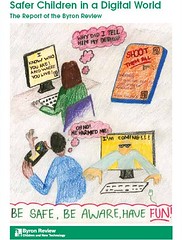
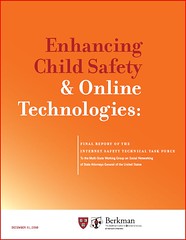
 Continue reading →
The first meeting of the Online Safety Technology Working Group (OSTWG) took place today and I just wanted to provide interested parties with relevant info and links in case they want to keep track of the task force’s work. As I mentioned back in late April, this new task force was established by the “Protecting Children in the 21st Century Act,” (part of the ‘‘Broadband Data Improvement Act’,’ Pub. L. No. 110-385) and it will report to the Assistant Secretary of Commerce for Communications and Information at the U.S. Department of Commerce’s National Telecommunications and Information Administration (NTIA).
I’m happy to be serving on this new working group and I am particularly honored to be serving as the chairman of 1 of the 4 subcommittees. The four subcommittees will address: data retention, child pornography, educational efforts, and parental controls technologies. I am chairing that last subcommittee on parental controls. The task force has about 35 members and we have a year to conduct our research and report back to Congress. Here are some relevant links from the NTIA website that provide additional details about this task force:
Of course, this is certainly not the first task force to explore online safety issues. There was the COPA Commission (2000), the “Thornburgh Commission” report (2002), the U.K. “Byron Commission” report (2008), the Harvard Berkman Center’s Internet Safety Technical Task Force (2008), and the NCTA-iKeepSafe-CommonSenseMedia “Point Smart, Click Safe” working group, which is due to issue its final report shortly. [Full disclosure: I was a member of that last two task forces as well.] I’m currently working on a short paper that attempts to summarize the remarkably similar findings of these important child safety working groups. Generally speaking, they all concluded that education and empowerment, not regulation, were the real keys to moving forward and making our kids safer online.
Today, the U.S. Department of Commerce’s National Telecommunications and Information Administration (NTIA) announced the members of the new Online Safety and Technology Working Group (OSTWG). I am honored to be among those chosen to participate in this new task force and I look forward to continuing the work started last year with the Harvard Berkman Center’s Internet Safety Technical Task Force (ISTTF), which I also served on. I was very proud of the work done by the ISTTF and the impressive final report that Prof. John Palfrey crafted to reflect our findings. I am eager to investigate these issues further and take a look at the latest research and technologies that can help us better understand how to protect our kids online while also protecting the free speech and privacy rights of Netizens.
The new NTIA working group, which was established under the “Protecting Children in the 21st Century Act,” will report to the Assistant Secretary of Commerce for Communications and Information on industry-implemented online child safety tools and efforts. Within a year of convening its first meeting, the group will submit a report of its findings and make recommendations on how to increase online safety measures.
Below the fold I have listed the complete roster of OSTWG task force members. I very much looking forward to working with this outstanding group. And I’m happy to report that my TLF blogging colleague Braden Cox will be joining me on this task force!
Continue reading →

 The Technology Liberation Front is the tech policy blog dedicated to keeping politicians' hands off the 'net and everything else related to technology.