This is a compendium of readings on “
progress studies
,” or essays and books which generally make the case for technological innovation, dynamism, economic growth, and abundance. I will update this list as additional material of relevance is brought to my attention.
[Last update: 10/11/22]
Recent Essays
- Marc Andreessen, “The Techno-Optimist Manifesto,” a16z.com, October 16, 2023.
- Will Rinehart, “The Abundance Agenda,” The Exformation Newsletter, October 15, 2022.
- Sarah Constantin, “Unblocking Abundance: A Model for Activism,” Rough Diamonds, October 10, 2022.
- Derek Thompson, “The Forgotten Stage of Human Progress,” The Atlantic, May 11, 2022.
- Adam Thierer, “Where is ‘Progress Studies’ Going?” Progress Forum, April 23, 2022.
- Katherine Boyle, “The Case for American Seriousness,” Common Sense, April 18, 2022.
- William Rinehart, “Vetocracy, the Costs of Vetos and Inaction,” Center for Growth & Opportunity at Utah State University, March 24, 2022.
- James Pethokoukis, “Forget about Left Wing and Right Wing. How about an Up Wing America?” Faster Please, March 23, 2022.
- John W. Lettieri & Kenan Fikri, “The Case for Economic Dynamism and Why it Matters for the American Worker,” Economic Innovation Group, March 2022.
- Adam Kovacevich, “Saying YIMBY (Yes In My Back Yard) to “Civic Innovation,” Chamber of Progress, March 21, 2022.
- Eli Dourado, “Remove Barriers to Productivity,” City Journal, March 18, 2022.
- “A Case for Innovation and Optimism,” (A conversation with Jason Crawford), Discourse, March 2, 2022.
- Noah Smith, “A New Industrialist Roundup,” Noahpinion, February 3, 2022.
- James Pethokoukis, “When Will the Next Big Thing Arrive?” Faster Please, February 3, 2022.
- Alec Stapp & Caleb Watney, “
Progress is a Policy Choice
,” Institute for Progress, January 20, 2022.
- Adam Thierer, “
How to Get the Future We Were Promised
,” Discourse, January 18, 2022.
- Katherine Boyle, “
Building American Dynamism
,” Future, January 14, 2022.
- Derek Thompson, “
A Simple Plan to Solve All of America’s Problems
,” The Atlantic, January 12, 2022.
- Jason Crawford, “Progress, Humanism, Agency: An Intellectual Core for the Progress Movement,” Roots of Progress, January 11, 2022.
- Adam Thierer, “Defending Innovation Against Attacks from All Sides,” Discourse, November 9, 2021.
- Matthew Yglesias, “The Case for More Energy,” October 7, 2021.
- Jason Crawford, “
We need a new philosophy of progress
,” The Roots of Progress, August 23, 2021.
- Gale Pooley & Marian L. Tupy, “The Simon Abundance Index 2021,” Human Progress, April 22, 2021.
- Noah Smith, “
Techno-optimism for the 2020s
,” December 3, 2020.
- Ezra Klein, “
Why We Can’t Build
,” Vox, April 22, 2020.
- Marc Andreesen, “
It’s Time to Build
,” Future, April 18, 2020.
- Eli Dourado, “
How do we move the needle on progress
?” September 26, 2019.
- José Luis Ricón, “
About the ‘Progress’ in Progress Studies
” September 6, 2019.
- Will Rinehart, “
Progress Studies: Some Initial Thoughts
,” August 30, 2019.
- Adam Thierer, “
Is There a Science of Progress
?” AIER, August 8, 2019.
- Patrick Collison and Tyler Cowen, “
We Need a New Science of Progress
,” The Atlantic, July 30, 2019.
- Tyler Cowen, “
The Case for the Longer Term
,” Cato Unbound, January 9, 2019.
- Vinod Khosla, “
We Need Large Innovations
,” Medium, January 1, 2018.
- Adam Thierer, “
How Technology Expands the Horizons of Our Humanity
,” Medium, November 19, 2018.
- Chelsea Follett, “Utopianism: One of the Biggest Obstacles to Progress,” Human Progress, August15, 2018.
- Eli Dourado, “
How Technological Innovation Can Massively Reduce the Cost of Living
,” PlainText, January 29, 2016.
Continue reading →
[Updated: March 2022]
I was speaking at a conference recently and discussing my life’s work, which for 30 years has been focused on the importance of innovation and intellectual battles over what we mean progress. I put together up a short list of some things I have written over the last few years on this topic and thought I would just re-post them here. I will try to keep this regularly updated, at least for a few years.
UNDERSTANDING THE CHALLENGE WE FACE:
HOW WE MUST RESPOND = “Rational Optimism” / Right to Earn a Living / Permissionless Innovation
Continue reading →
Today marks the 15th anniversary of the launch of the Technology Liberation Front. This blog has evolved through the years and served as a home for more than 50 writers who have shared their thoughts about the intersection of technological innovation and public policy.
Many TLF contributors have moved on to start other blogs or
write for other publications. Others have gone into other professions where
they simply can’t blog anymore. Still others now just publish their daily
musings on Twitter, which has had a massive substitution effect on long-form blogging
more generally. In any event, I’m pleased that so many of them had a home here
at some point over the past 15 years.
What has unified everyone who has written for the TLF is (1)
a strong belief in technological innovation as a method of improving the human
condition and (2) a corresponding concern about impediments to technological
change. Our contributors might best be labeled “rational
optimists,” to borrow Matt Ridley’s phrase, or “dynamists,” to use Virginia
Postrel’s term. In a
recent essay, I sketched out the core tenets of a dynamist, rational optimist
worldview, arguing that we:
- believe there is a symbiotic relationship
between innovation, economic growth, pluralism, and human betterment, but also
acknowledge the various challenges sometimes associated with technological
change;
- look forward to a better future and reject
overly nostalgic accounts of some supposed “good ‘ol days” or bygone better
eras;
- base our optimism on facts and historical
analysis, not on blind faith in any particular viewpoint, ideology, or gut
feeling;
- support practical, bottom-up solutions to hard
problems through ongoing trial-and-error experimentation, but are not wedded to
any one process to get the job done;
- appreciate entrepreneurs for their willingness
to take risks and try new things, but do not engage in hero worship of any
particular individual, organization, or particular technology.
Applying that vision, the contributors here through the
years have unabashedly defended a pro-growth, pro-progress, pro-freedom vision,
but they have also rejected techno-utopianism or gadget-worship of any sort. Rational
optimists are anti-utopians, in fact, because they understand that hard
problems can only be solved through ongoing trial and error, not wishful
thinking or top-down central planning.
Continue reading →
 I wanted to draw your attention to yet another spectacular speech by Maureen K. Ohlhausen, a Commissioner with the Federal Trade Commission (FTC). I have written here before about Commissioner Ohlhausen’s outstanding speeches, but this latest one might be her best yet.
On Tuesday, Ohlhausen was speaking at U.S. Chamber of Commerce Foundation day-long event on “The Internet of Everything: Data, Networks and Opportunities.” The conference featured various keynote speakers and panels discussing, “the many ways that data and Internet connectiviting is changing the face of business and society.” (It was my honor to also be invited to deliver an address to the crowd that day.)
As with many of her other recent addresses, Commissioner Ohlhausen stressed why it is so important that policymakers “approach new technologies and new business models with regulatory humility.” Building on the work of the great Austrian economist F.A. Hayek, who won a Nobel prize in part for his work explaining the limits of our knowledge to plan societies and economies, Ohlhausen argues that: Continue reading →
How is it that we humans have again and again figured out how to assimilate new technologies into our lives despite how much those technologies “unsettled” so many well-established personal, social, cultural, and legal norms?
In recent years, I’ve spent a fair amount of time thinking through that question in a variety of blog posts (“Are You An Internet Optimist or Pessimist? The Great Debate over Technology’s Impact on Society”), law review articles (“Technopanics, Threat Inflation, and the Danger of an Information Technology Precautionary Principle”), opeds (“Why Do We Always Sell the Next Generation Short?”), and books (See chapter 4 of my new book, “Permissionless Innovation: The Continuing Case for Comprehensive Technological Freedom”).
It’s fair to say that this issue — how individuals, institutions, and cultures adjust to technological change — has become a personal obsession of mine and it is increasingly the unifying theme of much of my ongoing research agenda. The
economic ramifications of technological change are part of this inquiry, of course, but those economic concerns have already been the subject of countless books and essays both today and throughout history. I find that the social issues associated with technological change — including safety, security, and privacy considerations — typically get somewhat less attention, but are equally interesting. That’s why my recent work and my new book narrow the focus to those issues. Continue reading →
 I am pleased to announce the release of my latest book, “Permissionless Innovation: The Continuing Case for Comprehensive Technological Freedom.” It’s a short manifesto (just under 100 pages) that condenses — and attempts to make more accessible — arguments that I have developed in various law review articles, working papers, and blog posts over the past few years. I have two goals with this book.
First, I attempt to show how the central fault line in almost all modern technology policy debates revolves around “the permission question,” which asks:
Must the creators of new technologies seek the blessing of public officials before they develop and deploy their innovations? How that question is answered depends on the disposition one adopts toward new inventions. Two conflicting attitudes are evident.
One disposition is known as the “precautionary principle.” Generally speaking, it refers to the belief that new innovations should be curtailed or disallowed until their developers can prove that they will not cause any harms to individuals, groups, specific entities, cultural norms, or various existing laws, norms, or traditions.
The other vision can be labeled “permissionless innovation.” It refers to the notion that experimentation with new technologies and business models should generally be permitted by default. Unless a compelling case can be made that a new invention will bring serious harm to society, innovation should be allowed to continue unabated and problems, if they develop at all, can be addressed later.
I argue that we are witnessing a grand clash of visions between these two mindsets today in almost all major technology policy discussions today. Continue reading →
My thanks to both Maria H. Andersen and Michael Sacasas for their thoughtful responses to my recent Forbes essay on “10 Things Our Kids Will Never Worry About Thanks to the Information Revolution.” They both go point by point through my Top 10 list and offer an alternative way of looking at each of the trends I identify. What their responses share in common is a general unease with the hyper-optimism of my Forbes piece. That’s understandable. Typically in my work on technological “optimism” and “pessimism” — and yes, I admit those labels are overly simplistic — I always try to strike a sensible balance between pollyannism and hyper-pessimism as it pertains to the impact of technological change on our culture and economy. I have called this middle ground position “pragmatic optimism.” In my Forbes essay, however, I was in full-blown pollyanna mode. That doesn’t mean I don’t generally feel very positive about the changes I itemized in that essay, rather, I just didn’t have the space in a 1,000-word column to identify the tradeoffs inherent in each trend. Thus, Andersen and Sacasas are rightfully pushing back against my lack of balance.
But there is a problem with their slightly pessimistic pushback, too. To better explain my own position and respond to Andersen and Sacasas, let me return to the story we hear again and again in discussion about technological change: the well-known allegorical tale from Plato’s
Phaedrus about the dangers of the written word. In the tale, the god Theuth comes to King Thamus and boasts of how Theuth’s invention of writing would improve the wisdom and memory of the masses relative to the oral tradition of learning. King Thamus shot back, “the discoverer of an art is not the best judge of the good or harm which will accrue to those who practice it.” King Thamus then passed judgment himself about the impact of writing on society, saying he feared that the people “will receive a quantity of information without proper instruction, and in consequence be thought very knowledgeable when they are for the most part quite ignorant.”
After recounting Plato’s allegory in my essay, “Are You An Internet Optimist or Pessimist? The Great Debate over Technology’s Impact on Society,” I noted how this same tension has played out in every subsequent debate about the impact of a new technology on culture, values, morals, language, learning, and so on. It is a never-ending cycle. Continue reading →
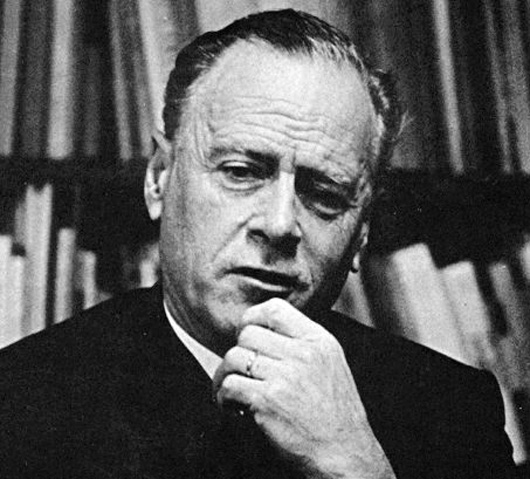 I have always struggled with the work of media theorist Marshall McLuhan. I find it to be equal parts confusing and compelling; it’s persuasive at times and then utterly perplexing elsewhere. I just can’t wrap my head around him and yet I can’t stop coming back to him.
Today would have been his 100th birthday. He died in 1980, but he’s just as towering of a figure today as he was during his own lifetime. His work is eerily prescient and speaks to us as if written yesterday instead of decades ago. Take, for example, McLuhan’s mind-blowing 1969 interview with
Playboy. [PDF] The verse is awe-inspiring, but much of the substance is simply impenetrable. Regardless, it serves as perhaps the best introduction to McLuhan’s work. I strongly encourage you to read the entire thing. The questions posed by interviewer Eric Norden are brilliant and bring out the best in McLuhan.
I was re-reading the interview while working on a chapter for my next book on Internet optimism and pessimism, a topic I’ve spent a great deal of time pondering here in the past. Toward the end of the interview, McLuhan is asked by Norden to respond to some of his critics. McLuhan responds in typically brilliant, colorful fashion: Continue reading →
I’ve spent a great deal of time here defending “techno-optimism” or “Internet optimism” against various attacks through the years, so I was interested to see Cory Doctorow, a novelist and Net activist, take on the issue in a new essay at Locus Online. I summarized my own views on this issue in two recent book chapters. Both chapters appear in The Next Digital Decade and are labeled “The Case for Internet Optimism.” Part 1 is sub-titled “Saving the Net From Its Detractors” and Part 2 is called “Saving the Net From Its Supporters.” More on my own thoughts in a moment. But let’s begin with Doctorow’s conception of the term.
Doctorow defines “techno-optimism” as follows:
In order to be an activist, you have to be… pessimistic enough to believe that things will get worse if left unchecked, optimistic enough to believe that if you take action, the worst can be prevented. […]
Techno-optimism is an ideology that embodies the pessimism and the optimism above: the concern that technology could be used to make the world worse, the hope that it can be steered to make the world better.
What this definition suggests is that Doctorow has a very clear vision of what constitutes “good” vs. “bad” technology or technological developments. He turns to that dichotomy next as he seeks to essentially marry “techno-optimism” to a devotion to the free/open software movement and a rejection of “proprietary technology”: Continue reading →
My thanks to Linton Weeks of NPR who reached out to me for comment for a story he was doing on the impact of the Internet and digital technology on culture and our attention spans. His essay, “We Are Just Not Digging The Whole Anymore,” is an interesting exploration of the issue, although it is clear that Weeks, like Nick Carr (among others), is concerned about what the Net is doing to our brains. He says:
We just don’t do whole things anymore. We don’t read complete books — just excerpts. We don’t listen to whole CDs — just samplings. We don’t sit through whole baseball games — just a few innings. Don’t even write whole sentences. Or read whole stories like this one. We care more about the parts and less about the entire. We are into snippets and smidgens and clips and tweets. We are not only a fragmented society, but a fragment society. And the result: What we gain is the knowledge — or the illusion of knowledge — of many new, different and variegated aspects of life. What we lose is still being understood.
After reading the entire piece I realized that some of my comments to Weeks probably came off as a bit more pessimistic about things than I actually am. I told him, for example, that “Long-form reading, listening and viewing habits are giving way to browse-and-choose consumption,” and that “With the increase in the number of media options — or distractions, depending on how you look at them — something has to give, and that something is our attention span.”
Luckily, however, Weeks was kind enough to also give me the last word in the story in which I pointed out that it would be a serious mistake to conclude “that we’re all growing stupid, or losing our ability to think, or losing our appreciation of books, albums or other types of long-form content.” Instead, I argued: Continue reading →


 The Technology Liberation Front is the tech policy blog dedicated to keeping politicians' hands off the 'net and everything else related to technology.