Posts tagged as:

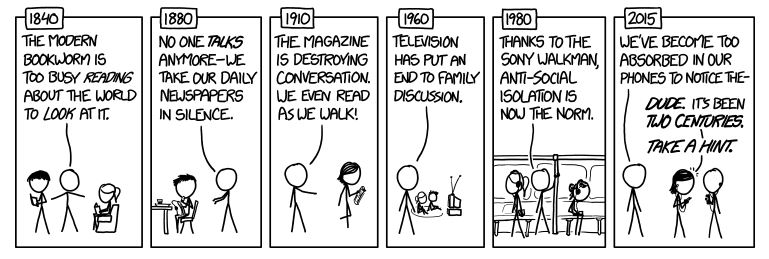
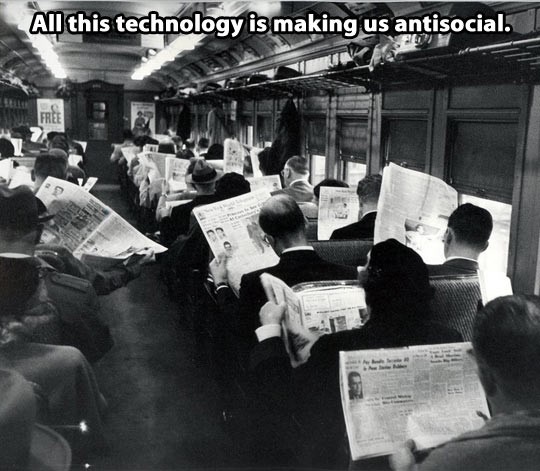
Last week, science writer Michael Shermer tweeted out this old xkcd comic strip that I had somehow missed before. Shermer noted that it represented, “another reply to pessimists bemoaning modern technologies as soul-crushing and isolating.” Similarly, there’s this meme that has been making the rounds on Twitter and which jokes about how newspapers made us as antisocial in the past much as newer technologies supposedly do today.

‏The sentiments expressed by the comic and that image make it clear how people often tend to romanticize past technologies or fail to remember that many people expressed the same fears about them as critics do today about newer ones. I’ve written dozens of articles about “moral panics” and “techno-panics,” most of which are cataloged here. The common theme of those essays is that, when it comes to fears about innovations, there really is nothing new under the sun. Continue reading →

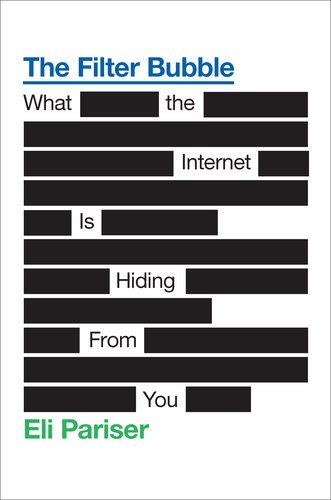
In my latest weekly Forbes column is entitled “The Internet Isn’t Killing Our Culture or Democracy” and it’s a short review of the new book, The Filter Bubble: What the Internet is Hiding from You, by MoveOn.org board president Eli Pariser. As I note in my essay, Pariser’s book covers some very familiar ground already plowed by others in the burgeoning Internet pessimism movement:

[The Filter Bubble] restates a thesis developed a decade ago in both Cass Sunstein’s Republic.com and Andrew L. Shapiro’s The Control Revolution, that increased personalization is breeding a dangerous new creature—Anti-Democratic Man. “Democracy requires citizens to see things from one another’s point of view,” Pariser notes, “but instead we’re more and more enclosed in our own bubbles.”  Pariser worries that personalized digital “filters” like Facebook, Google, Twitter, Pandora, and Netflix are narrowing our horizons about news and culture and leaving “less room for the chance encounters that bring insights and learning.” “Technology designed to give us more control over our lives is actually taking control away,” he fears.
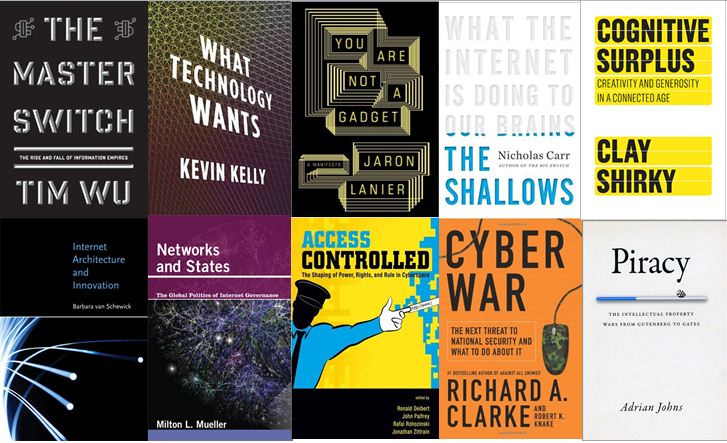
Pariser joins a growing brigade of Internet pessimists. Almost every year for the past decade a new book has been published warning that the Internet is making us stupid, debasing our culture, or destroying social interaction.  Many of these Net pessimists—whose ranks include Andrew Keen (The Cult of the Amateur), Lee Siegel (Against the Machine), Jaron Lanier (You Are Not a Gadget) and Nicholas Carr (The Shallows)—lament the rise of “The Daily Me,” or the rise of hyper-personalized news, culture, and information. They claim increased information and media customization will lead to close-mindedness, corporate brainwashing, an online echo-chamber, or even the death of deliberative democracy.

If you’ve read anything I’ve written on this topic in recent years, you will not be surprised to hear that I disagree with Pariser and these other Net pessimists when it comes to fears about hyper-personalization and user customization. As I noted in my recent book chapter, ” The Case for Internet Optimism, Part 1 – Saving the Net From Its Detractors“: Continue reading →

My thanks to Linton Weeks of NPR who reached out to me for comment for a story he was doing on the impact of the Internet and digital technology on culture and our attention spans. His essay, “We Are Just Not Digging The Whole Anymore,” is an interesting exploration of the issue, although it is clear that Weeks, like Nick Carr (among others), is concerned about what the Net is doing to our brains. He says:

We just don’t do whole things anymore. We don’t read complete books — just excerpts. We don’t listen to whole CDs — just samplings. We don’t sit through whole baseball games — just a few innings. Don’t even write whole sentences. Or read whole stories like this one. We care more about the parts and less about the entire. We are into snippets and smidgens and clips and tweets. We are not only a fragmented society, but a fragment society. And the result: What we gain is the knowledge — or the illusion of knowledge — of many new, different and variegated aspects of life. What we lose is still being understood.

After reading the entire piece I realized that some of my comments to Weeks probably came off as a bit more pessimistic about things than I actually am. I told him, for example, that “Long-form reading, listening and viewing habits are giving way to browse-and-choose consumption,” and that “With the increase in the number of media options — or distractions, depending on how you look at them — something has to give, and that something is our attention span.”

Luckily, however, Weeks was kind enough to also give me the last word in the story in which I pointed out that it would be a serious mistake to conclude “that we’re all growing stupid, or losing our ability to think, or losing our appreciation of books, albums or other types of long-form content.” Instead, I argued: Continue reading →

Wow, what a year for cyberlaw and information technology policy books!  Both in terms of number of titles and the gravity of the books released, 2010 was one of the biggest years of the past decade (perhaps matched only by 2006 or 2008 in terms of significance).  So, here’s my annual list of the Most Important Info-Tech Policy Books of 2010.

First, however, as is the case each year [see my 2008 & 2009 lists], I need to repeat a few disclaimers.  First, what qualifies as an “important” info-tech policy book is highly subjective, but I would define it as a title that many people — especially scholars in the field — are currently discussing and that we will likely be referencing for many years to come.  But I “weight” books in the sense that narrowly-focused titles lose a few points. For example, books that deal mostly with privacy issues, copyright law, or antitrust policy do not exactly qualify as the same sort of “info-tech policy book” as other titles that offer a broader exploration of policy issues / concerns. For that reason, “big picture” info-tech policy books tend to rank higher on my lists.

The second caveat: Merely because a book appears on my list it does not necessarily mean I agree with everything in it. In fact, as was the case in previous years, I found much with which to disagree in my picks for the most important books of 2010 and I find that the cyber-libertarianism I subscribe to has very few fans out there.

With those caveats in mind, here are my choices for the Most Important Info-Tech Policy Books of 2010. Continue reading →

This is a response to Nick Carr’s recent piece, “The Attack on Do Not Track,” in which he goes after me for some comments I made in this essay about the trade-offs at work in the privacy and online advertising debates.  In his critique of my essay, he argues:

What the FTC is suggesting is that the unwritten quid pro quo be written, and that the general agreement be made specific. Does Thierer really believe that invisible tradeoffs are somehow better than visible ones? Shouldn’t people know the cost of “free” services, and then be allowed to make decisions based on their own cost-benefit analysis? Isn’t that the essence of the free market that Thierer so eloquently celebrates?

My response to Nick follows. Continue reading →

I have a piece on Internet privacy in the Wall Street Journal today. It’s one side of a “debate” on Internet privacy and tracking. I say be careful what you give up if you thwart online tracking—personalization, free content, and other goodies may go by the wayside.

My “opponent” is Nicholas Carr, whose identity and arguments I didn’t know as I wrote, nor likely did he mine. His is a good piece that lays out the many legitimate concerns with online tracking. Must be nice to be the maximal-privacy “good guy”!

For the sake of making it interesting I’ll pick out one important point that highlights the nub of the issue.

Privacy tradeoffs have always been a part of life, Carr says, “But now, thanks to the Net, we’re losing our ability to understand and control those tradeoffs—to choose, consciously and with awareness of the consequences, what information about ourselves we disclose and what we don’t.”

This sentence brought back to me a memorable moment from law school. In a seminar course, the professor called upon a fellow student who rather dopily apologized, “Sorry, I didn’t have time to do the reading.”

“In fact you did have time to do the reading,” replied the teacher, “but you just didn’t take it. Isn’t that correct?”

It was funny, if embarrassing for my colleague, and a great illustration of precision with language.

Holding to that standard of precision, I’ll disagree with Carr’s statement: The Net is not affecting our ability to understand and control privacy tradeoffs. Its development has outstripped that capacity. Developing consumers’ understanding of information flows, information uses, and consequences will position them to restore privacy.

I don’t think Carr would disagree with that sentiment in the main. Later he says, agreeably to me, “We need to take personal responsibility for the information we share whenever we log on.”

And I do think that’s the heart of the problem: “Education is the hard way, and it is the only way, to get consumers’ privacy interests balanced with their other interests.”
Faithful readers know of my geeky love of tech policy books [here are my “best of” lists for 2008 & 2009], and the intriguing battle taking place today between Internet optimists and pessimists in particular.  One of the things that I noticed when I was putting together my compendium, “The Digital Decade’s Definitive Reading List: Internet & Info-Tech Policy Books of the 2000s,” is that there are up years and down years. For example, there weren’t a lot of big tech policy titles in 2000 or 2005. By contrast, 2001, 2006 and 2008 were monster years.  I suppose that’s the case with any genre, of course.

Anyway, I was beginning to think that 2010 was shaping up to be one of those slow years, with Jaron Lanier’s You Are Not a Gadget being the only major release so far this year. [See my review of it here.] But there are some very important titles on the way that are worth picking up. I’ve already pre-ordered most of these and am looking forward to reviewing them all soon:

Please let me know others that I may be missing. [Note: Most of the books I’ve been reading this year have more to do with the future of media, the press, journalism, etc. It’s been a big year for books like that. For example, McChesney & Nichols’ The Death and Life of American Journalism; Lee Bollinger’s Uninhibited, Robust, and Wide-Open: A Free Press for a New Century; and Bob Garfield’s The Chaos Scenario. But it’s not clear any of these books belong in the “info-tech policy” genre, although they all have something to say about the impact of the Internet and digital technology on the media and journalism. So, who knows, maybe I will add them to my end of year list.]

Of the many tech policy-related books I’ve read in recent years, I can’t recall ever being quite so torn over one of them as much as I have been about Jaron Lanier‘s You Are Not a Gadget: A Manifesto.  There were moments while I was reading through it when I was thinking, “Yes, quite right!,” and other times when I was muttering to myself, “Oh God, no!”

The book is bound to evoke such strong emotions since Lanier doesn’t mix words about what he believes is the increasingly negative impact of the Internet and digital technologies on our lives, culture, and economy. In this sense, Lanier fits squarely in the pessimist camp on the Internet optimists vs. pessimists spectrum. (I outlined the intellectual battle lines between these two camps my essay, “Are You An Internet Optimist or Pessimist? The Great Debate over Technology’s Impact on Society.”) But Lanier is no techno-troglodyte. Generally speaking, his pessimism isn’t as hysterical in tone or Luddite-ish in its prescriptions as the tracts of some other pessimists.  And as a respected Internet visionary, a gifted computer scientist, an expert on virtual reality, and a master wordsmith, the concerns Lanier articulates here deserve to be taken seriously— even if one ultimately does not share his lugubrious worldview.

On the very first page of the book, Lanier hits on three interrelated concerns that other Net pessimists have articulated in the past:

  1. Loss of individuality & concerns about “mob” behavior (Lanier: “these words will mostly be read by nonpersons–automatons or numb mobs composed of people who are no longer acting as individuals.”)
  2. Dangers of anonymity (Lanier: “Reactions will repeatedly degenerate into mindless chains of anonymous insults and inarticulate controversies.”)
  3. “Sharecropper” concern that a small handful of capitalists are getting rich off the backs of free labor (Lanier: “Ultimately these words will contribute to the fortunes of those few who have been able to position themselves as lords of the computing clouds.”)

Again, others have tread this ground before, and it’s strange that Lanier doesn’t bother mentioning any of them. Neil Postman, Mark Helprin, Andrew Keen, and Lee Siegel have all railed against the online “mob mentality” and argued it can be at least partially traced to anonymous online communications and interactions. And it was Nick Carr, author of The Big Switch, who has been the most eloquent in articulating the “sharecropper” concern, which Lanier now extends with his “lords of the computing clouds” notion. [More on that towards the end.] Continue reading →

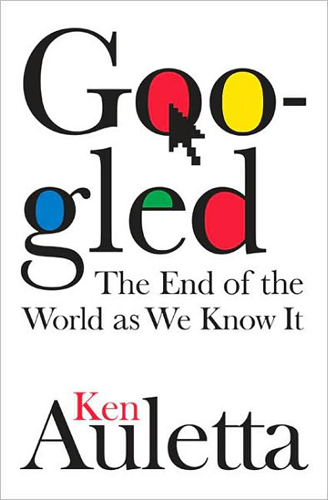
Auletta GoogledI just finished Ken Auletta’s latest book, Googled: The End of the World As We Know It, and I highly recommend it. Auletta is an amazingly gifted journalist and knows how put together a hell of good story.  It helps in this case that he was granted unprecedented access to the Google team and their day-to-day workings at the Googleplex. I’m really shocked by the level of access he was granted to important meetings and officials–over 150 interviews with Googlers, including 11 with CEO Eric Schmidt and several with founders Sergey Brin and Larry Page.  That’s impressive.

The book shares much in common with Randall Stross’s excellent Planet Google: One Company’s Audacious Plan to Organize Everything We Know, which I reviewed here earlier this year.  Both books recount the history of Google from its early origins to present. And both survey a great deal of ground in terms of the challenges that Google faces as it matures and the policy issues that are relevant to the company (privacy, free speech, copyright law, etc).

What makes Auletta’s book unique is the way we taps his extensive “old media” world contacts and integrates such a diverse cast of characters into the narrative — Mel Karmazin (former Viacom, now Sirius XM), Bob Iger (Disney), Howard Stringer (Sony), Martin Sorrrell (WPP), Irwin Gotlieb (Group M), and even the Internet’s “inventor”–Al Gore!   Auletta interviews them or recounts stories about their interactions with Google to show the growing tensions being created by this disruptive company and its highly disruptive technologies.  There are some terrifically entertaining anecdotes in the book, but the bottom line is clear: Google has made a lot of enemies in a very short time.

Indeed, the book is as much about the decline of old media as it is about Google’s ascendancy.  What Auletta has done so brilliantly here is to tell their stories together and ask how much old media’s recent woes can be blamed on Google and digital disintermediation in general. “If Google is destroying or weakening old business models,” Auletta argues, “it is because the Internet inevitably destroys old ways of doing things, spurs ‘creative destruction.’ This does not mean that Google is not ambitious to grow, and will not grow at the expense of others. But the rewards, and the pain, are unavoidable,” he concludes. Continue reading →

I recently finished Tyler Cowen’s latest book, Create Your Own Economy: The Path to Prosperity in a Disordered World.  Like everything he writes, this book is worth reading and it will be of interest to those who follow technology policy debates since Cowen makes a passionate case for “Internet optimism” in the face of recent criticisms of the Internet and the Information Age in general.

Cowen is a Professor of Economics at George Mason University and the co-author, along with Alex Tabarrok, of the wonderful  MarginalRevolution.com blog.  And if you haven’t read Cowen’s In Praise of Commercial Culture, stop what you’re doing and go get yourself a copy right now. Brilliant book.  Compared to that book, Create Your Own Economy is a difficult book to summarize.  Seriously, this book is all over the place… but in a good way.  Even though it sometimes feels like “Tyler’s Miscellaneous Ramblings,” those ramblings will keep you engaged and entertained.  Cord Blomquist did a pretty good job of summarizing the general themes of the book in this post two months ago when he noted that, “despite cultural reflexes that would have us do otherwise, we should embrace… new technologies as means to be more selective about what information we absorb and therefore welcome the increased volume of bytes into our lives.  In his new book, [Cowen] explores technology as a vehicle to help you determine what you really value, not a series of a email-powered torture devices.”  That’s a pretty good summation, but the book is about much more than that.

Instead of a full-blown review, I want to focus on some of passages from Cowen’s book about coping with information overload, which I think readers here might find of interest. In doing so, I will contrast Cowen’s views with those of John Freeman, who just penned “A Manifesto for Slow Communication” in The Wall Street Journal. As we will see, Cowen and Freeman’s differences exemplify the heated ongoing debate taking place among “Internet optimists &  pessimists,” which I have discussed here many times before.   Continue reading →