Declan McCullagh, chief political correspondent for CNET and former Washington bureau chief for Wired News, discusses recent leaks of NSA surveillance programs. What do we know so far, and what more might be unveiled in the coming weeks? McCullagh covers legal challenges to the programs, the Patriot Act, the fourth amendment, email encryption, the media and public response, and broader implications for privacy and reform.
Download
Related Links
Timothy Ravich, a board certified aviation lawyer in private practice and an adjunct professor of law at the Florida International University School of Law and the University of Miami School of Law, discusses the future of unmanned aerial system (UAS), also known as drones.
Ravich defines what UAVs are, what they do, and what their potential non-military uses are. He explains that UAV operations have outpaced the law in that they are not sufficiently supported by a dedicated and enforceable regime of rules, regulations, and standards respecting their integration into the national airspace.
Ravich goes on to explain that Congress has mandated the FAA to integrate UAS into the national airspace by 2015, and explains the challenges the agency faces. Among the novel issues domestic drone use raises are questions about trespass, liability, and privacy.
Download
Related Links
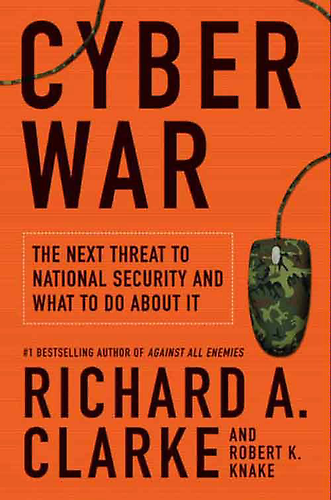
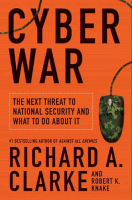 While on vacation last week, I finished up a few new cyber-policy books and one of them was Cyber War: The Next Threat to National Security and What to Do About It by Richard A. Clarke and Robert K. Knake. The two men certainly possess the right qualifications for a review of the subject. Clarke was National Coordinator for Security, Infrastructure Protection, and Counterterrorism during the Clinton years and also served in the Reagan and two Bush administrations. Knake is an international affairs fellow at the Council on Foreign Relations where he specializes in cybersecurity.
Clarke and Knake’s book is important if for no other reason than, as they note, “there are few books on cyber war.” (p. 261) Thus, their treatment of the issue will likely remain the most relevant text in the field for some time to come.
They define cyber war as “actions by a nation-state to penetrate another nation’s computers or networks for the purposes of causing damage or disruption” (p. 6) and they argue that such actions are on the rise. And they also claim that the U.S. has the most to lose if and when a major cyber war breaks out, since we are now so utterly dependent upon digital technologies and networks.
At their best, Clarke and Knake walk the reader through the mechanics of cyber war, who some of the key players and countries are who could engage in it, and identify what the costs of such of war would entail. Other times, however, the book suffers from a somewhat hysterical tone, as the authors are out here not just to describe cyber war, but to also issue a clarion call for regulatory action to combat it. Ryan Singel of
Wired, for example, has taken issue with the book’s “doomsday scenario that stretches credulity” and claims that “Like most cyberwar pundits, Clarke puts a shine on his fear mongering by regurgitating long-ago debunked hacker horror stories.” Bruce Schneier and Jim Harper have raised similar concerns elsewhere.
Continue reading →
I’ll be speaking on a panel titled “The Future of Security vs. Privacy” today at the Computers Freedom and Privacy conference. If you’re in Washington, D.C., come on by the Marvin Center at George Washington University and head up to the third floor. The conference continues through the week.
The organizers say C-SPAN will be recording parts of today, and it is supposed to be streamed live here. You Twitterers can follow the conversation by checking out the official hashtag: #cfp09. Be sure to say your piece, as well.
Arts+Labs, a new coalition “committed to a better, safer internet that works for both artists and consumers,” has written up Friday’s Cato Institute book forum on The Crime of Reason on their ArtLab blog. Author Robert B. Laughlin of Stanford University will present his book, then we’ll have comments from Tom Sydnor of the Progress and Freedom Foundation.
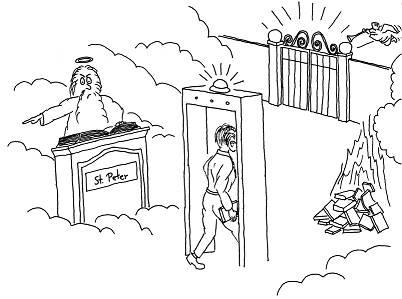
I’ve gotten a glimpse at the slides Dr. Laughlin will be using, and this Nobel laureate in physics also turns out to be something of an artist.
Join us Friday to learn what this drawing is all about.

 The Technology Liberation Front is the tech policy blog dedicated to keeping politicians' hands off the 'net and everything else related to technology.