Oh yeah, that was me. And a lot of others. Well, we were wrong. The mobile app store market (Apple, Android, etc) is brimming with a bonanza of micro-business opportunities for producers and consumers alike. I am consistently amazing by the range of offerings available today, the vast majority of which remain free of charge. But what is more impressive is the growing array of applications and games available for mere pennies. Sure, some are more than a buck — but not that much more. I was just looking through the 40+ apps that I’ve got on my Droid right now (not really sure how many I’ve downloaded overall since I’ve deleted a lot) and I would guess that I paid for at least 25% of them–many after being “upsold” by first trying the free versions and then buying. Yes, I know there continues to be a debate about what counts as a “micropayment,” but the fact that so many more people are paying just a couple of bucks or less for content in these mobile app stores suggests that its only going to easier for people to pay even smaller sums for content in coming years.
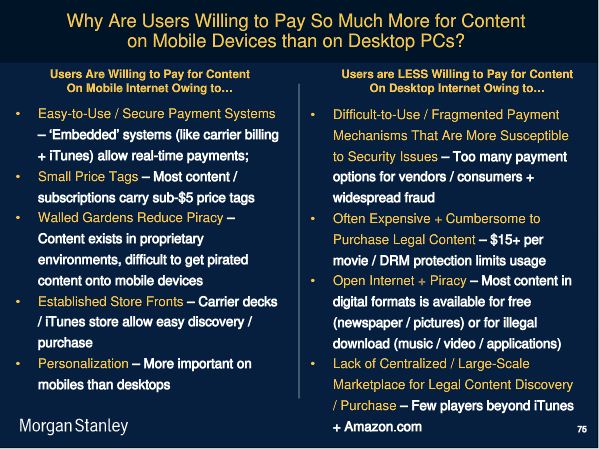
What got me thinking about all this was slide #75 in Mary Meeker’s latest slideshow about Internet trends. The Morgan Stanley web guru notes that users are more willing to pay for content on mobile devices than they are on desktop computers for a number of reasons, but the first of which she listed was: “Easy-to-Use/Secure Payment Systems — embedded systems like carrier billing and iTunes allow real-time payment.” The important point here is that the combination of these slick, well-organized online app stores + secure, super-easy billing systems have combined to overcome the so-called”mental transaction cost problem,” at least to some extent. We’re not nearly as reluctant today to surf away when something says “$0.99” on our screen. Increasingly, we’re hitting the “Buy” button.
 Continue reading →
I’ve always generally agreed with the conventional wisdom about micropayments as a method of funding online content or services: Namely, they won’t work. Clay Shirky, Tim Lee, and many others have made the case that micropayments face numerous obstacles to widespread adoption. The primary issue seems to be the “mental transaction cost” problem: People don’t want to be diverted–even for just a few seconds–from what they are doing to pay a fee, no matter how small. [That is why advertising continues to be the primary monetization engine of the Internet and digital services.]
 That being said, I keep finding examples of how micropayments do work in some contexts and it has kept me wondering if there’s still a chance for micropayments to work in other contexts (like funding media content). For example, I mentioned here before how shocked I was when I went back and looked at my eBay transactions for the past couple of years and realized how many “small-dollar” purchases I had made via PayPal (mostly dumb stickers and other little trinkets). And the micropayment model also seems to be doing reasonably well in the online music world. In January 2009, Apple reported that the iTunes Music Store had sold over 6 billion tracks.
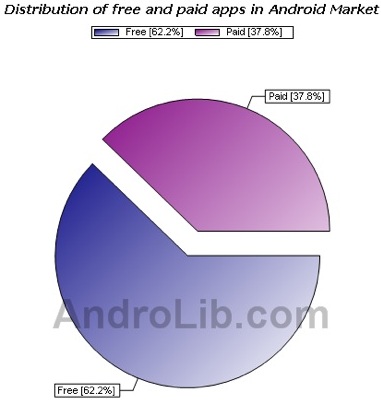
And then there are mobile application stores. Just recently I picked up a Droid and I’ve been taking advantage of the rapidly growing Android marketplace, which recently hit the 20,000 apps mark. Like Apple’s 100,000-strong App Store, there’s a nice mix of paid and free apps, and even though I’m downloading mostly freebies, I’ve started buying more paid apps. Many of them are “upsells” from free apps I downloaded. In most cases, they are just 99 cents. A few examples of paid apps I’ve downloaded or considered buying: Stocks Pro, Mortgage Calc Pro, Currency Guide, Photo Vault, Weather Bug Elite, and Find My Phone. And there are all sorts of games, clocks, calendars, ringtones, heath apps, sports stuff, utilities, and more that are 99 cents or $1.99. Some are more expensive, of course.
Continue reading →
Progress Snapshot 5.10
from
The Progress & Freedom Foundation
A recent telephone poll conducted by professors at Berkeley and the University of Pennsylvania concluded, “Contrary to what many marketers claim, most adult Americans (66%) do not want marketers to tailor advertisements to their interest.” The study’s authors claim that their poll is the “the first nationally representative telephone (wireline and cell phone) survey to explore Americans’ opinions about behavioral targeting by marketers.” They also assert that the poll indicates that “if Americans could vote on behavioral targeting today, they would shut it down.” Advocates of regulating online data collection have trumpeted this poll as evidence consumers demand legislation to protect their privacy. “This research gives the F.T.C. and Congress a political green light to go ahead and enact effective, but reasonable, rules and policies,” declared Jeff Chester, a leading critic of online advertising.
But what is most surprising about this poll is not that 66% of users said they do not want tailored online ads, but that 34% of users said they did! The key, initial question of “whether or not you want the websites you visit to show you ads that are tailored to your interests,” presents no trade-off. The fact that
anyusers said “yes” indicates that many users paused to do the rough mental math about the unarticulated trade-off between the benefits of receiving tailored ads and the costs of that tailoring.
The methodology of opinion polls necessarily affects respondents’ mental calculations, rendering polls not just easily manipulated, but inherently unreliable as indicators of real preferences. Every poll reflects the bias of its authors to some degree by the way questions are worded, the order in which they are asked, the sample surveyed,
etc. The easiest way to bias the results of a poll is to omit any mention of the trade-offs at issue. This poll simply buried the issue of trade-offs in a heavily loaded follow-up question: After telling respondents that marketers “often use technologies to follow the websites you visit and the content you look at in order to better customize ads,” the interviewer asked whether the respondent would allow advertisers to “follow [them] online in an anonymous way in exchange for free content.” Only 10% of users said they would allow this voluntary exchange.
What does this tell us about whether, and how, government should further regulate online advertising? Precious little: Not only does this poll overstate the costs of targeted advertising, understate its benefits, and ignore the tools available to users to address their privacy concerns but, like any opinion poll, this one tells us more about the psychology of decision-making under the artificial uncertainty of polls than about the choices users would actually make in the real world. Continue reading →

 The Technology Liberation Front is the tech policy blog dedicated to keeping politicians' hands off the 'net and everything else related to technology.