On July 12, I participated in a Bipartisan Policy Center event on “Civil Society Perspectives on Artificial Intelligence Impact Assessments.” It was an hour-long discussion moderated by Michele Nellenbach, Vice President of Strategic Initiatives at the Bipartisan Policy Center, and which also featured Miriam Vogel, President and CEO of EqualAI. We discussed the ins and outs of algorithmic auditing and impact assessments for artificial intelligence. This is one of the hottest topics in the field of AI governance today, with proposals multiplying rapidly in academic and public policy circles. Several governments are already considering mandating AI auditing and impact assessments.
You can watch the entire discussion here, and down below I have included some of my key talking points from the session. I am currently finishing up my next book, which is on how to craft a flexible governance framework for AI and algorithmic technologies. It includes a lengthy chapter on this issue and I also plan on eventually publishing a stand-alone study on this topic.
Profectus is an excellent new online magazine featuring essays and interviews on the intersection of academic literature, public policy, civilizational progress, and human flourishing. The Spring 2022 edition of the magazine features a “Progress Roundtable” in which six different scholars were asked to contribute their thoughts on three general questions:
What is progress?
What are the most significant barriers holding back further progress?
If those challenges can be overcome, what does the world look like in 50 years?
I was honored to be asked by Clay Routledge to contribute answers to those questions alongside others, including: Steven Pinker (Harvard University), Jason Crawford (Roots of Progress), Matt Clancy (Institute for Progress), Marian Tupy (HumanProgress.org), James Pethokoukis (AEI). I encourage you to jump over the roundtable and read all their excellent responses. I’ve included my answers down below:
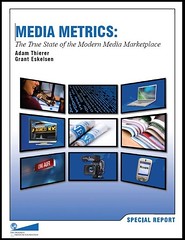
Faithful readers will recall that, several months ago, I penned a 7-part “Media Metrics” series that took a hard look at the health of the media marketplace. Today, the Progress & Freedom Foundation is releasing a greatly expanded version of these essays that I have put together with my PFF colleague Grant Eskelsen. In this 100-page special report, “Media Metrics: The True State of the Modern Media Marketplace,” we begin by noting that heated debates about the state of the media marketplace continue to rage in Washington, and opinions seem to range from grim to outright apocalyptic. As we note on pg. 1:
Many people—including a large number of legislators and regulators—argue that America’s media marketplace is in a miserable state. Some claim that citizens lack choice in media outlets and that options are just as scarce as ever. Others believe that media “localism” is dead or that many groups or niches go underserved because of a lack of true “diversity” in media. Others argue that the market is hopelessly over-concentrated in the hands of a few evil media barons who are hell-bent on force-feeding us corporate propaganda. And still others say that the quality of news and entertainment in our society has deteriorated because of a combination of all of the above. It all sounds quite troubling, but is any of it true?
After taking an objective look at the true state of America’s media marketplace, we conclude that such pessimism is unwarranted. Indeed, a careful review of the facts reveals that—contrary to what those media critics suggest—we have more media choice, more media competition, and more media diversity than ever before. Indeed, to the extent there was ever a “golden age” of media in America, we are living in it today. The media sky has never been brighter and it is getting brighter with each passing year.
Continue reading →
The Technology Liberation Front is the tech policy blog dedicated to keeping politicians' hands off the 'net and everything else related to technology. Learn more about TLF →

 The Technology Liberation Front is the tech policy blog dedicated to keeping politicians' hands off the 'net and everything else related to technology.