This is a compendium of readings on “progress studies,” or essays and books which generally make the case for technological innovation, dynamism, economic growth, and abundance. I will update this list as additional material of relevance is brought to my attention.
I recently posted an essay over at The Bridge about “The Pacing Problem and the Future of Technology Regulation.” In it, I explain why the pacing problem—the notion that technological innovation is increasingly outpacing the ability of laws and regulations to keep up—“is becoming the great equalizer in debates over technological governance because it forces governments to rethink their approach to the regulation of many sectors and technologies.”
In this follow-up article, I wanted to expand upon some of the themes developed in that essay and discuss how they relate to two other important concepts: the “Collingridge Dilemma” and technological determinism. In doing so, I will build on material that is included in a forthcoming law review article I have co-authored with Jennifer Skees, Ryan Hagemann (“Soft Law for Hard Problems: The Governance of Emerging Technologies in an Uncertain Future”) as well as a book I am finishing up on the growth of “evasive entrepreneurialism” and “technological civil disobedience.”
Recapping the Nature of the Pacing Problem
First, let us quickly recap that nature of “the pacing problem.” I believe Larry Downes did the best job explaining the “problem” in his 2009 book on
The Laws of Disruption. Downes argued that “technology changes exponentially, but social, economic, and legal systems change incrementally” and that this “law” was becoming “a simple but unavoidable principle of modern life.” Continue reading →
What happens when technological innovation outpaces the ability of laws and regulations to keep up?
This phenomenon is known as “the pacing problem,” and it has profound ramifications for the governance of emerging technologies. Indeed, the pacing problem is becoming the great equalizer in debates over technological governance because it forces governments to rethink their approach to the regulation of many sectors and technologies.
The Innovation Cornucopia
Had Rip Van Winkle woken up his famous nap today, he’d be shocked by all the changes around him. At-home genetics tests, personal drones, driverless cars, lab-grown meats, and 3D-printed prosthetic limbs are just some of the amazing innovations that would boggle his mind. New devices and services are flying at us so rapidly that we sometimes forget that most did not even exist a short time ago. Continue reading →
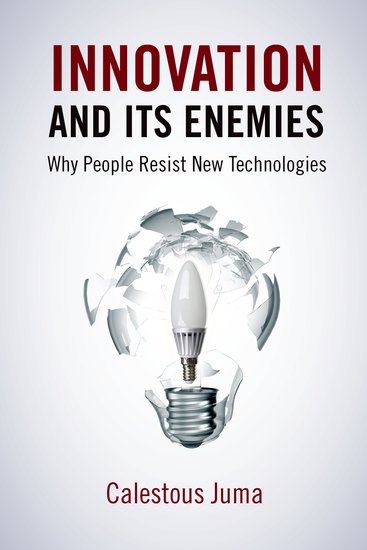
“The quickest way to find out who your enemies are is to try doing something new.” Thus begins Innovation and Its Enemies, an ambitious new book by Calestous Juma that will go down as one of the decade’s most important works on innovation policy.
Juma, who is affiliated with the Harvard Kennedy School’s Belfer Center for Science and International Affairs, has written a book that is rich in history and insights about the social and economic forces and factors that have, again and again, lead various groups and individuals to oppose technological change. Juma’s extensive research documents how “technological controversies often arise from tensions between the need to innovate and the pressure to maintain continuity, social order, and stability” (p. 5) and how this tension is “one of today’s biggest policy challenges.” (p. 8)
What Juma does better than any other technology policy scholar to date is that he identifies how these tensions develop out of deep-seated psychological biases that eventually come to affect attitudes about innovations among individuals, groups, corporations, and governments. “Public perceptions about the benefits and risks of new technologies cannot be fully understood without paying attention to intuitive aspects of human psychology,” he correctly observes. (p. 24) Continue reading →
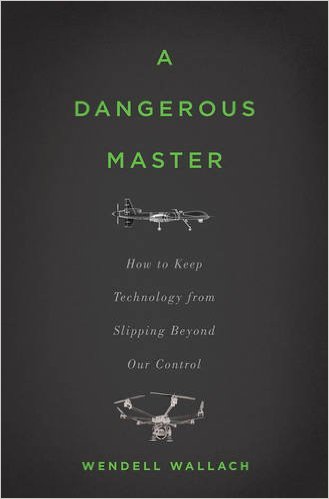
On May 3rd, I’m excited to be participating in a discussion with Yale University bioethicist Wendell Wallach at the Microsoft Innovation & Policy Center in Washington, DC. (RSVP here.) Wallach and I will be discussing issues we write about in our new books, both of which focus on possible governance models for emerging technologies and the question of how much preemptive control society should exercise over new innovations.
Of all the books of technological criticism or skepticism that I’ve read in recent years—and I have read stacks of them!—
A Dangerous Master is by far the most thoughtful and interesting. I have grown accustomed to major works of technological criticism being caustic, angry affairs. Most of them are just dripping with dystopian dread and a sense of utter exasperation and outright disgust at the pace of modern technological change.
Although he is certainly concerned about a wide variety of modern technologies—drones, robotics, nanotech, and more—Wallach isn’t a purveyor of the politics of panic. There are some moments in the book when he resorts to some hyperbolic rhetoric, such as when he frets about an impending “techstorm” and the potential, as the book’s title suggests, for technology to become a “dangerous master” of humanity. For the most part, however, his approach is deeper and more dispassionate than what is found in the leading tracts of other modern techno-critics.
Throughout the year, I collect some of the more notable tech policy-related essays that I’ve read and then publish an end-of-year list here. (Here, for example, are my end-of-year lists from 2014 and 2013.) So, here are some of my favorite essays and editorials from 2015. (Note: They are just in chronological order. No ranking here.)
Larry Downes – “Take note Republicans and Democrats, this is what a pro-innovation platform looks like,” Washington Post, January 7. (Downes explains how governments need to adapt to accommodate and embrace new forms of technological innovation. He notes: “Here at home, the opportunity to wrap themselves in the flag of innovation is knocking for both parties, but so far there are few takers. Republicans and Democrats regularly invoke the rhetoric of innovation, entrepreneurship, and the transformative power of technology. But in reality neither party pursues policies that favor the disruptors. Instead, where lawmakers once took a largely hands-off approach to Silicon Valley, as the Internet revolution enters a new stage of industry transformation, the temptation to intervene, to usurp, to micromanage, to circumscribe the future — becomes irresistible.”) Equally excellent was Larry’s essay later in the year, “Fewer, Faster, Smarter.” (“As the technology revolution proceeds, the concept of government may return to its pre-industrial roots, setting the most basic rules of the economy and standing by as regulator of last resort when markets fail for some or all consumers over an extended period of time. Even then, the solution may simply be to tweak the incentives to encourage better behavior, rather than more full-fledged—and usually ill-fated—micromanagement of fast-changing industries.”)
Bryant Walker Smith – “Slow Down That Runaway Ethical Trolley,” CIS Blog, January 12. (Smith, a leading expert on autonomous vehicle systems, notes that, while serious ethical dilemmas will always be present with such technologies, we should not allow the perfect to be the enemy of the good. “The fundamental ethical question, in my opinion, is this: In the United States alone, tens of thousands of people die in motor vehicle crashes every year, and many more are injured. Automated vehicles have great potential to one day reduce this toll, but the path to this point will involve mistakes and crashes and fatalities. Given this stark choice, what is the proper balance between caution and urgency in bringing these systems to the market? How safe is safe enough?”)
Andrew McAfee – “Who are the humanists, and why do they dislike technology so much?” Financial Times, July 7, 2015. (A brief but brilliant exploration of the philosophical fight over differing conceptions of “humanism.” McAfee, appropriately in my opinion, calls into question technological critics who self-label themselves “humanists” and then suggest that those who believe in the benefits of technological innovation and progress are somehow opposed to humanity. In reality, of course, nothing could be further from the truth!)
Jocelyn Brewer – “Techno-Fear is Hurting Kids, Not Their Use of Digital Devices,” July 7, 2015. (A beautiful piece that makes it clear why “the Internet… is not addictive. Technology is not a drug.” Brewer continues on to make the case for avoiding fear-based messaging about Internet problems and instead adopting a more sensible approach: “Rather than trotting out interminable lists of the negative consequences of our adoption of technology lets raise awareness of how to avoid the pitfalls of not approaching this new era with solutions and proactive thinking.” Amen, sister!)
Evan Ackerman – “We Should Not Ban ‘Killer Robots,’ and Here’s Why,” IEEE Spectrum, July 29, 2015, (A thought-provoking piece about a controversial subject in which Ackerman argues that “banning the technology is not going to solve the problem if the problem is the willingness of humans to use technology for evil”)
Tim O’Reilly – “Networks and the Nature of the Firm,” Medium, August 14, 2015. (Explores the economics of the sharing economy and “the huge economic shift led by software and connectedness.”)
Joe Queenan – “America’s Need for Pointless Updates and Cat Videos,” Wall Street Journal, December 3, 2015. (“The back-to-nature, turn-off-your-cellphone movement is based on a false assumption. . . . Time not spent doing dumb stuff would otherwise be wasted doing other dumb stuff. It’s called ‘play,’ without which Jack is a dull boy. It is a variation on the old saying that nature abhors a vacuum. So nature created the Internet.”)
Dominic Basulto – “Can we just stop with all these tech dystopia stories?” Washington Post, Dec 8, 2015. (“Yes, a dystopian future is possible, but so is a utopian future. Most likely, the answer is somewhere in the middle, the way it’s been for millennia.”)
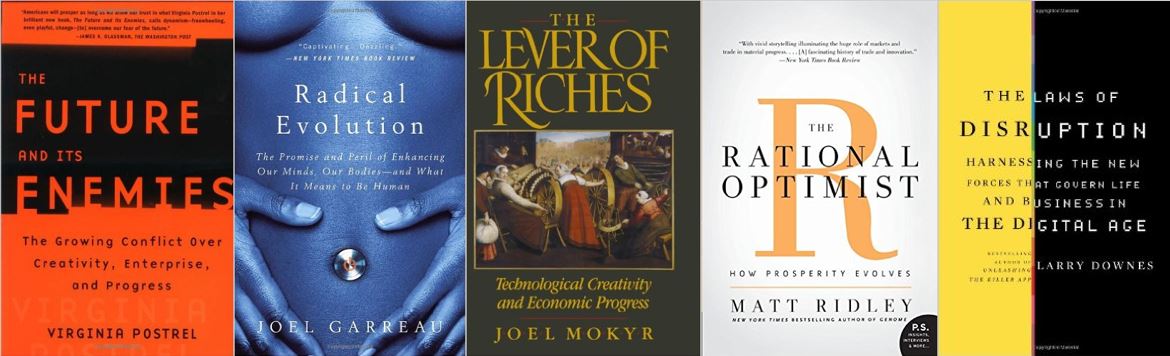
I was delivering a lecture to a group of academics and students out in San Jose recently [see the slideshow here] and someone in the crowd asked me to send them a list of some of the many books I had mentioned during my talk, which was about future policy clashes over various emerging technologies. I cut the list down to the five books that I believe best frame the nature of debates over innovation and technology policy. They are:
Virginia Postrel, The Future and Its Enemies (1998): Contrasts the conflicting worldviews of “dynamism” and “stasis” and shows how the tensions between these two visions influences debates over technological progress. No book has had a greater influence on my own thinking about debates over innovation and progress.
Joel Mokyr, Lever of Riches: Technological Creativity and Economic Progress (1990): One of the finest histories of technological innovation ever penned. It’s certainly my favorite. It explores how earlier technologies evolved and created social and economic tensions.
Matt Ridley, The Rational Optimist: How Prosperity Evolves (2010): Makes the case for “rational optimism” in debates about technology and innovation and takes on pessimistic critics of technological change.
Larry Downes, The Laws of Disruption: Harnessing the New Forces That Govern Life and Business in the Digital Age (2009): Explains how lawmaking in the information age is inexorably governed by the “law of disruption” or the fact that “technology changes exponentially, but social, economic, and legal systems change incrementally.” That fact, he explains, has profound ramifications for all technology policy debates going forward.
If you haven’t read these amazing books yet, add them to your collection
right now! They are worth reading again and again. They will forever change the way you think about debates over technology and innovation.
“Why hasn’t Europe fostered the kind of innovation that has spawned hugely successful technology companies?” asks James B. Stewart in an important new column for the New York Times (“A Fearless Culture Fuels U.S. Tech Giants“).
That’s a great question, and one that I have tried to answer in a series of recent essays. (See, for example, “Europe’s Choice on Innovation” and “Embracing a Culture of Permissionless Innovation.”) What I have suggested in those essays is that the starkly different outcomes on either side of the Atlantic in terms of recent economic growth and innovation can primarily be explained by cultural attitudes toward risk-taking and failure. “For innovation and growth to blossom, entrepreneurs need a clear green light from policymakers that signals a general acceptance of risk-taking—especially risk-taking that challenges existing business models and traditional ways of doing things,” I have argued. And the most powerful proof of this is to examine the amazing natural experiment that has played out on either side of the Atlantic over the past two decades with the Internet and the digital economy.
For example, an annual Booz & Company report on the world’s most innovative companies revealed that 9 of the top 10 most innovative companies are based in the U.S. and that most of them are involved in computing and digital technology. None of them are based in Europe, however. Another recent survey revealed that the world’s 15 most valuable Internet companies (based on market capitalizations) have a combined market value of nearly $2.5 trillion, but none of them are European while 11 of them are U.S. firms. Again, it is America’s tech innovators that dominate that list.
Many European officials and business leaders are waking up to this grim reality and are wondering how to reverse this situation. In his
Times essay, Stewart quotes Danish economist Jacob Kirkegaard of the Peterson Institute for International Economics, who notes that Europeans “all want a Silicon Valley. . . . But none of them can match the scale and focus on the new and truly innovative technologies you have in the United States. Europe and the rest of the world are playing catch-up, to the great frustration of policy makers there.”
My friend and frequent co-blogger Larry Downes has shown how lawmaking in the information age is inexorably governed by “The Law of Disruption” or the fact that “technology changes exponentially, but social, economic, and legal systems change incrementally.” This law is “a simple but unavoidable principle of modern life,” he said, and it will have profound implications for the way businesses, government, and culture evolve going forward. “As the gap between the old world and the new gets wider,” he argues, “conflicts between social, economic, political, and legal systems” will intensify and “nothing can stop the chaos that will follow.” This has profound ramifications for high-tech policymaking, or at least it should.
A powerful illustration of the Law of Disruption in action comes from this cautionary tale told by telecom attorney Jonathan Askin in his new essay, “A Remedy to Clueless Tech Lawyers.” In the early 2000s, Askin served as legal counsel to Free World Dialup (FWD), “a startup that had the potential to dramatically disrupt the telecom sector” with its peer-to-peer IP network that could provide free global voice communications. Askin notes that “FWD paved the way for another startup—Skype. But FWD was Skype before Skype was Skype. The difference was that FWD had U.S. attorneys who put the reigns on FWD to seek FCC approvals to launch free of regulatory constraints.” Here’s what happened to FWD according to Askin: Continue reading →
Here’s the video from a recent panel I sat on at the 4th annual Privacy Identity Innovation conference (pii2013) in downtown Seattle on September 17, 2013. The panel was entitled, “Emerging Technologies and the Fine Line between Cool and Creepy,” a topic I have written much about here in recent blog posts as well as in law review articles. The panel was expertly moderated by the awesome Natalie Fonseca, co-founder and executive producer of the pii2013 event as well as the always excellent Tech Policy Summit. Other panelists included Terence Craig, Co-founder and CEO, PatternBuilders and Co-author, Privacy and Big Data, Jamela Debelak, Technology and Liberty Director, ACLU of Washington, and my friend Larry Downes, Consultant and Author of The Laws of Disruption, among other excellent books. We discussed how to balance out the competing tensions surround new information technologies and stressed the various ways we could alleviate the primary concerns about many of them.
(The video, which is embedded down below, lasts just under 40 minutes. The audio is a little uneven because I was too stupid to keep the microphone close to my mouth. Sorry about that!)
The Technology Liberation Front is the tech policy blog dedicated to keeping politicians' hands off the 'net and everything else related to technology. Learn more about TLF →

 The Technology Liberation Front is the tech policy blog dedicated to keeping politicians' hands off the 'net and everything else related to technology.