 I’m pretty rough on all the Internet and info-tech policy books that I review. There are two reasons for that. First, the vast majority of tech policy books being written today should never have been books in the first place. Most of them would have worked just fine as long-form (magazine-length) essays. Too many authors stretch a promising thesis into a long-winded, highly repetitive narrative just to say they’ve written an entire book about a subject. Second, many info-tech policy books are poorly written or poorly argued. I’m not going to name names, but I am frequently unimpressed by the quality of many books being published today about digital technology and online policy issues.
The books of Harvard University cyberlaw scholars John Palfrey and Urs Gasser offer a welcome break from this mold. Their recent books, Born Digital: Understanding the First Generation of Digital Natives, and Interop: The Promise and Perils of Highly Interconnected Systems, are engaging and extremely well-written books that deserve to be books. There’s no wasted space or mindless filler. It’s all substantive and it’s all interesting. I encourage aspiring tech policy authors to examine their works for a model of how a book should be done.
In a 2008 review, I heaped praise on Born Digital and declared that this “fine early history of this generation serves as a starting point for any conversation about how to mentor the children of the Web.” I still recommend highly to others today. I’m going to be a bit more critical of their new book, Interop, but I assure you that it is a text you absolutely must have on your shelf if you follow digital policy debates. It’s a supremely balanced treatment of a complicated and sometimes quite contentious set of information policy issues.
In the end, however, I am concerned about the open-ended nature of the standard that Palfrey and Gasser develop to determine when government should intervene to manage or mandate interoperability between or among information systems. I’ll push back against their amorphous theory of “optimal interoperability” and offer an alternative framework that suggests patience, humility, and openness to ongoing marketplace experimentation as the primary public policy virtues that lawmakers should instead embrace. Continue reading →
I highly recommend this important new study on “Why Parents Help Their Children Lie to Facebook about Age: Unintended Consequences of the Children’s Online Privacy Protection Act” by danah boyd of New York University, Eszter Hargittai from Northwestern University, Jason Schultz from University of California, Berkeley, and John Palfrey from Harvard University. COPPA is a complicated and somewhat open-ended law and regulatory regime. COPPA requires that commercial operators of websites and services obtain “verifiable parental consent” before collecting, disclosing, or using “personal information” (name, contact information) of children under the age of 13 if either their website or service (or “portion thereof”) is “directed at children” or they have actual knowledge that they are collecting personal information from a child.
The new study, which surveyed over 1,000 parents of children between the ages of 10 and 14, reveals that, despite the best of intentions, COPPA is having many unintended costs and consequences:
Although many sites restrict access to children, our data show that many parents knowingly allow their children to lie about their age — in fact, often help them to do so — in order to gain access to age–restricted sites in violation of those sites’ ToS. This is especially true for general–audience social media sites and communication services such as Facebook, Gmail, and Skype, which allow children to connect with peers, classmates, and family members for educational, social, or familial reasons.
The authors conclude that “COPPA inadvertently undermines parents’ ability to make choices and protect their children’s data” and that their results “have significant implications for policy–makers, particularly in light of ongoing discussions surrounding COPPA and other age–based privacy laws.” Indeed, this paper could really shake up the debate over online kids’ privacy regulation. I will have more analysis of the paper in my weekly
Forbes column this weekend.
Additional reading for COPPA background and current controversies: Berin Szoka & Adam Thierer, “COPPA 2.0: The New Battle over Privacy, Age Verification, Online Safety & Free Speech,” (May 21, 2009); and Adam Thierer, “Kids, Privacy, Free Speech & the Internet: Finding the Right Balance,” (August 12, 2011).
John Naughton, a professor at the Open University in the U.K. and a columnist for the U.K. Guardian, has a new essay out entitled “Only a Fool or Nicolas Sarkozy Would Go to War with Facebook.” I enjoyed it because it touches upon two interrelated concepts that I’ve spent years writing about: “moral panic” and “third-person effect hypothesis” (although Naughton doesn’t discuss the latter by name in his piece.) To recap, let’s define those terms:
“Moral Panic” / “Techno-Panic“: Christopher Ferguson, a professor at Texas A&M’s Department of Behavioral, Applied Sciences and Criminal Justice, offers the following definition: “A moral panic occurs when a segment of society believes that the behavior or moral choices of others within that society poses a significant risk to the society as a whole.” By extension, a “techno-panic” is simply a moral panic that centers around societal fears about a specific contemporary technology (or technological activity) instead of merely the content flowing over that technology or medium.
“Third-Person Effect Hypothesis“: First formulated by psychologist W. Phillips Davison in 1983, “this hypothesis predicts that people will tend to overestimate the influence that mass communications have on the attitudes and behavior of others. More specifically, individuals who are members of an audience that is exposed to a persuasive communication (whether or not this communication is intended to be persuasive) will expect the communication to have a greater effect on others than on themselves.” While originally formulated as an explanation for how people convinced themselves “media bias” existed where none was present, the third-person-effect hypothesis has provided an explanation for other phenomenon and forms of regulation, especially content censorship. Indeed, one of the most intriguing aspects about censorship efforts historically is that it is apparent that many censorship advocates desire regulation to protect others, not themselves, from what they perceive to be persuasive or harmful content. That is, many people imagine themselves immune from the supposedly ill effects of “objectionable” material, or even just persuasive communications or viewpoints they do not agree with, but they claim it will have a corrupting influence on others.
All my past essays about moral panics and third-person effect hypothesis can be found here. These theories are also frequently on display in the work of some of the “Internet pessimists” I have written about here, as well as in many bills and regulatory proposals floated by lawmakers. Which brings us back to the Naughton essay.
Continue reading →
I’ve just had a new article published by the American Legislative Exchange Council (ALEC) in which I make the case against “techno-panics,” which refers to public and political crusades against the use of new media or technologies by the young. The article is entitled “Parents, Kids & Policymakers in the Digital Age: Safeguarding Against ‘Techno-Panics‘” and it appears in the July 2009 Inside ALEC newsletter. This is something I have spent a lot of time writing about here in recent years (See 1, 2, 3, 4, 5) and I finally got around to putting it altogether in a concise essay here. I have pasted the full text below. [And I just want to send a shout-out to my friend Anne Collier of Net Family News.org, whose work on this topic has been very influential on my thinking.]
“Parents, Kids & Policymakers in the Digital Age: Safeguarding Against ‘Techno-Panics‘”
by Adam Thierer
A cursory review of the history of media and communications technologies reveals a reoccurring cycle of “techno-panics” — public and political crusades against the use of new media or technologies by the young. From the waltz to rock-and-roll to rap music, from movies to comic books to video games, from radio and television to the Internet and social networking websites, every new media format or technology has spawned a fresh debate about the potential negative effects they might have on kids.
Inevitably, fueled by media sensationalism and various activist groups, these social and cultural debates quickly become political debates. Indeed, each of the media technologies or outlets mentioned above was either regulated or threatened with regulation at some point in its history. And the cycle continues today. During recent sessions of Congress, countless hearings were held and bills introduced on a wide variety of media and content-related issues. These proposals dealt with broadcast television and radio programming, cable and satellite television content, video games, the Internet, social networking sites, and much more. State policymakers, especially state Attorneys General (AGs), have also joined in such crusades on occasion. The recent push by AGs for mandatory age verification for all social networking sites is merely the latest example.
What is perhaps most ironic about these techno-panics is how quickly yesterday’s boogeyman becomes tomorrow’s accepted medium, even as the new villains replace old ones. For example, the children of the 1950s and 60s were told that Elvis’s hip shakes and the rock-and-roll revolution would make them all the tools of the devil. They grew up fine and became parents themselves, but then promptly began demonizing rap music and video games in the ‘80s and ‘90s. And now those aging Pac Man-era parents are worried sick about their kids being abducted by predators lurking on MySpace and Facebook. We shouldn’t be surprised if, a decade or two from now, today’s Internet generation will be decrying the dangers of virtual reality.
Continue reading →
In an earlier post, I mentioned an important new online child safety task force report that has just been released from the “Point Smart. Click Safe.” Blue Ribbon Working Group. It’s a great report and I encourage you to read the whole thing. It was my great pleasure to serve on this task force, and as we started finalizing our conclusions and recommendations, I started thinking about how much of what we were finding and recommending was consistent with what past online safety task forces had also concluded.
By way of background, over the past decade, five major online safety task forces or blue ribbon commissions have been convened to study online safety issues. Two of these task forces were convened in the United States and issued reports in 2000 (“COPA Commission”) and 2002 (“Thornburgh Commission“). Another was commissioned by the British government in 2007 and issued in a major report in March 2008 (“Byron Review“). Finally, two additional online safety task forces were formed in the U.S. in 2008 and concluded their work, respectively, in January (“Internet Safety Technical Task Force“) and July (“Point Smart. Click Safe.“) of 2009. [And yet another task force — the Online Safety Technology Working Group — was recently formed and has now gotten underway.]
In a new PFF white paper, ”
Five Online Safety Task Forces Agree: Education, Empowerment & Self-Regulation Are the Answer,” I walk through a chronological summary of each of these past task forces [click on covers of each report below to read them in their entirety] and highlight some of the similar themes and recommendations from them.
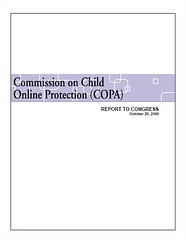
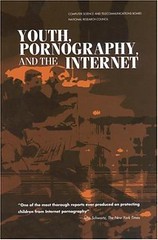
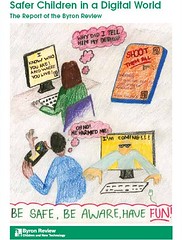
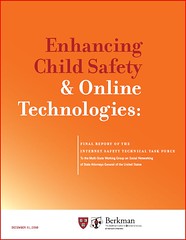
 Continue reading →
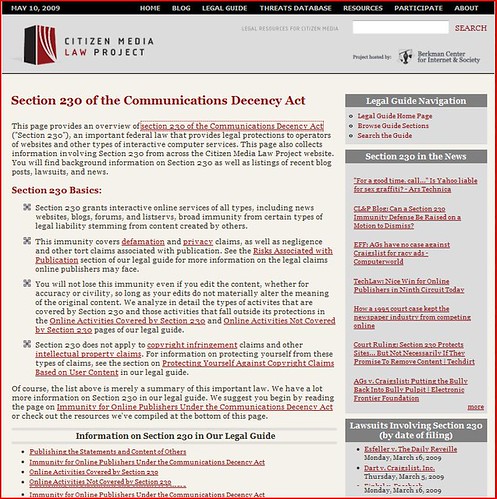
If you’re a cyberlaw geek or tech policy wonk who needs to keep close tabs on Sec. 230 developments, here’s a terrific resource from the Citizen Media Law Project up at the Harvard Berkman Center. The site offers a wealth of background info, including legislative history, all the relevant case law surrounding 230, and breaking news on this front. Just a phenomenal resource; a big THANK YOU! to the folks at CMLP who put this together.
If you’re interested in these issues, you might also want to check out this friendly debate that Harvard’s John Palfrey and I engaged in over at Ars recently as well as my essay on how Sec. 230 has spawned a “utopia of utopias” online.
Today, the U.S. Department of Commerce’s National Telecommunications and Information Administration (NTIA) announced the members of the new Online Safety and Technology Working Group (OSTWG). I am honored to be among those chosen to participate in this new task force and I look forward to continuing the work started last year with the Harvard Berkman Center’s Internet Safety Technical Task Force (ISTTF), which I also served on. I was very proud of the work done by the ISTTF and the impressive final report that Prof. John Palfrey crafted to reflect our findings. I am eager to investigate these issues further and take a look at the latest research and technologies that can help us better understand how to protect our kids online while also protecting the free speech and privacy rights of Netizens.
The new NTIA working group, which was established under the “Protecting Children in the 21st Century Act,” will report to the Assistant Secretary of Commerce for Communications and Information on industry-implemented online child safety tools and efforts. Within a year of convening its first meeting, the group will submit a report of its findings and make recommendations on how to increase online safety measures.
Below the fold I have listed the complete roster of OSTWG task force members. I very much looking forward to working with this outstanding group. And I’m happy to report that my TLF blogging colleague Braden Cox will be joining me on this task force!
Continue reading →
 Ars Technica has just posted the transcript of a friendly debate I recently engaged in with Harvard University law professor John Palfrey about the future of Section 230 of the Communications Decency Act and online liability more generally. Our debate got started last fall, shortly after I penned a favorable review of John’s excellent new book (with Urs Gasser), Born Digital: Understanding the First Generation of Digital Natives. [Listen to my podcast with John about it here.] Although I enjoyed John’s book, I also raised some concerns about his call in the book to reopen and revise Section 230, specifically to address child safety concerns. At the time, John and I were working together on the Berkman Center’s “Internet Safety Technical Task Force” and we decided to begin an e-mail exchange about the future of 230 and online liability norms more generally. The result was the debate that Ars has just published.
In our exchange, I begin by asking John to more fully develop some statements and proposals he sets forth in
Born Digital. Specifically, he and co-author Urs Gasser argue that: “The scope of the immunity the CDA provides for online service providers is too broad” and that the law “should not preclude parents from bringing a claim of negligence against [a social networking site] for failing to protect the safety of its users.” They also suggest that “There is no reason why a social network should be protected from liability related to the safety of young people simply because its business operates online.” Specifically, the call for “strengthening private causes of action by clarifying that tort claims may be brought against online service providers when safety is at stake,” although they do not define those instances.
Using those proposals as a launching point for our discussion, I challenge John as follows:
I’m troubled by your proposals because I believe Section 230 has been crucial to the success of the Internet and the robust marketplace of online freedom of speech and expression. In many ways — whether intentional or not — Section 230 was the legal cornerstone that gave rise to many of the online freedoms we enjoy today. I fear that the proposal you have set forth could reverse that. It could lead to crushing liability for many online operators-and not just giants like MySpace or Facebook-that might not be able to absorb the litigation costs. Could you elaborate a bit more about your proposal and explain why you think the time has come to alter Section 230 and online liability norms?
And John does and then we go back-and-forth from there. Again, you can read the whole exchange over at Ars.
It was a great pleasure to engage in this exchange with Prof. Palfrey and I look forward to what others have to say in response to our debate. I am working on a longer paper looking broadly at the rising threats to Sec. 230 and the increasing calls for expanded online liability and middleman deputization. I will use whatever feedback I get from this exchange to refine my paper and proposals.
On this episode of “Tech Policy Weekly,” we’re launching a new format called “Tech Book Corner” that will feature occasional conversations with the authors of important new books about technology policy and the other issues that we debate frequently at the Tech Liberation Front blog.
On this debut episode of Book Corner, we are joined by John Palfrey, a professor of law at Harvard University and the co-director of the Berkman Center for Internet & Society at Harvard. Along with his Berkman Center colleague Urs Gasser, Prof. Palfrey has recently co-authored Born Digital: Understanding the First Generation of Digital Natives, which was published last summer by Basic Books and which you can find out more information about at www.borndigitalbook.com. [Incidentally, I reviewed Born Digital here last October and I also named it one of the most important technology policy books of 2008.]
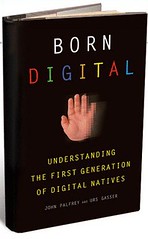
In our discussion, Prof. Palfrey explains who exactly counts as a “digital native” and tells us why he decided to write a book about them. He discusses why he believes that there has been some overreaction by older generations to fears about this Digital Generation and he argues that we need “to separate what we need to worry about from what’s not so scary” and “what we ought to resist from what we ought to embrace.” He then outlines how we should think about these issues and concerns going forward, and he stresses the importance of “balancing caution with encouragement” as we do so. Finally, he then applies that framework to three specific issues: privacy, child safety, and copyright.
It’s an interesting conversation and you can begin listening to it immediately by downloading the MP3 file here or by just clicking the play button below!
[display_podcast]
Just wanted draw everyone’s attention to a couple of great podcasts about online safety issues that include comments from members of the Internet Safety Technical Task Force (ISTTF). As I mentioned a few weeks ago, the ISTTF project and final report represent a major milestone in the discussion about online safety in America, and I was honored to serve as a member of this task force.
This in-depth “Radio Berkman” podcast featuring ISTTF director John Palfrey and co-director Dena Sacco is a really excellent (but lengthy!) overview of the ISTTF’s word. Here’s a shorter podcast that Prof. Palfrey did with Larry Magid of CNet. And I also recommend this excellent NPR “On the Media” podcast featuring my friend Stephen Balkam of the Family Online Safety Institute (FOSI).
For those interested, down below you will find a running list I have been keeping of coverage of the ISTTF. (I will try to keep updating this list here).
Continue reading →

 The Technology Liberation Front is the tech policy blog dedicated to keeping politicians' hands off the 'net and everything else related to technology.