I’ve had quite enough of service providers of one kind or another making me part of their new social network. (I’m looking at you, Google Buzz.)
So here’s an article about how to control iTunes’ new Ping social network, which comes with iTunes 10.
Apple did a couple things right: They made it very clear in the “Terms and Conditions” click-through for the new version of the software that you’re getting Ping. It also appears to default to “off.” That’s what I found when I followed the directions in the article linked above, anyway.
If you want to be in yet another social network, you can enable Ping using those directions. You also might want to get your head checked. Something might be wrong in your
real life.
Oh yeah, that was me. And a lot of others. Well, we were wrong. The mobile app store market (Apple, Android, etc) is brimming with a bonanza of micro-business opportunities for producers and consumers alike. I am consistently amazing by the range of offerings available today, the vast majority of which remain free of charge. But what is more impressive is the growing array of applications and games available for mere pennies. Sure, some are more than a buck — but not that much more. I was just looking through the 40+ apps that I’ve got on my Droid right now (not really sure how many I’ve downloaded overall since I’ve deleted a lot) and I would guess that I paid for at least 25% of them–many after being “upsold” by first trying the free versions and then buying. Yes, I know there continues to be a debate about what counts as a “micropayment,” but the fact that so many more people are paying just a couple of bucks or less for content in these mobile app stores suggests that its only going to easier for people to pay even smaller sums for content in coming years.
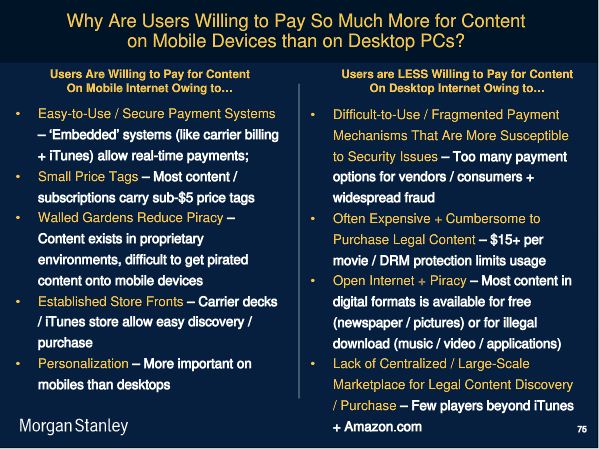
What got me thinking about all this was slide #75 in Mary Meeker’s latest slideshow about Internet trends. The Morgan Stanley web guru notes that users are more willing to pay for content on mobile devices than they are on desktop computers for a number of reasons, but the first of which she listed was: “Easy-to-Use/Secure Payment Systems — embedded systems like carrier billing and iTunes allow real-time payment.” The important point here is that the combination of these slick, well-organized online app stores + secure, super-easy billing systems have combined to overcome the so-called”mental transaction cost problem,” at least to some extent. We’re not nearly as reluctant today to surf away when something says “$0.99” on our screen. Increasingly, we’re hitting the “Buy” button.
 Continue reading →
By Adam Thierer & Berin Szoka
The Wall Street Journal reports (see Financial Times, too) that “CBS Corp. and Walt Disney Co. are considering participating in Apple Inc.’s plan to offer television subscriptions over the Internet, according to people familiar with the matter, as Apple prepares a potential new competitor to cable and satellite TV.”
If Apple signs up enough networks to launch a viable service—still a very big if—it could ultimately alter the economics of the television business. The service could undermine the big bundles of channels that cable, satellite and telecommunications companies, including Comcast Corp. and DirecTV Inc., have traditionally sold in packages to subscribers.
And Brian Stelter of The New York Times says of the plan:
Broadband Internet subscriptions to TV networks could potentially destabilize the bedrock of the television business, which relies on subscribers paying for dozens of bundled channels.
As we have noted have noted here in our ongoing “Cutting the Video Cord” series, it’s just another sign that the video marketplace is vibrantly competitive and experiencing unprecedented innovation. So, why is Washington regulating this marketplace like we still live in the disco era?
The
New York Times itself seems to be of two minds on this: Brian seems to recognize that the rise of Internet television means that cable providers no longer have any sort of special “gatekeeper” or “bottleneck” control over the programming available to consumers, just as his colleague Nick Bilton at the Times‘ BITS blog recently declared that “Cable Freedom Is a Click Away.” And yet, as Berin recently noted, when the DC Circuit struck down the FCC’s outdated 30% cap on the number of homes a single cable provider could serve (based on “gatekeeper” concerns) back in September, the Times editorial page bemoaned the decision and demanded further regulation of the cable industry—even as Internet TV is fundamentally changing the marketplace for video programming and rendering moot “gatekeeper” concerns far more effectively than any law could ever do.
“Right hand, meet Left hand. Howyadoinnicetameetcha!”
I’ve always generally agreed with the conventional wisdom about micropayments as a method of funding online content or services: Namely, they won’t work. Clay Shirky, Tim Lee, and many others have made the case that micropayments face numerous obstacles to widespread adoption. The primary issue seems to be the “mental transaction cost” problem: People don’t want to be diverted–even for just a few seconds–from what they are doing to pay a fee, no matter how small. [That is why advertising continues to be the primary monetization engine of the Internet and digital services.]
 That being said, I keep finding examples of how micropayments do work in some contexts and it has kept me wondering if there’s still a chance for micropayments to work in other contexts (like funding media content). For example, I mentioned here before how shocked I was when I went back and looked at my eBay transactions for the past couple of years and realized how many “small-dollar” purchases I had made via PayPal (mostly dumb stickers and other little trinkets). And the micropayment model also seems to be doing reasonably well in the online music world. In January 2009, Apple reported that the iTunes Music Store had sold over 6 billion tracks.
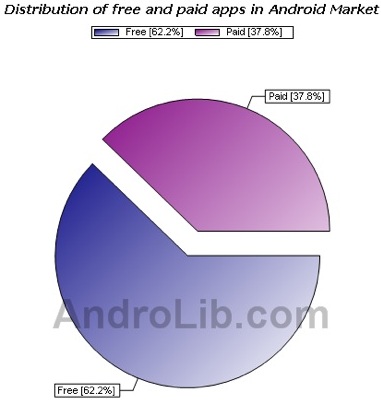
And then there are mobile application stores. Just recently I picked up a Droid and I’ve been taking advantage of the rapidly growing Android marketplace, which recently hit the 20,000 apps mark. Like Apple’s 100,000-strong App Store, there’s a nice mix of paid and free apps, and even though I’m downloading mostly freebies, I’ve started buying more paid apps. Many of them are “upsells” from free apps I downloaded. In most cases, they are just 99 cents. A few examples of paid apps I’ve downloaded or considered buying: Stocks Pro, Mortgage Calc Pro, Currency Guide, Photo Vault, Weather Bug Elite, and Find My Phone. And there are all sorts of games, clocks, calendars, ringtones, heath apps, sports stuff, utilities, and more that are 99 cents or $1.99. Some are more expensive, of course.
Continue reading →
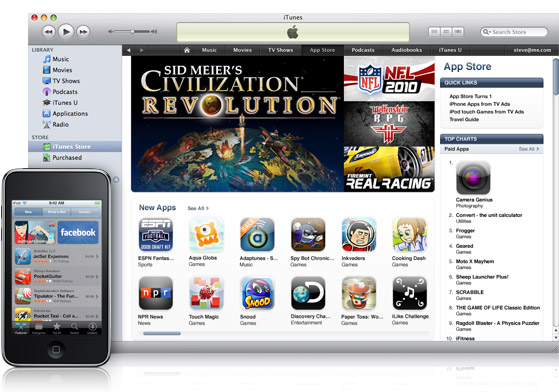
FCC Chairman Julius Genachowski suggested at an FCC field hearing this week that the federal government might create its own “version of iTunes.” Multichannel News reports:
The chairman asked panelists to think about the value of a clearinghouse where best practices could be shared. He suggested that might be a way to spur the spin-off of public-sector apps from private sector initiatives and to prevent reinventing the wheel, rather than tapping into what is already being done. There is not a lot of shared info out there, he said.
If all we’re talking about is a clearinghouse that provides easy access to apps for government-developed apps, Google Code or SourceForge may be a better model than iTunes—though perhaps without the instant name recognition by ordinary consumers. Like SourceForge, Google Code allows hosting and management of open source projects, including Google’s own products. iTunes, by contrast, essentially offers consumers finished apps. Also, iTunes is a stand-alone piece of software, of which the Apps Store is just one part, while I can’t imagine why Genachowski’s “store” need be anything more than a website.
Whatever the analogy, such a “store” could well be a valuable tool for sharing the benefits of software development by government employees, both with the private sector and among federal agencies as well as state, local and even foreign governments. But what, exactly, Genachowski had in mind for the store remains awfully vague: Multichannel News mentions, as examples, “applications that do everything from monitoring heart rates and blood sugar to checking for greenhouse gas levels.” If the idea ever goes anywhere, it should be based on two principles:
- All apps should be open source and available to all users to use as they see fit.
- The store should be limited to apps developed by government employees to meet the needs of government agencies.
Continue reading →
Adam Thierer and I have warned that neutrality regulation, once imposed on broadband providers, will
extend to other Internet services wherever “gatekeepers” are alleged to control access to a platform used by others. In short, the slippery slope of creeping common carriage is real and we’re already heading down it, with cyber-collectivist “luminaries” like Jonathan Zittrain and Frank Pasquale demanding neutrality regulation for devices, application platforms like iTunes and Facebook, and search!
TLF Reader Jim Reardon made a particularly astute observation on my post asking whether Americans really want net neutrality regulation:
Regulation of any service, product or industry is preceded by definition. Once defined, it is subject to taxation.
[Net Neutrality regulation] is a prelude to taxation of Internet products and services. It will likely start with telephony services and proceed accordingly to financial services, and continue from there.
As such, the activity is essentially neutral insofar as technology innovation is concerned — so long as applicable taxes are paid the government will ensure that the service is not disfavored by the network operators.
Absolutely right! One of the greatest barriers to government regulation and taxation of the Internet today is the lack of clear definitions: The FCC rules will tell you precisely what “cable television” or “commercial radio” mean, but the concepts of “social networking,” “Internet video,” “blogging,” and even “search” are indeterminate and constantly evolving.
Ronald Reagan once quipped:
Government’s view of the economy could be summed up in a few short phrases: If it moves, tax it. If it keeps moving, regulate it. And if it stops moving, subsidize it.
Fortunately, government’s
ability to implement this view depends—to paraphrase President Clinton—”on what the meaning of the word ‘is’ ‘it’ is”: Allowing “it” to remain beautifully amorphous may be the best way to keep government at bay.
Over at TechDirt, Mike Masnick has an interesting post asking “Why Did Apple Approve Spotify?” which builds on an AdAge column asking a similar question: “Did Apple Sacrifice ITunes With Latest Apps?” As the title of that AdAge piece suggests, some folks are wondering if Apple shot itself in the foot by approving Spotify, a music streaming app that some regard as a potential iTunes killer. I don’t really have any comment on the business angle here, rather, I wanted to just comment on Mike’s suggestion that one possible explanation for Apple’s approval of the app is that:
As we noted when the app was approved, Apple appears to be somewhat gunshy, following the FCC inquiry into why it “blocked” Google Voice on the iPhone (and, yes, Apple still insists it didn’t actually block the app, but Google says otherwise). Given the scrutiny, Apple probably realized that it was in for some serious political trouble if it blocked an app like Spotify, which would have received a lot of press attention. Oddly, the AdAge article doesn’t mention this at all.
Indeed, it is odd that
AdAge didn’t bother mentioning that fact. But what I find doubly odd here is that nobody is even blinking an eye at the prospect of such political meddling with — or even possible FCC regulation of — Apple, iTunes, or music streaming market in general! Seriously, have we gotten to the point now in our Bold New World of Neutrality Regulation that innovative high-tech companies must live in fear of constant regulatory intervention even when they completely lack any statutory authority to play these games? Moreover, does anyone think that the a bunch of Beltway bureaucrats can micro-manage music and high-tech application markets and give us more options than we have today?
I know the prospect of such meddling makes some academics and regulatory activists groups happy, but I can’t see how this ends well for consumers or high-tech markets more generally. Regardless, for those of you who laugh when we suggest that the slippery slope of regulation is real, consider this case to be Exhibit A. Or perhaps it’s Exhibit B since the Google Voice spat with Apple was already moving the FCC in the direction of becoming a device regulator and applying “handset neutrality” principles that have no basis in law. It’s your anything-goes government at work.
 The Wall Street Journal reports today that student loan borrowing for college “in the 2008-09 academic year grew about 25% over the previous year, to $75.1 billion,” with the average student borrowing $13,172 to pay for college. So it should come as an enormous relief that one Internet start-up, StraighterLine, has essentially made the university fully virtual, offering classes for just $99/month. While this may seem like a boon for students, especially the millions of Americans for whom even community college tuition seems an insurmountable obstacle to climbing up the economic ladder, such “e-Learning” offerings are already, predictably, coming under attack by entrenched interests in “Big Ed” (the professoriat!) as the “media-software–publishing–E-learning-complex.”
In Washington Monthly, Kevin Carey explains why “The next generation of online education could be great for students—and catastrophic for universities.” In a nutshell, the story is the same basic theme of Chris Anderson’s book Free!: digital distribution of information will ultimately drive costs down to zero. Carey shows how universities are essentially facing the same sorts of pressure from disruptive innovation as newspapers—except with more capital costs:
Colleges are caught in the same kind of debt-fueled price spiral that just blew up the real estate market. They’re also in the information business in a time when technology is driving down the cost of selling information to record, destabilizing lows.
In combination, these two trends threaten to shake the foundation of the modern university, in much the same way that other seemingly impregnable institutions have been torn apart. In some ways, the upheaval will be a welcome one. Students will benefit enormously from radically lower prices—particularly people like Solvig who lack disposable income and need higher learning to compete in an ever-more treacherous economy. But these huge changes will also seriously threaten the ability of universities to provide all the things beyond teaching on which society depends: science, culture, the transmission of our civilization from one generation to the next.
Whether this transformation is a good or a bad thing is something of a moot point—it’s coming, and sooner than you think.
Continue reading →
 The latest edition (Version 4.0) of my PFF special report on “Parental Controls and Online Child Protection: A Survey of Tools & Methods” is now up. For those not familiar with the report, it explores the market for parental control tools, rating schemes, education and media literacy efforts, and various other tools, methods, and initiatives aimed at promoting online child safety. After evaluating that state of this market, I conclude: “There has never been a time in our nation’s history when parents have had more tools and methods at their disposal to help them decide what constitutes acceptable media content in their homes and in the lives of their children.” Moreover, I believe that the parental controls and content management tools cataloged in the report represent a better, less restrictive alternative to government regulation.
Version 4.0 of the report is now over 250 pages long (up from 200 pages in Version 3.0) and it contains almost 70 exhibits (up from 50), 725 references (up from roughly 500), and numerous updates in all five sections of the book. Major updates have been made to the Internet, social networking, and mobile media sections, reflecting the growing importance of those sectors and issues. Other new sections or appendices have also been added to the report, including:
- a new section examining how many households really need parental control tools;
- a new appendix on the downsides of mandatory parental controls and restrictive default settings;
- a new section on the dangers of “deputizing the online middleman” solution as an approach to solving child safety concerns;
- a new appendix reviewing the findings of 5 past online safety task forces;
- … and much more.
I issue major updates once a year and 1 or 2 minor tweaks during the course of the year to reflect the evolution of the parental control and online child safety marketplace and debate. The report is available free-of-charge on the PFF website, and the previous editions of the report are housed there too in case you want to see how it has evolved over the past couple of years. For those interested in taking a quick look at the report, I have embedded it down below the fold as a Scribd file. Finally, as is always the case, I encourage readers to send me updates and suggestions for how to improve the report and I will incorporate them into future versions.
Continue reading →
 In episode #44 of “Tech Policy Weekly,” Berin Szoka and Adam Thierer engage in a debate with Internet security expert Chris Soghoian, who is a student fellow at the Berkman Center for Internet & Society at Harvard University. He is also a Ph.D. candidate at Indiana University’s School of Informatics.
Chris is an up-and-coming star in the field of cyberlaw and technology policy as he has quickly made a name for himself in debates over privacy policy, data security, and government surveillance. He straddles the line between academic and activist, and the role he often plays in many tech policy debates is somewhat akin to what Ralph Nader has done in many other fields through the years. Except, in this case, instead of “Unsafe at Any Speed” it’s more like “Unsafe at Any Setting,” since Chris is often raising a stink about what he regards as unjust or unreasonable privacy or security settings that various online websites or service providers use.
On the show, Chris talks about two of his recent crusades to get certain online providers to change their default settings to improve user security or privacy: (1) His effort this week to get major email providers—and Google in particular—to change their default security settings on their email offerings; and (2) his earlier crusade to create permanent opt-out cookies to stop behavioral advertising by advertising networks.
There are several ways to listen to today’s TLF Podcast. You can press play on the player below to listen right now, or download the MP3 file. You can also subscribe to the podcast by clicking on the button for your preferred service. (And do us a favor, Digg this podcast!)
[display_podcast]
Continue reading →

 The Technology Liberation Front is the tech policy blog dedicated to keeping politicians' hands off the 'net and everything else related to technology.