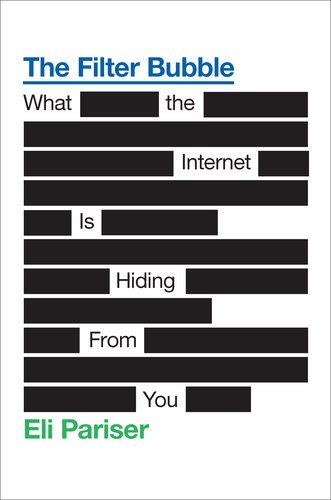
 In my latest weekly Forbes column is entitled “The Internet Isn’t Killing Our Culture or Democracy” and it’s a short review of the new book, The Filter Bubble: What the Internet is Hiding from You, by MoveOn.org board president Eli Pariser. As I note in my essay, Pariser’s book covers some very familiar ground already plowed by others in the burgeoning Internet pessimism movement:
[The Filter Bubble] restates a thesis developed a decade ago in both Cass Sunstein’s Republic.com and Andrew L. Shapiro’s The Control Revolution, that increased personalization is breeding a dangerous new creature—Anti-Democratic Man. “Democracy requires citizens to see things from one another’s point of view,” Pariser notes, “but instead we’re more and more enclosed in our own bubbles.” Pariser worries that personalized digital “filters” like Facebook, Google, Twitter, Pandora, and Netflix are narrowing our horizons about news and culture and leaving “less room for the chance encounters that bring insights and learning.” “Technology designed to give us more control over our lives is actually taking control away,” he fears.
Pariser joins a growing brigade of Internet pessimists. Almost every year for the past decade a new book has been published warning that the Internet is making us stupid, debasing our culture, or destroying social interaction. Many of these Net pessimists—whose ranks include Andrew Keen (The Cult of the Amateur), Lee Siegel (Against the Machine), Jaron Lanier (You Are Not a Gadget) and Nicholas Carr (The Shallows)—lament the rise of “The Daily Me,” or the rise of hyper-personalized news, culture, and information. They claim increased information and media customization will lead to close-mindedness, corporate brainwashing, an online echo-chamber, or even the death of deliberative democracy.
If you’ve read anything I’ve written on this topic in recent years, you will not be surprised to hear that I disagree with Pariser and these other Net pessimists when it comes to fears about hyper-personalization and user customization. As I noted in my recent book chapter, ” The Case for Internet Optimism, Part 1 – Saving the Net From Its Detractors“: Continue reading →

 The Technology Liberation Front is the tech policy blog dedicated to keeping politicians' hands off the 'net and everything else related to technology.