The Treasury Department today announced that it would grant the State Department’s December request (see the Iran letter here) for a waiver from U.S. embargoes that would allow Iranians, Sudanese and Cubanese to download “free mass market software … necessary for the exchange of personal communications and/or sharing of information over the internet such as instant messaging, chat and email, and social networking.”
I’m delighted to see that the Treasury Department is implementing Secretary Clinton’s pledge to make it easier for citizens of undemocratic regimes to use Internet communications tools like e-mail and social networking services offered by US companies (which Adam discussed here). It has been no small tragedy of mindless bureaucracy that our sanctions on these countries have actually hampered communications and collaboration by dissidents—without doing anything to punish oppressive regimes. So today’s announcement is a great victory for Internet freedom and will go a long way to bringing the kind of free expression we take for granted in America to countries like Iran, Sudan and Cuba.
But I’m at a loss to explain why the Treasury Department’s waiver is limited to free software. The U.S. has long objected when other countries privilege one model of software development over another—and rightly so: Government should remain neutral as between open-source and closed-source, and between free and paid models. This “techno-agnosticism” for government is a core principle of cyber-libertarianism: Let markets work out the right mix of these competing models through user choice!
Why should we allow dissidents to download free “Web 2.0” software but not paid ones? Not all mass-market tools dissidents would find useful are free. Many “freemium” apps, such as Twitter client software, require purchase to get full functionality, sometimes including privacy and security features that are especially useful for dissidents. To take a very small example that’s hugely important to me as a user, Twitter is really only useful on my Android mobile phone because I run the Twidroid client. But the free version doesn’t support multiple accounts or lists, which are essential functions for a serious Tweeter. The Pro version costs just $4.89—but if I lived in Iran, U.S. sanctions would prevent me from buying this software. More generally, we just don’t know what kind of innovative apps or services might be developed that would be useful to dissidents, so why foreclose the possibility of supporting them through very small purchases? Continue reading →
Lots of good things in The Washington Post today following up on U.S. Secretary of State Hillary Clinton’s historic address last week about the importance of global Internet freedom. First, The Post has published a powerful supporting statement from Sweden’s Minister of Foreign Affairs, Carl Bildt, entitled, “Tear Down These Virtual Walls.” Bildt notes that:
Two decades ago a wall made of concrete, built to divide the free and unfree, was torn down. Today it is the freedom of cyberspace that is under threat from regimes as keen as dictatorships past to control and limit the possibilities of their citizens. They are trying to build firewalls against freedom. At the end of the day, I am convinced they are fighting a losing battle — that cyber walls are as certain to fall as the walls of concrete once did.
He then goes on to argue that, following Secretary Clinton’s address last week, “We should now forge a new transatlantic partnership for protecting and promoting the freedoms of cyberspace. Together, we should call for all these walls to be torn down.” He continues:
Much like the way the rule of the law is critical to protecting the freedoms we enjoy as citizens in our societies, and international law protects the peace between our nations, we must seek to shape the rules that will protect the rights and the freedom of cyberspace.
Importantly,
The Washington Post itself also editorialized today about “The Internet War.” Continue reading →
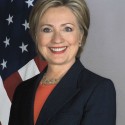 This morning at the Newseum in Washington, DC, U.S. Secretary of State Hillary Rodham Clinton delivered remarks on Internet freedom and the future of global free speech and expression. [Transcript is here + video.] It will go down as a historic speech in the field of Internet policy since she drew a bold line in the cyber-sand regarding exactly where the United States stands on global online freedom. Clinton’s answer was unequivocal: “Both the American people and nations that censor the Internet should understand that our government is committed to helping promote Internet freedom.” “The Internet can serve as a great equalizer,” she argued. “By providing people with access to knowledge and potential markets, networks can create opportunities where none exist.”
Unfortunately, however, “the same networks that help organize movements for freedom… can also be hijacked by governments to crush dissent and deny human rights.” Echoing Winston Churchill’s famous “iron curtain” speech, Sec. Clinton argued that “With the spread of these restrictive practices, a new information curtain is descending across much of the world.” She noted that virtual walls are replacing traditional walls in many nations as repressive regimes seek to squash the liberties of their citizenry. That’s why the Administration’s bold stand in favor of online freedom is so essential.
Importantly, Sec. Clinton made it clear that the Obama Administration is ready to commit significant resources to this effort. She said that, over the next year, the State Department plans to work with others to establish a standing effort to promote technology and will invite technologists to help advance the cause through a new “innovation competition” that will promote circumvention technologies and other technologies of freedom. Sec. Clinton also challenged private companies to stand up to censorship globally and challenge foreign governments when they demand controls on the free flow of information or digital technology.
That is particularly important because Secretary Clinton’s speech comes on the heels of the recent news that Google and at least 30 other Internet companies were the victims of cyberattacks in China, which raises profound questions about the future of online freedom and cybersecurity. Sec. Clinton’s remarks will make it clear to online operators that the U.S. government stands prepared to back them up when they challenge the censorial policies of repressive foreign regimes.
Continue reading →
Well, I don’t often get a chance to sing the praises of Hillary Clinton, so let me take the opportunity to loudly applaud her stand on religious defamation policies, which are becoming a growing international concern. According to The Washington Post, while unveiling the State Department’s 2009 Report on International Religious Freedom:
Secretary of State Hillary Rodham Clinton criticized on Monday an attempt by Islamic countries to prohibit defamation of religions, saying such policies would restrict free speech. … While unnamed in Clinton’s speech, the Organization of the Islamic Conference, a group of 56 Islamic nations, has been pushing hard for the U.N. Human Rights Council to adopt resolutions that broadly bar the defamation of religion. The effort has raised concerns that such resolutions could be used to justify crackdowns on free speech in Muslim countries.
Here’s specifically what Secretary Clinton had to say:
some claim that the best way to protect the freedom of religion is to implement so-called anti-defamation policies that would restrict freedom of expression and the freedom of religion. I strongly disagree. The United States will always seek to counter negative stereotypes of individuals based on their religion and will stand against discrimination and persecution. But an individual’s ability to practice his or her religion has no bearing on others’ freedom of speech. The protection of speech about religion is particularly important since persons of different faiths will inevitably hold divergent views on religious questions. These differences should be met with tolerance, not with the suppression of discourse.
Quite right. Thank you, Secretary Clinton, for this bold stand. Freedom of religious worship and expression — including the criticism of religion — is essential. Now, can we talk about your old positions on video game regulation?!
http://c.brightcove.com/services/viewer/federated_f8/1705667530
 Caroline Kennedy has abruptly dropped her bid for Hillary Clinton’s Senate seat. Her father, of course, probably ties with Andrew Mellon and Ronald Reagan as one of the greatest supply-side tax-cutters of all time. The economic boom JFK unleashed probably makes up for whatever damage—personal or national—done by the Kennedy clan over the years.
But whatever one thinks of Caroline in particular or the Kennedys in general, her departure from the “race” to succeed Clinton may go down in history as a catastrophe for Internet freedom, since it likely means that NY Attorney General Andrew Cuomo will take the seat.
Cuomo has cast himself as a hero fighting to protect children by strong-arming ISPs into shutting down Usenets, as Ryan has explained. Jim correctly points out the “shake down” nature of Cuomo’s operation. And Adam has explained that this is all part of a broader assault on online free speech. While few are willing to discuss this taboo subject, it’s fair to ask whether the “solutions” Cuomo are really the most effective way to deal with the scourge of child pornography.
I’ll bet good money that if Cuomo makes it into the Senate, he’ll continue this fight on a broader scale—perhaps by pushing for legislation to mandate network-level filtering
a la Cleanfeed.
Update: Gov. Paterson has decided to appoint Rep. Kirsten Gillibrand to this seat rather than Cuomo. That’s the good news. The bad news is that this bully is still Attorney General of the Empire State. I have no doubt he’ll continue his war on free speech in his current position.
Tim Lee has been taking some heat here from Richard Bennett and Steve Schultze about various aspects of his new Net neutrality paper. I haven’t had much time this week to jump into these debates, but I did want to mention one important portion of Tim’s paper that is being overlooked. Specifically, I like the way Tim took head-on some of the silly free speech arguments being put forth as a rationale for net neutrality regulation. As Tim notes in the introduction of the paper:
Concerns that network owners will undermine free speech online are particularly misguided. Network owners have neither the technology nor the manpower to effectively filter online content based on the viewpoints being expressed, nor do profit-making businesses have any real incentive to do so. Should a network owner be foolish enough to attempt large-scale censorship of its customers, it would not only fail to suppress the disfavored speech, but the network would actually increase the visibility of the content as the effort at censorship attracted additional coverage of the material being censored.
I think that’s exactly right and, later in his paper (between pgs 22-3), Tim nicely elaborates about the “Herculean task” associated with any attempt by a broadband provider to “manipulate human communication.” Not only is it true, as Tim argues, that “no widescale manipulation would go unnoticed for very long,” but he is also correct in noting that the public and press backlash would be enormous.
Again, I agree wholeheartedly with all these sentiments, but I think Tim missed another important angle here when discussing the unfounded fears about corporate censorship and the misguided attempts to use free speech as a justification for imposing net neutrality regulations.
Continue reading →
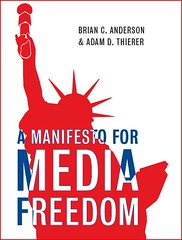 I’m pleased to announce the publication of A Manifesto for Media Freedom, which I co-authored with Brian C. Anderson of the Manhattan Institute. Brian serves as editor of Manhattan Institute’s excellent City Journal and he is the author of best-selling books like South Park Conservatives and Democratic Capitalism and Its Discontents.
In this little manifesto, we highlight one of the central ironies of the Information Age. Namely, that despite “the breathtaking abundance of new and old media outlets for obtaining news, information, and entertainment…”
many people hate this profusion, and never more than when it involves political speech. The current media market, they charge, doesn’t represent true diversity, or isn’t fair, or is subject to manipulation by a small and shrinking group of media barons. They want the government to regulate it into better shape, which just happens to be a shape that benefits them. Doing so… would be a disaster, a kind of soft or not-so-soft tyranny that would wipe out whole sectors of media, curtailing free speech and impoverishing our democracy.
In other words, instead of celebrating the unprecedented cornucopia of media choices at our collective disposal, many policymakers and media critics are calling for just as much media regulation as ever. We itemize these threats in our chapters and they include: efforts to revive the “Fairness Doctrine”, media ownership regulations, “localism” requirements, Net neutrality mandates, a la carte regulations, cable and satellite censorship, video game censorship, regulation of social networking sites, campaign finance-related speech restrictions, and so on.
In each case, we advance a pro-freedom paradigm to counter the advocates of media control. What do we mean by the “media freedom” that we advocate as the alternative to these new regulatory crusades? Here’s how we put it in the book:
Continue reading →
Senator Hillary Clinton (D-NY) proposed new legislation on Thursday that would make it a federal offense for retailers to sell a minor a video game that includes violent or sexual themes. Her bill would impose a $5000 fine on any retailer that sold a youngster a game that was classified as mature or violent under the video game industry’s voluntary ratings system.
The Clinton bill might best be thought of as a “hanging the industry with its own rope” regulatory scheme. That is, her bill would hijack the industry’s voluntary ratings system and then use it against them (and retailers) should someone choose to sell a game with mature or violent themes to someone under the age of 18.
Continue reading →

 The Technology Liberation Front is the tech policy blog dedicated to keeping politicians' hands off the 'net and everything else related to technology.