We’ve discussed extensively the controversy that recently erupted when Apple rejected Google Voice applications from the iPhone App Store. With the FCC sniffing around and tech pundits around the blogosphere weighing in on the merits of possible government intervention, it’s important to remember that jailbreaking an iPhone may be illegal under the Digital Millenium Copyright Act (DMCA). In other words, if you use a hack or workaround that enables you to run banned apps like Google Voice on your iPhone, you could be violating federal law.
The DMCA hasn’t stopped millions of iPhone owners from jailbreaking their phones and installing Cydia, an unofficial alternative to the official iPhone App Store. Cydia, which lets users download banned iPhone apps like Google Voice, has been installed on a whopping one in ten iPhones, according to its developers.
But jailbreaking programs and applications like Cydia are in risky legal territory. Developers who circumvent the iPhone’s copy protection systems are at risk of being sued by Apple, as are users who run jailbreaking software. Apple maintains that jailbreaking software is illegal under federal law, though it has not taken legal action against any unauthorized iPhone developers to date.
To clear up the muddy legal waters surrounding iPhone jailbreaking, Fred von Lohmann of the Electronic Frontier Foundation has asked the U.S. Copyright Office to grant a legal exemption to iPhone jailbreaking on the grounds that users should be able to install apps of their choice on the phone without risking civil or criminal sanctions. In a recent DeepLinks post, von Lohmann argues that the FCC should throw its weight behind EFF’s call for exempting jailbreaking from anti-circumvention rules.
Continue reading →
One reason AT&T may not like Google Voice is that it allows you to send and receive text messages for free. This has led many to argue that SMS are free to the carriers and they are overcharging. Congress is considering getting involved. Most recently there’s this from David Pogue in the NY Times:
The whole thing is especially galling since text messages are pure profit for the cell carriers. Text messaging itself was invented when a researcher found “free capacity on the system” in an underused secondary cellphone channel: http://bit.ly/QxtBt. They may cost you and the recipient 20 cents each, but they cost the carriers pretty much zip.
The price of a text message does sound ridiculous when you consider it on a per bit basis. The problem with thinking about it that way, though, is that it neglects the fact that AT&T had to build a network, and it has to maintain that network, before a text message can be “free.” AT&T charges customers so it can recoup its investment. It does so through voice and data service fees, but also through other fees, including for text messages. However it charges customers, it ultimately has to bring in enough to cover its costs or it goes out of business.
Now, if we passed a law today that said carriers could not charge for SMS because, after all, it’s free, we would see a an increase in the fees it charges for voice, data, and other services. The mix of prices for services we have right now is one the market will bear and consumers want, and there’s no reason to think that we could command a better one.
Better yet, if you want a “free” text messaging option, consider Boost Mobile, which offers just that. Of course, they have different voice prices and an older and slower network. In the end, they have to cover their costs, too.
 Despite my frequent disagreements with his policy conclusions, Farhad Manjooo of Slate is one of the most gifted tech policy pundits around today and everything he writes is worth reading (and I whole-heartedly agreed with his recent article on the high-tech and antitrust). Alas, I find myself again disagreeing with him again today.
In his latest column, “The Great iPhone Lockdown: Should the FCC force Apple to sell Google’s apps?” Manjoo responds to a recent essay by TLF contributor Ryan Radia (“Newsflash to FCC: The iPhone is a Closed Platform, and Consumers Love It“). In that essay, Ryan generally argued that: (a) a lot of people own and love the iPhone despite some silly restrictions on certain apps; and (b) if they don’t like that, there are plenty of other options from which they can choose. Consequently, regulation seems unwarranted and likely highly misguided in light of the potential unitended consequences in might yield. It’s an argument I very much agree with, of course. Anyway, Manjoo responds:
Radia’s argument isn’t crazy. Just the other day, I argued that the government shouldn’t go after Google for antitrust violations because the tech industry is fluid; companies that are on top today can fall tomorrow. So what if Apple rejects apps capriciously? If its actions are so terrible, consumers will eventually abandon it.
But then Manjoo counters that argument and goes completely off-the-rails with several assertions that I find quite perplexing: Continue reading →
Just when you thought the FCC’s investigation of the wireless industry couldn’t get any stranger, TechCrunch reports that the Commission has sent letters to AT&T, Apple, and Google inquiring about Apple’s recent decision to reject the Google Voice app from the iPhone App Store (as Berin discussed yesterday).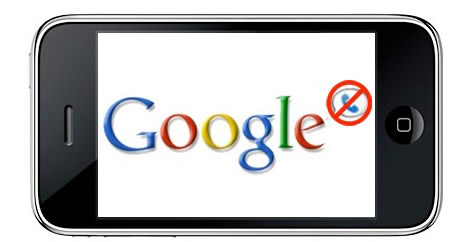
It’s been over two years since the original iPhone was launched, but it seems the FCC still doesn’t get it: the iPhone is very clearly a closed platform — a prototypical walled garden — and Apple has the final say on what applications users can install. When you buy an iPhone, you’re not simply buying a piece of hardware, but actually a package deal that includes software, hardware, and a wireless contract. Is this anti-consumer? 26 million consumers don’t think so. The iPhone 3GS, the latest version of the phone, is selling so fast that Apple’s CFO says they can’t make enough to meet demand!
Of course, the iPhone model isn’t for everyone. I, for one, don’t own one because I’m an obsessive tinkerer and prefer a phone that’s as open as possible. But not everyone shares my preferences. As mentioned above, over 26 million iPhones have been sold since June 2007, so openness clearly isn’t make-or-break for a lot of consumers. Who knows, maybe some people actually trust Apple and like the comfort of knowing that every app they can get comes with a seal of approval from Cupertino.
The FCC’s letter to Apple demands an explanation for why Google Voice was rejected. If Apple’s explanation doesn’t satisfy the FCC’s criteria — which, by the way, are entirely unclear — then what? Will the FCC force Apple to accept Google Voice? Say what you will about Apple’s app store track record, but the prospect of federal regulators having the final word on which applications smartphone owners can install hardly seems pro-consumer. The FCC can’t even figure out how to run its own website!
In some ways, the iPhone has perhaps been too successful for its own good. It’s so popular that many consumers seem to no longer view it as just another product but instead as an item to which they are entitled. Thus, bureaucrats and Congresscritters in search of political points are making a big fuss over the fact that the iPhone isn’t everything to everyone. Why can’t it be wide open? Why isn’t in available on every carrier nationwide? Why is it so expensive to purchase without a service contract?
Continue reading →
The iPhone-obsessed blogosphere is atwitter about the Apple”s exclusion of the Google voice application from the iPhone app store. On Friday, the FCC sent letters of inquiry to the two companies as well as AT&T.
Whatever one thinks about whether Apple and AT&T should be able to operate their own networks as they see fit, this cat-fight should at least demonstrate the pointlessness of the investigation opened by the FTC in May as to whether Apple and Google are violating the antitrust laws by having two members of their boards of directors in common: Google CEO Eric Schmidt and former Genentech CEO Art Levinson. If the two companies were, in fact, trying to collude in an anti-competitive manner, they don’t seem to be doing a very good job of it!
Meanwhile, if you don’t like how Apple runs its app store, don’t get an iPhone! If you already have one, you could follow the lead of TechCrunch’s Michael Arrington and simply cancel your existing iPhone contract to get a more “open” phone—such as one powered by Google’s Android operating system.
Me, I’m just waiting for Google Voice to offer number portability so I can start using the service without having to change the number I’ve had for the last five years—and plan to take to my ashen grave (somewhere beyond low Earth orbit).

 The Technology Liberation Front is the tech policy blog dedicated to keeping politicians' hands off the 'net and everything else related to technology.