Are you a student or young scholar looking for opportunities to advance your studies and future career opportunities? The Mercatus Center at George Mason University can help. I’ve been with Mercatus for 12 years now and the most rewarding part of my job has always been the chance to interact with students and up-and-coming scholars who are hungry to learn more and make their mark on the world. Of course, learning and researching takes time and money. Mercatus works with students and scholars in many different fields to help them advance their careers by offering them some financial assistance to make their dreams easier to achieve.
The Mercatus Center’s Academic & Student Programs team (ASP) are the ones that make all this happen. ASP is currently accepting applications for various fellowships running through the 2022-2023 academic year (for students) and 2023 calendar year (for our early-career scholars). ASP recruits, trains, and supports graduate students who have gone on to pursue careers in academia, government, and public policy. Additionally, ASP supports scholars pursuing research on the cutting edge of academia. Mercatus fellows have an opportunity to learn from and interact with an impressive collection of Mercatus faculty, affiliated scholars, and visitors.
ASP offers several different fellowship programs to suit every need. Our fellows explore and discuss the foundations of political economy and public policy and pursue research on pressing issues. For graduate students who follow this blog and are generally interested in the big questions surrounding innovation, we especially encourage you to consider the Frédéric Bastiat Fellowship which will be premiering its innovation study track for the 2022-2023 academic year. I usually am an instructor at the session on tech and innovation policy.
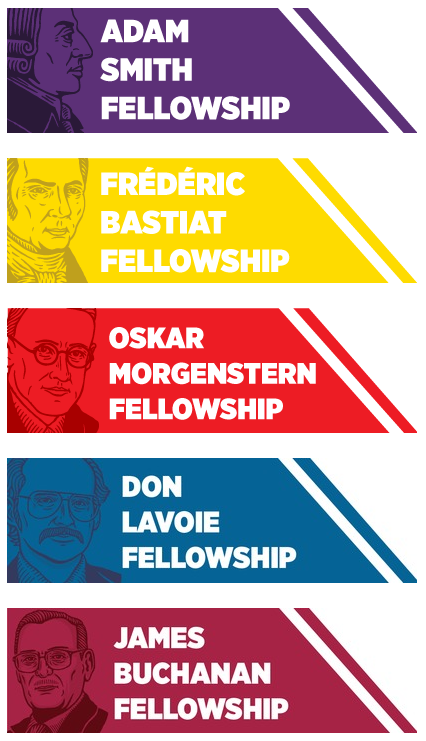
Here are more details on all the academic fellowships that Mercatus currently offers. Please pass along this information to any students or early-career scholars who might be interested.
Randall Stross discusses his recent book: The Launch Pad: Inside Y Combinator, Silicon Valley’s Most Exclusive School for Startups. Stross’s behind-the-scenes look at Y Combinator details how the seed fund has been able to produce young entrepreneurs and successful startups such as Dropbox and Airbnb. Stross also discusses Y Combinator’s early history, the typical Y Combinator participant, the fund’s rate of return, the gender gap in the program, and the reason Silicon Valley has become the epicenter for startups.
I’ve always generally agreed with the conventional wisdom about micropayments as a method of funding online content or services: Namely, they won’t work. Clay Shirky, Tim Lee, and many others have made the case that micropayments face numerous obstacles to widespread adoption. The primary issue seems to be the “mental transaction cost” problem: People don’t want to be diverted–even for just a few seconds–from what they are doing to pay a fee, no matter how small. [That is why advertising continues to be the primary monetization engine of the Internet and digital services.]
That being said, I keep finding examples of how micropayments do work in some contexts and it has kept me wondering if there’s still a chance for micropayments to work in other contexts (like funding media content). For example, I mentioned here before how shocked I was when I went back and looked at my eBay transactions for the past couple of years and realized how many “small-dollar” purchases I had made via PayPal (mostly dumb stickers and other little trinkets). And the micropayment model also seems to be doing reasonably well in the online music world. In January 2009, Apple reported that the iTunes Music Store had sold over 6 billion tracks.
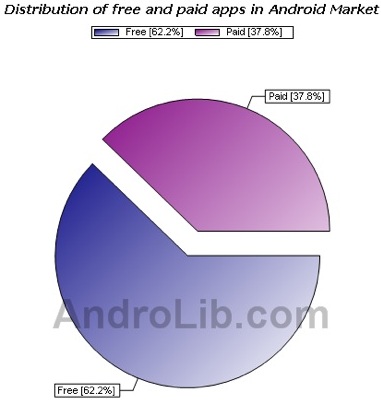
And then there are mobile application stores. Just recently I picked up a Droid and I’ve been taking advantage of the rapidly growing Android marketplace, which recently hit the 20,000 apps mark. Like Apple’s 100,000-strong App Store, there’s a nice mix of paid and free apps, and even though I’m downloading mostly freebies, I’ve started buying more paid apps. Many of them are “upsells” from free apps I downloaded. In most cases, they are just 99 cents. A few examples of paid apps I’ve downloaded or considered buying: Stocks Pro, Mortgage Calc Pro, Currency Guide, Photo Vault, Weather Bug Elite, and Find My Phone. And there are all sorts of games, clocks, calendars, ringtones, heath apps, sports stuff, utilities, and more that are 99 cents or $1.99. Some are more expensive, of course.
Lori Drew was convicted late last year on charges related to her role in a cruel hoax that led to the tragic suicide of thirteen-year old Megan Meier in Missouri in 2006. But today, at her sentencing, the judge threw out her convictions. Millions around the world were horrified by Megan’s fate, and many will probably be upset that Drew might go unpunished. But we need to separate three questions in this case:
Should the federal anti-hacking law under which she was convicted really be applied in such cases?
What, precisely, was Drew’s involvement?
The key question: What should be done about the general problems of cyberbullying and cyberharassment?
Misuse of the Anti-Hacking Statute
Judge Wu has yet to issue his written opinion but seems to have agreed with the various experts on Internet law who argued that, however tragic the Meier case was, the Computer Fraud & Abuse Act (CFAA) should not have been applied to Drew. Most notably, the Electronic Frontier Foundation filed an Amicus Brief in support of Drew’s motion to dismiss the charges against her—summarized by Groklaw and the Harvard Journal of Law & Technology. Orin Kerr, a leading Internet law professor, felt so strongly about the consequences of using the CFAA to criminalize violations of privately written terms of service that he joined Drew’s defense team. Kerr demonstrated the problems of essentially allowing private parties to create the grounds for criminal offenses (if violated by users) by suggesting obviously ridiculous new terms of service for the Volokh Conspiracy, the group blog he writes on.
Hard as it may be for those who want to “see justice done” in this case, the CFAA just isn’t the right law to apply—which raises the question of whether new laws are needed, discussed below.
Uncertainty About Drew’s Role
The judge may also have been influenced by uncertainty as to Drew’s actual role in the case. Initial coverage of the story suggested that Drew created the fake MySpace persona of a teen boy (“Josh Evans”), then used that profile to woo Meier, a classmate of Drew’s daughter, only to deliberately—and cruelly—break her heart. After Missouri prosecutors and the FBI declined to press charges against Drew, federal prosecutors in California decided to do so, but Drew consistently maintained that it was not her idea to create the account. Continue reading →
We’ve just released a new PFF white paper (PDF) entitled, “Cyberbullying Legislation: Why Education is Preferable to Regulation.” In this 24-page study we note that, compared to previous fears about online predation, which have been greatly overblown, concerns about cyberbullying are more well-founded. Evidence suggests the cyberbullying is on the rise and that it can have profoundly damaging consequences for children.
Unsurprisingly, in the wake of a handful of high-profile cyberbullying incidents that resulted in teen/tween suicides, some state lawmakers began floating legislation to address the issue. More recently, two very different federal approaches have been proposed. One approach is focused on the creation of a new federal crime to punish cyberbullying, which would include fines and jail time for violators. In April 2008, Rep. Linda Sánchez (D-CA) introduced H.R. 1966 (originally H.R. 6123), the “Megan Meier Cyberbullying Prevention Act,” a bill that would create a new federal felony:
“Whoever transmits in interstate or foreign commerce any communication, with the intent to coerce, intimidate, harass, or cause substantial emotional distress to a person, using electronic means to support severe, repeated, and hostile behavior, shall be fined under this title or imprisoned not more than two years, or both.”
The other legislative approach is education-based and would create an Internet safety education grant program to address the issue in schools and communities. In mid-May, the “School and Family Education about the Internet (SAFE Internet) Act” (S. 1047) was introduced in the Senate by Sen. Robert Menendez (D-NJ) and in the House by Rep. Debbie Wasserman Schultz (D-FL). The measure proposes an Internet safety education grant program that will be administered by the Department of Justice, in concurrence with the Department of Education, and the Department of Health & Human Services. These agencies will also work in consultation with education, Internet safety, and other relevant experts to administer a five-year grant program, under which each grant will be awarded for a two-year period.
The Progress & Freedom Foundation has just launched the new Center for Internet Freedom. CIF offers an alternative to the proliferation of advocacy groups calling for government intervention online by offering timely analyses and critiques of proposals that diminish the vital role of free markets, free speech and property rights. We aim to drive the Internet policy debate in new directions by emphasizing a layered approach of technological innovation, user education, user self-help, industry self-regulation, and the enforcement of existing laws consistent with the First Amendment. Such an approach is a less restrictive—and generally more effective—alternative to increased regulation.
Here are some of the issues I’ll be working on as CIF’s Director in conjunction with my esteemed colleagues Adam Thierer, Adam Marcus, and adjunct fellows:
Defending online advertising as the lifeblood of online content & services, especially in the “Long Tail”;
Emphasizing market solutions to problems of privacy protection, especially regarding the use of cookies and packet inspection data;
Protecting online speech and expression both in the U.S. and abroad;
Defending Section 230 immunity for Internet intermediaries;
Opposing online taxation and legal barriers to e-commerce and digital payments, especially at the state and local levels; and
Ensuring that Internet governance remains transparent and accountable without hampering the evolution of the Internet.
By Berin Szoka & Adam Thierer
Progress Snapshot 4.19 (PDF)
Since the fall of 2008, a debate has raged in Washington over “targeted online advertising,” an ominous-sounding shorthand for the customization of Internet ads to match the interests of users. Not only are these ads more relevant and therefore less annoying to Internet users than untargeted ads, they are more cost-effective to advertisers and more profitable to websites that sell ad space. While such “smarter” online advertising scares some—prompting comparisons to a corporate “Big Brother” spying on Internet users—it is also expected to fuel the rapid growth of Internet advertising revenues from $21.7 billion in 2007 to $50.3 billion in 2011-an annual growth rate of more than 24%. Since this growing revenue stream ultimately funds the free content and services that Internet users increasingly take for granted, policymakers should think very carefully about what’s really best for consumers before rushing to regulate an industry that has thrived for over a decade under a layered approach that combines technological “self-help” by privacy-wary consumers, consumer education, industry self-regulation, existing state privacy tort laws, and Federal Trade Commission (FTC) enforcement of corporate privacy policies.
In an upcoming PFF
Special Report, we will address the many technical, economic, and legal aspects of this complicated policy issue-especially the possibility that regulation may unintentionally thwart market responses to the growing phenomenon of users blocking online ads.
We will also issue a three-part challenge to those who call for regulation of online advertising practices:
Identify the harm or market failure that requires government intervention.
Prove that there is no less restrictive alternative to regulation.
Explain how the benefits of regulation outweigh its costs.
The Technology Liberation Front is the tech policy blog dedicated to keeping politicians' hands off the 'net and everything else related to technology. Learn more about TLF →



 The Technology Liberation Front is the tech policy blog dedicated to keeping politicians' hands off the 'net and everything else related to technology.