Posts tagged as:

A few states have passed Internet regulations because the Trump FCC, citing a 20 year US policy of leaving the Internet “unfettered by Federal or State regulation,” decided to reverse the Obama FCC’s 2015 decision to regulate the Internet with telephone laws.

Those state laws regulating Internet traffic management practices–which supporters call “net neutrality”–are unlikely to survive lawsuits because the Internet and Internet services are clearly interstate communications and FCC authority dominates. (The California bill also likely violates federal law concerning E-Rate-funded Internet access.) 

However, litigation can take years. In the meantime ISP operators will find they face fewer regulatory headaches if they do exactly what net neutrality supporters believe the laws prohibit: block Internet content. Net neutrality laws in the US don’t apply to ISPs that “edit the Internet.”

The problem for net neutrality supporters is that Internet service providers, like cable TV providers, are protected by the First Amendment. In fact, Internet regulations with a nexus to content are subject to “strict scrutiny,” which typically means regulations are struck down. Even leading net neutrality proponents, like the ACLU and EFF, endorse the view that ISP curation is expressive activity protected by First Amendment.

As I’ve pointed out, these First Amendment concerns were raised during the 2016 litigation and compelled the Obama FCC to clarify that its 2015 “net neutrality” Order allows ISPs to block content. As a pro-net neutrality journalist recently wrote in TechCrunch about the 2015 rules,  

[A] tiny ISP in Texas called Alamo . . . wanted to offer a “family-friendly” edited subset of the internet to its customers. Funnily enough, this is permitted! And by publicly stating that it has no intention of providing access to “substantially all Internet endpoints,” Alamo would exempt itself from the net neutrality rules! Yes, you read that correctly — an ISP can opt out of the rules by changing its business model. They are . . . essentially voluntary.

The author wrote this to ridicule Judge Kavanaugh, but the joke is clearly not on Kavanuagh.

In fact, under the 2015 Order, filtered Internet service was less regulated than conventional Internet service. Note that the rules were “essentially voluntary”–ISPs could opt out of regulation by filtering content. The perverse incentive of this regulatory asymmetry, whereby the FCC would regulate conventional broadband heavily but not regulate filtered Internet at all, was cited by the Trump FCC as a reason to eliminate the 2015 rules. 

State net neutrality laws basically copy and paste from the 2015 FCC regulations and will have the same problem: Any ISP that forthrightly blocks content it doesn’t wish to transmit–like adult content–and edits the Internet is unregulated.

This looks bad for net neutrality proponents leading the charge, so they often respond that the Internet regulations cover the “functional equivalent” of conventional (heavily regulated) Internet access. Therefore, the story goes, regulators can stop an ISP from filtering because an edited Internet is the functional equivalent of an unedited Internet.

Curiously, the Obama FCC didn’t make this argument in court. The reason the Obama FCC didn’t endorse this “functional equivalent” response is obvious. Let’s play this out: An ISP markets and offers a discounted “clean Internet” package because it knows that many consumers would appreciate it. To bring the ISP back into the regulated category, regulators sue, drag the ISP operators into court, and tell judges that state law compels the operator to transmit adult content.

This argument would receive a chilly reception in court. More likely is that state regulators, in order to preserve some authority to regulate the Internet, will simply concede that filtered Internet drops out of regulation, like the Obama FCC did.

As one telecom scholar wrote in a Harvard Law publication years ago, “net neutrality” is dead in the US unless there’s a legal revolution in the courts.  Section 230 of the Telecom Act encourages ISPs to filter content and the First Amendment protects ISP curation of the Internet. State law can’t change that. The open Internet has been a net positive for society. However, state net neutrality laws may have the unintended effect of encouraging ISPs to filter. This is not news if you follow the debate closely, but rank-and-file net neutrality advocates have no idea. The top fear of leading net neutrality advocates is not ISP filtering, it’s the prospect that the Internet–the most powerful media distributor in history–will escape the regulatory state.

Lawmakers frequently hear impressive-sounding stats about net neutrality like “83% of voters support keeping FCC’s net neutrality rules.”   This 83% number (and similar “75% of Republicans support the rules”) is based on a survey from the Program for Public Consultation released in December 2017, right before the FCC voted to repeal the 2015 Internet regulations.

These numbers should be treated with skepticism. This survey generates these high approval numbers by asking about net neutrality “rules” found nowhere in the 2015 Open Internet Order. The released survey does not ask about the substance of the Order, like the Title II classification, government price controls online, or the FCC’s newly-created authority to approve of and disapprove of new Internet services.

Here’s how the survey frames the issue:

Under the current regulations, ISPs are required to:    provide customers access to all websites on the internet.    provide equal access to all websites without giving any websites faster or slower download speeds.  

The survey then essentially asks the participant if they favor these “regulations.” The nearly 400-page Order is long and complex and I’m guessing the survey creators lacked expertise in this area because this is a serious misinterpretation of the Order. This framing is how net neutrality advocates discuss the issue, but the Obama FCC’s interpretations of the 2015 Order look nothing like these survey questions. Exaggeration and misinformation is common when discussing net neutrality and unfortunately these pollsters contributed to it. (The Washington Post Fact Checker column recently assigned “Three Pinocchios” to similar net neutrality advocate claims.)

Let’s break down these rules ostensibly found in the 2015 Order.

“ISPs are required to provide customers access to all websites on the internet”

This is wrong. The Obama FCC was quite clear in the 2015 Order and during litigation that ISPs are free to filter the Internet and block websites. From the oral arguments:

FCC lawyer: “If [ISPs] want to curate the Internet…that would drop them out of the definition of Broadband Internet Access Service.” Judge Williams: “They have that option under the Order?” FCC lawyer: “Absolutely, your Honor. …If they filter the Internet and don’t provide access to all or substantially all endpoints, then…the rules don’t apply to them.”

As a result, the judges who upheld the Order said, “The Order…specifies that an ISP remains ‘free to offer ‘edited’ services’ without becoming subject to the rule’s requirements.”

Further, in the 1996 Telecom Act, Congress gave Internet access providers legal protection in order to encourage them to block lewd and “objectionable content.” Today, many ISPs offer family-friendly Internet access that blocks, say, pornographic and violent content. An FCC Order cannot and did not rewrite the Telecom Act and cannot require “access to all websites on the internet.”

“ISPs are required to provide equal access to all websites without giving any websites faster or slower download speeds”

Again, wrong. There is no “equal access to all websites” mandate (see above). Further, the 2015 Order allows ISPs to prioritize certain Internet traffic because preventing prioritization online would break Internet services.

This myth–that net neutrality rules require ISPs to be dumb pipes, treating all bits the same–has been circulated for years but is derided by networks experts. MIT computer scientist and early Internet developer David Clark colorfully dismissed this idea as “happy little bunny rabbit dreams.”  He pointed out that prioritization has been built into Internet protocols for years and “[t]he network is not neutral and never has been.” 

Other experts, such as tech entrepreneur and investor Mark Cuban and President Obama’s former chief technology officer Aneesh Chopra, have observed that the need for Internet “fast lanes” as Internet services grow more diverse. Further, the nature of interconnection agreements and content delivery networks mean that some websites pay for and receive better service than others.

This is not to say the Order is toothless. It authorizes government price controls and invents a vague “general conduct standard” that gives the agency broad authority to reject, favor, and restrict new Internet services. The survey, however, declined to ask members of the public about the substance of the 2015 rules and instead asked about support for net neutrality slogans that have only a tenuous relationship with the actual rules.

“Net neutrality” has always been about giving the FCC, the US media regulator, vast authority to regulate the Internet.  In doing so, the 2015 Order rejects the 20-year policy of the United States, codified in law, that the Internet and Internet services should be “unfettered by Federal or State regulation.” The US tech and telecom sector thrived before 2015 and the 2017 repeal of the 2015 rules will reinstate, fortunately, that light-touch regulatory regime.

Title II allows the FCC to determine what content and media Internet access providers must transmit on their own private networks, so the First Amendment has constantly dogged the FCC’s “net neutrality” proceedings. If the Supreme Court agrees to take up an appeal from the DC Circuit Court of Appeals, which rejected a First Amendment challenge this summer, it will likely be because of Title II’s First Amendment deficiencies.

Title II has always been about handicapping ISPs qua speakers and preventing ISPs from offering curated Internet content. As former FCC commissioner Copps said, absent the Title II rules, “a big cable company could block access to an investigative report about its less-than-stellar customer service.” Tim Wu told members of Congress that net neutrality was intended to prevent ISPs from favoring, say, particular news sources or sports teams.

But just as a cable company chooses to offer some channels and not others, and a search engine chooses to promote some pages and not others, choosing to offer a curated Internet to, say, children, religious families, or sports fans involves editorial decisions. As communications scholar Stuart Benjamin said about Title II’s problem, under current precedent, ISPs “can say they want to engage in substantive editing, and that’s enough for First Amendment purposes.”

Title II – Bringing Broadcast Regulation to the Internet

Title II regulation of the Internet is frequently compared to the Fairness Doctrine, which activists used for decades to drive conservatives out of broadcast radio and TV. As a pro-net neutrality media professor explained in The Atlantic last year, the motivation for the Fairness Doctrine and Title II Internet regulation is the same: to “rescue a potentially democratic medium from commercial capture.” This is why there is almost perfect overlap between the organizations and advocates who support the Fairness Doctrine and those who lobbied for Title II regulation of the Internet. Continue reading →

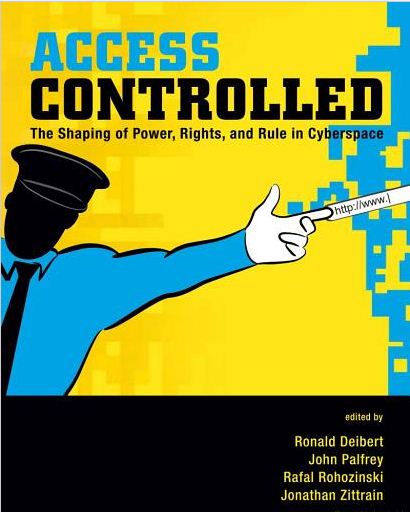
Faithful readers know of my geeky love for tech policy books. I read lots of ’em. There’s a steady stream of Amazon.com boxes that piles up on my doorstop some days because my mailman can’t fit them all in my mailbox.  But I go pretty hard on all the books I review. It’s rare for me pen a glowing review. Occasionally, however, a book will come along that I think is both worthy of your time and which demands a place on your bookshelf because it is such an indispensable resource.  Access Controlled: The Shaping of Power, Rights, and Rule in Cyberspace is one of those books.

Smartly organized and edited by Ronald J. Deibert, John G. Palfrey, Rafal Rohozinski, and Jonathan Zittrain, Access Controlled is essential reading for anyone studying the methods governments are using globally to stifle online expression and dissent. As I noted of their previous edition, Access Denied: The Practice and Policy of Global Internet Filtering, there is simply no other resource out there like this; it should be required reading in every cyberlaw or information policy program.

The book, which is a project of the OpenNet Initiative (ONI), is divided into two parts. Part 1 of the book includes six chapters on “Theory and Analysis.”  They are terrifically informative essays, and the editors have made them all available online here (I’ve listed them down below with links embedded). The beefy second part of the book provides a whopping 480 pages(!) of detailed regional and country-by-country overviews of the global state of online speech controls and discuss the long-term ramifications of increasing government meddling with online networks.

In their interesting chapter on “Control and Subversion in Russian Cyberspace,” Deibert and Rohozinski create a useful taxonomy to illustrate the three general types of speech and information controls that states are deploying today. What I find most interesting is how, throughout the book, various authors document the increasing movement away from “first generation controls,” which are epitomized by “Great Firewall of China”-like filtering methods, and toward second- and third-generation controls, which are more refined and difficult to monitor. Here’s how Deibert and Rohozinski define those three classes (or “generations”) of controls: Continue reading →

“Schools in Beijing are quietly removing the Green Dam filter, which was required for all school computers in July, due to complaints over problems with the software,” notes this Reuters report. Even though China backed down on their earlier requirement to have the Green Dam filter installed on all computers, according to Reuters “schools were still ordered by the Ministry of Industry and Information Technology to install the web filter, which Chinese officials said would block pornography and other unhealthy content.”  The Reuters article mentions a notice carried on the home page of one Beijing high school that reads: “We will remove all Green Dam software from computers in the school as it has strong conflicts with teaching software we need for normal work.”  The article also cites a school technology director, who confirmed that the software had been taken off most computers, as saying “It has seriously influenced our normal work.”

Ironically, many educators and librarians in the United States can sympathize since they currently live under similar requirements.  Under the Children’s Internet Protection Act (CIPA) of 2000, publicly funded schools and libraries must implement a mandatory filtering scheme or run the risk of losing their funding. As the Federal Communications Commission summarizes:

[CIPA] imposes certain types of requirements on any school or library that receives funding for Internet access or internal connections from the E-rate program… Schools and libraries subject to CIPA may not receive the discounts offered by the E-rate program unless they certify that they have an Internet safety policy and technology protection measures in place. An Internet safety policy must include technology protection measures to block or filter Internet access to pictures that are: (a) are obscene, (b) child pornography, or (c) harmful to minors (for computers that are accessed by minors).

Of course, nobody wants kids viewing porn in schools, but CIPA has been know the block far more than that and has become a real pain for many educators, librarians, and school administrators who have to occasionally get around these filters to teach their students about legitimate subjects. Anyway, I just find it ironic that some American lawmakers have been making a beef about mandatory Internet filtering by the Chinese when we have our own mandatory filtering regime right here in the states. For example, Continue reading →

What Unites Advocates of Speech Controls & Privacy Regulation? [pdf]

by Adam Thierer & Berin Szoka The Progress & Freedom Foundation, Progress on Point No. 16.19

Anyone who has spent time following debates about speech and privacy regulation comes to recognize the striking parallels between these two policy arenas. In this paper we will highlight the common rhetoric, proposals, and tactics that unite these regulatory movements. Moreover, we will argue that, at root, what often animates calls for regulation of both speech and privacy are two remarkably elitist beliefs:

  1. People are too ignorant (or simply too busy) to be trusted to make wise decisions for themselves (or their children); and/or,
  2. All or most people share essentially the same values or concerns and, therefore, “community standards” should trump household (or individual) standards.

While our use of the term “elitism” may unduly offend some understandably sensitive to populist demagoguery, our aim here is not to launch a broadside against elitism as Time magazine culture critic William H. Henry once defined it: “The willingness to assert unyieldingly that one idea, contribution or attainment is better than another.”[1] Rather, our aim here is to critique that elitism which rises to the level of political condescension and legal sanction. We attack not so much the beliefs of some leaders, activists, or intellectuals that they have a better idea of what it in the public’s best interest than the public itself does, but rather the imposition of those beliefs through coercive, top-down mandates.

That sort of elitism—elitism enforced by law—is often the objective of speech and privacy regulatory advocates. Our goal is to identify the common themes that unite these regulatory movements, explain why such political elitism is unwarranted, and make it clear how it threatens individual liberty as well as the future of free and open Internet. As an alternative to this elitist vision, we advocate an empowerment agenda: fostering an environment in which users have the tools and information they need to make decisions for themselves and their families. Continue reading →

Last year, my PFF colleague Adam Thierer asked whether State AGs + NCMEC = The Net’s New Regulators? Adam noted that NCMEC, the National Center for Missing and Exploited Children, a private non-profit organization, was playing a law enforcement role in regulating child pornography—but without any clear mechanisms for ensuring its accountability and effectiveness. Adam’s point wasn’t just that transparency is a good thing, but that when it comes to a cause as important as protecting children from exploitation, it’s vital to ensuring that we’re that we’re actually doing a good job at it!

Yesterday, Emmanuel Lazaridis commented on that post:

Given the increasing regulatory and investigative powers of the NCMEC, it is no longer clear whether or not the [Freedom of Information Act] applies to NCMEC records. We are about to find out. I am right now bringing a case against the NCMEC in federal court for access to records under the FOIA and, failing that, for discovery under 28 U.S.C. § 1782(a).

Mr. Lazaridis’s complaint in the D.C. District Court claims that Lazaridis (a Greek national) has been unfairly deemed a fugitive from U.S. justice for having taken his daughter to Greece over the objections of the girl’s American mother, Lazaridis’s ex-wife. NCMEC got involved by placing the girl on their MissingKids.com registry of abducted children. Lazaridis wants the court to recognize his custody, deem him not to be a fugitive, and to order NCMEC to turn over all their records on the girl.

This is, of course, just one side of the story (and such cases are usually so complicated as to be indecipherable to outsiders). But even if Lazaridis’s case were wholly without merit, his basic argument would be a sound one: Why shouldn’t NCMEC, in exercising any of its essentially governmental functions, be subject to the same accountability requirements through FOIA as the FBI would be?

When the issue is the Lazaridis family’s trans-Atlantic custody battle, it may seem easy to ignore this question. But when NCMEC is essentially making policy regarding filtering Internet content, blacklisting websites, turning over user logs to law enforcement, or “cleaning up” Craigslist, the question of NCMEC’s accountability under FOIA cannot be avoided as a critical decision about the future of Internet governance. Continue reading →

In an earlier post, I mentioned an important new online child safety task force report that has just been released from the “Point Smart. Click Safe.” Blue Ribbon Working Group. It’s a great report and I encourage you to read the whole thing. It was my great pleasure to serve on this task force, and as we started finalizing our conclusions and recommendations, I started thinking about how much of what we were finding and recommending was consistent with what past online safety task forces had also concluded.

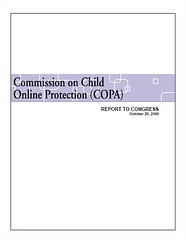
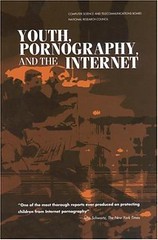
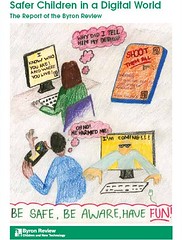
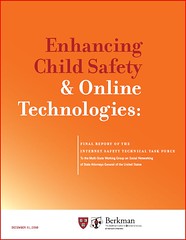
By way of background, over the past decade, five major online safety task forces or blue ribbon commissions have been convened to study online safety issues. Two of these task forces were convened in the United States and issued reports in 2000 (“COPA Commission”) and 2002 (“Thornburgh Commission“). Another was commissioned by the British government in 2007 and issued in a major report in March 2008 (“Byron Review“). Finally, two additional online safety task forces were formed in the U.S. in 2008 and concluded their work, respectively, in January (“Internet Safety Technical Task Force“) and July (“Point Smart. Click Safe.“) of 2009. [And yet another task force — the Online Safety Technology Working Group — was recently formed and has now gotten underway.]

In a new PFF white paper, ” Five Online Safety Task Forces Agree: Education, Empowerment & Self-Regulation Are the Answer,” I walk through a chronological summary of each of these past task forces [click on covers of each report below to read them in their entirety] and highlight some of the similar themes and recommendations from them.

COPA Commission cover Thornburgh Commission cover Byron Commission report cover

ISTTF cover Point Smart Click Safe report cover Continue reading →

Harvard’s Jonathan Zittrain has launched an interesting new project called “HerdictWeb,” which “seeks to gain insight into what users around the world are experiencing in terms of web accessibility; or in other words, determine the herdict.”  It’s a useful tool for determining whether governments are blocking certain websites for whatever reason.  Here’s Zittrain’s sock puppet video with all the details!

http://www.youtube.com/v/NggzBHSXdCo&hl=en&fs=1

The website is quite slick and very user-friendly, and they’ve even created a downloadable Firefox button that will automatically check site accessibility while you’re surfing the Net.

The information gathered from this effort will be useful for the OpenNet Initiative that Zittrain and John Palfrey co-created (with others from Univ. of Toronto, Oxford Univ., and Univ. of Cambridge) and wrote about in their excellent book, Access Denied: The Practice and Policy of Global Internet Filtering, which was one of my favorite technology policy books of the past year.  The data collected will give them, and us, a fuller picture of just how widespread global filtering and censorship efforts really are.  I encourage you to take a look and spread the word, especially to those in foreign countries who could probably use it more than us. (Of course, their governments will likely block Herdict once the word gets around!)