On October 7th I appeared on a webinar hosted by Prof. Barry Umansky and Ball State’s Digital Policy Institute about the FCC’s Title II case before the DC Circuit Court of Appeals, US Telecom Association v. FCC. The other panelists were Andrew Schwartzman of Georgetown University and Stuart Brotman of Harvard Law School and the Brookings Institution. Check it out, but here’s a brief summary of our hour-long discussion. Continue reading →
Note to Washington regulators and would-be censors… Don’t look now but parenting is happening! Yes, it really is true: Parents are parenting. That’s the result of this new survey by Yahoo & Ipsos OTX. Please pardon my snarky-ness, but I’ve been going at it for years with mobs of people here in DC who think that all parents are asleep at the wheel and kids are heading straight for the moral abyss. It’s a bunch of bunk, as I’ve pointed out here before. This new Yahoo!/Ipsos survey illustrates that, once again, parents are monitoring what their kids are up to online and taking an active role in mentoring them about web use:
- 78% of parents are concerned about their children’s online safety.
- 70% of parents talk to their children about online safety at least 2-3 times a year; 45% talk to their children at least once a month.
- 74% of parents are connected to their children’s profiles on social networking sites.
- 71% of parents have taken at least one action to manage their children’s use of the Internet or cell phones such as: Check to see where children are searching online; Set time limits for children’s use of computers or cell phones; Set parental controls on video sites; Use filters to limit where children go on the Web.
These results are consistent with what I have found and described in my ongoing PFF special report, Parental Controls & Online Child Protection: A Survey of Tools and Methods. Obviously, many parents utilize the growing diversity of parental control technologies that are at their disposal to better control/monitor their children’s online activities/interactions. But what’s really impressive (and far more important) is that so many surveys and studies continue to show that the vast majority of parents utilize a variety of household “media consumption rules” as a substitute for, or compliment to, parental control technologies. Continue reading →
 The latest edition (Version 4.0) of my PFF special report on “Parental Controls and Online Child Protection: A Survey of Tools & Methods” is now up. For those not familiar with the report, it explores the market for parental control tools, rating schemes, education and media literacy efforts, and various other tools, methods, and initiatives aimed at promoting online child safety. After evaluating that state of this market, I conclude: “There has never been a time in our nation’s history when parents have had more tools and methods at their disposal to help them decide what constitutes acceptable media content in their homes and in the lives of their children.” Moreover, I believe that the parental controls and content management tools cataloged in the report represent a better, less restrictive alternative to government regulation.
Version 4.0 of the report is now over 250 pages long (up from 200 pages in Version 3.0) and it contains almost 70 exhibits (up from 50), 725 references (up from roughly 500), and numerous updates in all five sections of the book. Major updates have been made to the Internet, social networking, and mobile media sections, reflecting the growing importance of those sectors and issues. Other new sections or appendices have also been added to the report, including:
- a new section examining how many households really need parental control tools;
- a new appendix on the downsides of mandatory parental controls and restrictive default settings;
- a new section on the dangers of “deputizing the online middleman” solution as an approach to solving child safety concerns;
- a new appendix reviewing the findings of 5 past online safety task forces;
- … and much more.
I issue major updates once a year and 1 or 2 minor tweaks during the course of the year to reflect the evolution of the parental control and online child safety marketplace and debate. The report is available free-of-charge on the PFF website, and the previous editions of the report are housed there too in case you want to see how it has evolved over the past couple of years. For those interested in taking a quick look at the report, I have embedded it down below the fold as a Scribd file. Finally, as is always the case, I encourage readers to send me updates and suggestions for how to improve the report and I will incorporate them into future versions.
Continue reading →
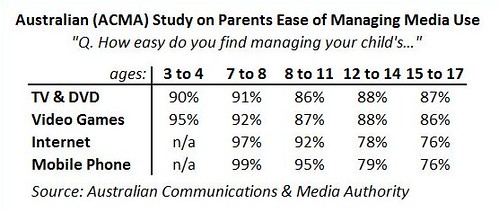
An interesting new survey has just been released by the Australian Communications and Media Authority (ACMA), which is the rough equivalent of the Federal Communications Commission here in the U.S., but with somewhat broader authority. ACMA’a latest report is entitled Use of Electronic Media and Communications: Early Childhood to Teenage Years and it takes a look at media technology usage among Australian youngsters in 5 age groupings (3 to 4 years of age, 7 to 8, 8 to 11, 12 to 14, and 15 to 17).
The survey also asked Australian parents “How easy do you find managing your child’s ___ use.” They asked that question for four different media or communications technologies: TV & DVD; video games; Internet; and mobile devices. They results, summarized in the table below, were quite interesting and seem to indicate that Australian parents find it much easier to manage their children’s media use than some of their elected leaders imagine.
Continue reading →
In an earlier post, I mentioned an important new online child safety task force report that has just been released from the “Point Smart. Click Safe.” Blue Ribbon Working Group. It’s a great report and I encourage you to read the whole thing. It was my great pleasure to serve on this task force, and as we started finalizing our conclusions and recommendations, I started thinking about how much of what we were finding and recommending was consistent with what past online safety task forces had also concluded.
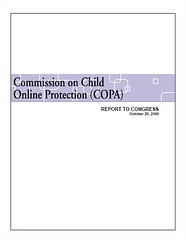
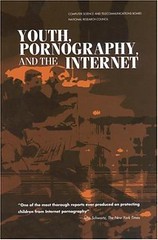
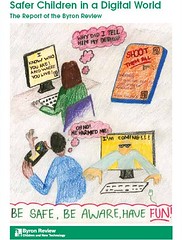
By way of background, over the past decade, five major online safety task forces or blue ribbon commissions have been convened to study online safety issues. Two of these task forces were convened in the United States and issued reports in 2000 (“COPA Commission”) and 2002 (“Thornburgh Commission“). Another was commissioned by the British government in 2007 and issued in a major report in March 2008 (“Byron Review“). Finally, two additional online safety task forces were formed in the U.S. in 2008 and concluded their work, respectively, in January (“Internet Safety Technical Task Force“) and July (“Point Smart. Click Safe.“) of 2009. [And yet another task force — the Online Safety Technology Working Group — was recently formed and has now gotten underway.]
In a new PFF white paper, ”
Five Online Safety Task Forces Agree: Education, Empowerment & Self-Regulation Are the Answer,” I walk through a chronological summary of each of these past task forces [click on covers of each report below to read them in their entirety] and highlight some of the similar themes and recommendations from them.
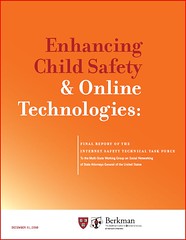
 Continue reading →
Rebecca MacKinnon has an important piece in the Wall Street Journal today about China’s “Green Dam Youth Escort” filtering mandate and the danger of this model catching on with other governments. “More and more governments — including democracies like Britain, Australia and Germany — are trying to control public behavior online, especially by exerting pressure on Internet service providers,” she notes. “Green Dam has only exposed the next frontier in these efforts: the personal computer.”
She’s right, and that’s cause for serious concern. Moreover, there’s the question of how corporations doing business in China should respond to demands and threats related to installing such filters. She notes:
In a world that includes child pornographers and violent hate groups, it is probably not reasonable to oppose all censorship in all situations. But if technical censorship systems are to be put in place, they must be sufficiently transparent and accountable so that they do not become opaque extensions of incumbent power — or get hijacked by politically influential interest groups without the public knowing exactly what is going on.
Which brings us back to companies: the ones that build and run Internet and telecoms networks, host and publish speech, and that now make devices via which citizens can go online and create more speech. Companies have a duty as global citizens to do all they can to protect users’ universally recognized right to free expression, and to avoid becoming opaque extensions of incumbent power — be it in China or Britain.
I generally agree with all that but this is a difficult issue and one that I have struggled with personally. (See this “Friendly Conversation about Corporate High-Tech Engagement with China” that Jim Harper and I had three years ago). But I do hope that more companies take a hard line with the Chinese as well as there own governemnts when it comes to filtering mandates or even restricitve parental control defaults and settings [an issue I wrote more about in this paper: “The Perils of Mandatory Parental Controls and Restrictive Defaults.”] On that note, kudos to the business groups that already signed on to a joint letter oppossing China’s new filtering mandate.
As anyone who has spent time searching for comments on the FCC’s website can tell you, the agency doesn’t exactly have the most user-friendly website. In the interest of making it easier for others to read the comments that came in last week in the agency’s “Child Safe Viewing Act” Notice of Inquiry, I have compiled all the major comments (those over 3 or 4 pages) and provided links to them below the fold.
Again, this proceeding was required under the “Child Safe Viewing Act of 2007,” which Congress passed last year and President Bush signed last December. The goal of the bill and the FCC’s proceeding (MB 09-26) is to study “advanced blocking technologies” that “may be appropriate across a wide variety of distribution platforms, including wired, wireless, and Internet platforms.” I filed 150+ pages worth of comments in this matter last week, and here’s my analysis of why this bill and the FCC’s proceeding are worth monitoring closely.
Continue reading →
Today I filed comments with the Federal Communications Commission (FCC) in its proceeding examining the marketplace for “advanced blocking technologies.” This proceeding was required under the “Child Safe Viewing Act of 2007,” which Congress passed last year and President Bush signed last December. The goal of the bill and the FCC’s proceeding (MB 09-26) is to study “advanced blocking technologies” that “may be appropriate across a wide variety of distribution platforms, including wired, wireless, and Internet platforms.” My colleagues will no doubt laugh about the fact that I have dropped an absurd 150 pages worth of comments on the FCC in this matter, but I had a lot to say on this topic! Parental controls, child safety, and free speech issues have been the focus of much of my research agenda over the past 10 years.
In my filing, I argue that the FCC should tread carefully in this matter since the agency has no authority over most of the media platforms and technologies described in the Commission’s recent Notice of Inquiry. Moreover, any related mandates or regulatory actions in in this area could diminish future innovation in this field and would violate the First Amendment rights of media creators and consumers alike. The other major conclusions of my filing are as follows:
- There exists an unprecedented abundance of parental control tools to help parents decide what constitutes acceptable media content in their homes and in the lives of their children.
- There is a trade-off between complexity and convenience for both tools and ratings, and no parental control tool is completely foolproof.
- Most homes have no need for parental control technologies because parents rely on other methods or there are no children in the home.
- The role of household media rules and methods is underappreciated and those rules have an important bearing on this debate.
- Parental control technologies work best in combination with educational efforts and parental involvement.
- The search for technological silver-bullets and “universal” solutions represent a quixotic, Holy Grail-like quest and it will destroy innovation in this marketplace.
- Enforcement of “household standards” made possible through use of parental controls and other methods negates the need for “community standards”-based content regulation.
My entire filing can be found here and down below in a Scribd reader. All comments in the matter are due tomorrow and then reply comments are due on May 18th.
Continue reading →
 It appears that the long legal saga of the Child Online Protection Act of 1998 (COPA) has finally come to a close. This morning, according to AP, the U.S. Supreme Court rejected the government’s latest request to revive the law, which was stuck down as an unconstitutional violation of the First Amendment by lower courts and never went into effect.
COPA was an effort by Congress to modify the Communications Decency Act of 1996 (CDA) in response to the Supreme Court’s decision in Reno v. ACLU finding that the CDA was unconstitutionally over-broad. COPA sought to narrow the scope of regulation and protect minors from sexual material on the Internet by making it a crime for someone to “knowingly” place materials online that were “harmful to minors.” The law provided an affirmative defense from prosecution, however, to those parties who made a “good faith” effort to “restrict[ ] access by minors to material that is harmful to minors” using credit cards or age verification schemes. Although narrower than the CDA, COPA was immediately challenged and also blocked by lower courts because it was still too sweeping in effect. Moreover, the courts found there were other “less restrictive means” that parents could use to deal with objectionable content — such as Internet filters.
Following the initial challenge, COPA then became the subject of an epic, decade-long legal battle that finally concluded today when the U.S. Supreme Court refused to revisit the law. COPA had already been reviewed by the Supreme Court twice before — in 2002 and 2004. Thus, a third visit to the Supreme Court by COPA would have been something of a historical development in the world of First Amendment jurisprudence. But with the Supreme Court’s rejection of the government’s appeal today, lower court rulings stand and COPA will remain unconstitutional and unenforceable.
The key recent legal battle occurred in the Third Circuit Court of Appeals, which upheld a lower court ruling striking down COPA. The Third Circuit’s full decision is here. And I penned a 3-part series on the lower court ruling by Judge Lowell Reed Jr., senior judge of the U.S. District Court for the Eastern District of Pennsylvania, here, here, and here. Also make sure to check out this summary of COPA’s legal journey that Alex Harris penned last November.
While COPA is now dead and buried, it would be foolish to think this is the end of efforts to legislate on this front. Although it remains unclear what the legislative response will look like during a time of Democratic rule, I am certain that legislation will be floated in short order (i.e., “Son of COPA”) to try to get around the constitutional issues and regulate objectionable online content. If legislators were smart, they’d avoid legally risky solutions like more centralized filtering mandates or age verification requirements. They’d be on safer ground to consider going the subsidy route and finding a way to get parental control tools in the hands of more families and institutions. I’m not saying that I favor such subsidies, merely that such an approach would almostly certainly pass legal muster and probably wouldn’t even be challenged in court. They might also consider more public education / PSA-driven approached to online safety. Those approaches may end up finding more support in a Democratic Congress and administration anyway.
[More coverage at NYT, Reuters, CNet and Ars.]
Just FYI, the latest update of my booklet on “Parental Controls and Online Child Protection: A Survey of Tools & Methods” is now live. The new version, Version 3.1, provides minor updates to all sections of the book and a new appendix of relevant research in the field. I issue major updates early each year and 1 or 2 tweaks during the course of the year to reflect the evolution of the parental control and online child safety market and debate.
For those not familiar with the report, it explores the market for parental control tools, rating schemes, education efforts, and initiatives aimed at promoting online child safety. I believe that the parental controls and content management tools cataloged in the report represent a better, less restrictive alternative to government regulation. As I conclude after evaluating that state of the market: “There has never been a time in our nation’s history when parents have had more tools and methods at their disposal to help them decide what constitutes acceptable media content in their homes and in the lives of their children.”
The report is available free-of-charge on the PFF website, and the previous editions of the report are housed there too in case you want to see how it has evolved over the past two years. For those interested in taking a quick look at the report, I have embedded it down below the fold as a Scribd file. Finally, as is always the case, I encourage readers to send me updates and suggestions for how to improve the report and I will incorporate them into future versions.
Continue reading →

 The Technology Liberation Front is the tech policy blog dedicated to keeping politicians' hands off the 'net and everything else related to technology.