In theory, the Food & Drug Administration (FDA) exists to save lives and improve health outcomes. All too often, however, that goal is hindered by the agency’s highly bureaucratic, top-down, command-and-control orientation toward drug and medical device approval.
Today’s case in point involves families of children with diabetes, many of whom are increasingly frustrated with the FDA’s foot-dragging when it comes to approval of medical devices that could help their kids. Writing today in
The Wall Street Journal, Kate Linebaugh discusses how “Tech-Savvy Families Use Home-Built Diabetes Device” to help their kids when FDA regulations limit the availability of commercial options. She documents how families of diabetic children are taking matters into their own hands and creating their own home-crafted insulin pumps, which can automatically dose the proper amount of proper amount of the hormone in response to their child’s blood-sugar levels. Families are building, calibrating, and troubleshooting these devices on their own. And the movement is growing. Linebaugh reports that:
More than 50 people have soldered, tinkered and written software to make such devices for themselves or their children. The systems—known in the industry as artificial pancreases or closed loop systems—have been studied for decades, but improvements to sensor technology for real-time glucose monitoring have made them possible.
The Food and Drug Administration has made approving such devices a priority and several companies are working on them. But the yearslong process of commercial development and regulatory approval is longer than many patients want, and some are technologically savvy enough to do it on their own.
Linebaugh notes that this particular home-built medical project (known as OpenAPS), was created by Dana Lewis, a 27-year-old with Type 1 diabetes in Seattle. Linebaugh says that: Continue reading →
 In a recent PFF paper I argued that “We Are Living in the Golden Age of Children’s Programming,” and showed how, despite incessant complaints by many policymakers:
the overall market for family and children’s programming options continues to expand quite rapidly. Thirty years ago, families had a limited number of children’s television programming options at their disposal on broadcast TV. Today, by contrast, there exists a broad and growing diversity of children’s television options from which families can choose.
I then documented there and in my book, Parental Controls & Online Child Protection:
- the many excellent family- or child-oriented networks available on cable, telco, and satellite television today;
- the growing universe of religious / spiritual television networks;
- the many family or educational programs that traditional TV broadcasters offer; or
- the massive market for interactive computer software or Internet websites for children.
And every time I turn around I find another great show, service, or site for families to choose from. Continue reading →
In an earlier post, I mentioned an important new online child safety task force report that has just been released from the “Point Smart. Click Safe.” Blue Ribbon Working Group. It’s a great report and I encourage you to read the whole thing. It was my great pleasure to serve on this task force, and as we started finalizing our conclusions and recommendations, I started thinking about how much of what we were finding and recommending was consistent with what past online safety task forces had also concluded.
By way of background, over the past decade, five major online safety task forces or blue ribbon commissions have been convened to study online safety issues. Two of these task forces were convened in the United States and issued reports in 2000 (“COPA Commission”) and 2002 (“Thornburgh Commission“). Another was commissioned by the British government in 2007 and issued in a major report in March 2008 (“Byron Review“). Finally, two additional online safety task forces were formed in the U.S. in 2008 and concluded their work, respectively, in January (“Internet Safety Technical Task Force“) and July (“Point Smart. Click Safe.“) of 2009. [And yet another task force — the Online Safety Technology Working Group — was recently formed and has now gotten underway.]
In a new PFF white paper, ”
Five Online Safety Task Forces Agree: Education, Empowerment & Self-Regulation Are the Answer,” I walk through a chronological summary of each of these past task forces [click on covers of each report below to read them in their entirety] and highlight some of the similar themes and recommendations from them.
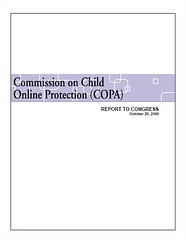
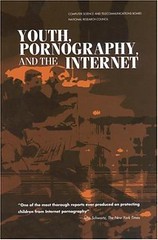
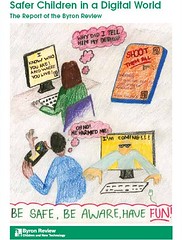
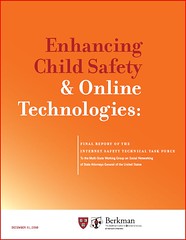
 Continue reading →
I’ve got a new PFF paper out today entitled, “Who Needs Parental Controls? Assessing the Relevant Market for Parental Control Technologies.” In this piece, I address the argument made by some media and Internet critics who say that government intervention (perhaps even censorship) may be necessary because parental control technologies are not widely utilized by most Americans. But, as I note in the paper, the question that these critics always fail to ask is: How many homes really need parental control technologies? The answer: Far fewer than you think. Indeed, the relevant universe of potential parental control users is actually quite limited.
I find that the percentage of homes that might need parental control technologies is certainly no greater than the 32% of U.S. households with children in them. Moreover, the relevant universe of potential parental control users is likely much less than that because households with very young children or older teens often have little need for parental control technologies. Finally, some households do not utilize parental control technologies because they rely on alternative methods of controlling media content and access in the home, such as household media rules. Consequently, policymakers should not premise regulatory proposals upon the limited overall “take-up” rate for parental control tools since only a small percentage of homes might actually need or want them.
If you don’t care to read the whole nerdy thing, I’ve created this short video summarizing the major findings of the paper.
http://www.youtube.com/v/a7Fnf3Ztt-U&hl=en&fs=1
And the document is embedded below the fold in a Scribd reader.
Continue reading →
Today’s USA Today features a debate between the editors and me on the question of the impact media has on children and what should be done about it. Their editorial argues that “Today’s mass media penetrate deeply and quietly, inflicting real damage on young children, an increasing body of research shows.” Specifically, they are referring to a new study commissioned by Common Sense Media (CSM), which claims that a review of 173 studies shows “that a strong correlation exists between greater exposure and adverse health outcomes.”
In my response entitled “Don’t Scapegoat Media,” which appears in its entirety down below the fold, I argue that “Media have long been a convenient scapegoat for the woes of the world,” and that we must be careful not to assume correlation equals causation when surveying the impact of media on kids. After all, I argue, “how do [those studies] account for the other variables that influence youth development, including broken homes, bad parents, socioeconomic status, troubled peer relations, poor schools and so on? And how is media exposure weighted relative to these other influences? Is a beer ad really as much of a negative influence as an alcoholic parent?” Again, read my entire response below. [Of course, even if one assumes some media has an impact on some kids, there are plenty of ways for parents and guardians to take control over the media in their lives, as I have shown in my big book on the subject.]
I was also quoted in this Washington Post article about the new CSM study on Tuesday.
Continue reading →

 The Technology Liberation Front is the tech policy blog dedicated to keeping politicians' hands off the 'net and everything else related to technology.