[originally posted on Medium
]
Today is the anniversary of the day the machines took over.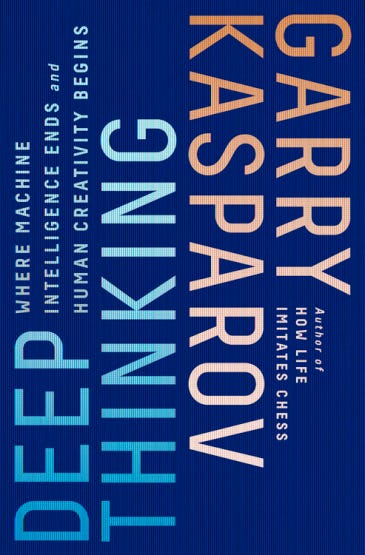
Exactly twenty years ago today, on May 11, 1997, the great chess grandmaster Garry Kasparov became the first chess world champion to lose a match to a supercomputer. His battle with IBM’s “Deep Blue” was a highly-publicized media spectacle, and when he lost Game 6 of his match against the machine, it shocked the world.
At the time, Kasparov was bitter about the loss and even expressed suspicions about how Deep Blue’s team of human programmers and chess consultants might have tipped the match in favor of machine over man. Although he still wonders about how things went down behind the scenes during the match, Kasparov is no longer as sore as he once was about losing to Deep Blue. Instead, Kasparov has built on his experience that fateful week in 1997 and learned how he and others can benefit from it.
The result of this evolution in his thinking is Deep Thinking: Where Machine Intelligence Ends and Human Creativity Begins, a book which serves as a paean to human resiliency and our collective ability as a species to adapt in the face of technological disruption, no matter how turbulent.
Kasparov’s book serves as the perfect antidote to the prevailing gloom-and-doom narrative in modern writing about artificial intelligence (AI) and smart machines. His message is one of hope and rational optimism about future in which we won’t be racing against the machines but rather running alongside them and benefiting in the process.
Overcoming the Technopanic Mentality
There is certainly no shortage of books and articles being written today about AI, robotics, and intelligent machines. The tone of most of these tracts is extraordinarily pessimistic. Each page is usually dripping with dystopian dread and decrying a future in which humanity is essentially doomed.
As I noted in a recent essay about “The Growing AI Technopanic,” after reading through most of these books and articles, one is left to believe that in the future: “Either nefarious-minded robots enslave us or kill us, or AI systems treacherously trick us, or at a minimum turn our brains to mush.” These pessimistic perspectives are clearly on display within the realm of fiction, where every sci-fi book, movie, or TV show depicts humanity as certain losers in the proverbial “race” against machines. But such lugubrious lamentations are equally prevalent within the pages of many non-fiction books, academic papers, editorials, and journalistic articles.
Given the predominantly panicky narrative surrounding the age of smart machines, Kasparov’s Deep Thinking serves as a welcome breath of fresh air. The aim of his book is finding ways of “doing a smarter job of humans and machines working together” to improve well-being. Continue reading →


 The Technology Liberation Front is the tech policy blog dedicated to keeping politicians' hands off the 'net and everything else related to technology.