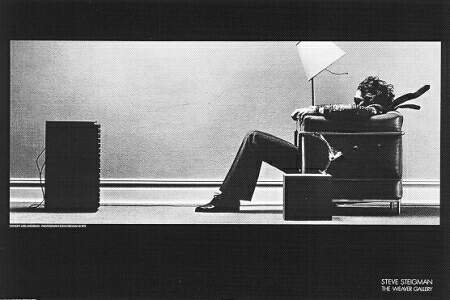
 When the government tells someone to shut up, we call it censorship and the First Amendment requires the government to defend its regulation. But what if the government just says, “Shhhh… could you please turn that down?” Rep. Anna Eshoo’s Commercial Advertisement Loudness Mitigation Act (“CALM Act” – HR 1084) would do just that: require the FCC to issue rules that broadcast and cable TV ads:
(1) … shall not be excessively noisy or strident;
(2) … shall not be presented at modulation levels substantially higher than the program material that such advertisements accompany; and
(3) [their] average maximum loudness… shall not be substantially higher than the average maximum loudness of the program material that such advertisements accompany.
Now, I understand where Ms. Eshoo is coming from: I have a very low tolerance for noise in general and for television in particular—and it’s not just about commercials. (I find TV news at least as “noisy” and “strident” as commercials. That’s why I opted-out from the whole TV thing in about 2000. Yup, that’s right: I found better things to do with my time and the supposedly all-powerful “gatekeepers” of Hollywood couldn’t do a damn thing about it. You should try it if you don’t like what’s on TV! To paraphrase Voltaire, “I disapprove of what you say watch, but I will defend to the death your right to say watch it! You can get most of what’s worth watching on DVD or online anyway.) But do we really need bureaucrats in Washington micromanaging volume levels? Maybe Congressmen would have a little more time to read the bills they vote for if they they weren’t so busy fiddling with everyone else’s remote!
Eshoo’s bill has passed the House Energy & Commerce Committee’s Communications Subcommittee just as the TV industry is completing work on voluntary standards of their own. That’s one “less restrictive” alternative to regulation. What about technological empowerment? If Americans really hate loud commercials so much, why don’t they demand TVs with built-in volume normalization features? But this bill isn’t merely unnecessary, it would also set a disturbing precedent in at least six ways.
Continue reading →
 The latest edition (Version 4.0) of my PFF special report on “Parental Controls and Online Child Protection: A Survey of Tools & Methods” is now up. For those not familiar with the report, it explores the market for parental control tools, rating schemes, education and media literacy efforts, and various other tools, methods, and initiatives aimed at promoting online child safety. After evaluating that state of this market, I conclude: “There has never been a time in our nation’s history when parents have had more tools and methods at their disposal to help them decide what constitutes acceptable media content in their homes and in the lives of their children.” Moreover, I believe that the parental controls and content management tools cataloged in the report represent a better, less restrictive alternative to government regulation.
Version 4.0 of the report is now over 250 pages long (up from 200 pages in Version 3.0) and it contains almost 70 exhibits (up from 50), 725 references (up from roughly 500), and numerous updates in all five sections of the book. Major updates have been made to the Internet, social networking, and mobile media sections, reflecting the growing importance of those sectors and issues. Other new sections or appendices have also been added to the report, including:
- a new section examining how many households really need parental control tools;
- a new appendix on the downsides of mandatory parental controls and restrictive default settings;
- a new section on the dangers of “deputizing the online middleman” solution as an approach to solving child safety concerns;
- a new appendix reviewing the findings of 5 past online safety task forces;
- … and much more.
I issue major updates once a year and 1 or 2 minor tweaks during the course of the year to reflect the evolution of the parental control and online child safety marketplace and debate. The report is available free-of-charge on the PFF website, and the previous editions of the report are housed there too in case you want to see how it has evolved over the past couple of years. For those interested in taking a quick look at the report, I have embedded it down below the fold as a Scribd file. Finally, as is always the case, I encourage readers to send me updates and suggestions for how to improve the report and I will incorporate them into future versions.
Continue reading →
Digital video recorders (DVRs) may turn out to be the “last gasp” of cable, satellite and other traditional multichannel subscription video providers. If users can get the same basic functionality (on demand viewing of the shows they want) over the Internet for free or paying for each show rather than a hefty monthly subscription, Who Needs a DVR?, as Nick Wingfield at the WSJ asks:
Among a more narrow band of viewers -– 18- to 34-year-olds -– SRG found that 70% have watched TV online in the past. In contrast, only 36% of that group had watched a show on a TiVo or some other DVR at any time in the past.
That last figure is a fairly remarkable statistic. Remember that DVRs have the advantage of playing video back on a device where the vast majority of television consumption has traditionally occurred –- that is, the TV set. Although it’s also possible to watch shows over the Internet on a TV set through a device like Apple TV and Microsoft’s Xbox 360, most people watch online TV shows through their computers — which have inherent disadvantages, like smaller screens and, in most cases, no remote controls.
Indeed, if users are going to buy a piece of hardware, why buy a DVR when they can buy a Roku box or a game console like the XBox 360 that will put Internet-delivered TV on their programming on their “television” (a term that increasingly simply means the biggest LCD in the house, or the one that faces a couch instead of an office chair)—
and save money?
This is precisely the point Adam Thierer and I have been hammering away at in this ongoing series. The availability of TV through the Internet and the ease with which consumers can display that content on a device, and at a time, of their choosing are quickly breaking down the old “gatekeeper” or “bottleneck” power of cable. Let’s see how long it takes Congress and the FCC to realize that the system of cable regulation created in the analog 1990s no longer makes sense in this truly digital age.
We’ve failed to keep our podcast alive here at the TLF — and I apologize about that — but there are still a lot of good tech policy-related podcasts out there for you to listen to. Here’s a new one that sounds very promising. It’s called the “Intellectual Property Colloquium” podcast, and it’s hosted by the brilliant Doug Lichtman, a professor of law at UCLA Law School.
The first show features a discussion that took place in one of Prof. Lichtman’s classes in which the always-interesting Fred Von Lohmann of the Electronic Frontier Foundation (EFF) begins by talking about the controversial Cablevision DVR case and then transitions into copyright law and infringement more generally. Doug jumps into the conversation about 12 minutes and needles Fred with a litany of excellent questions that really get the debate going. Whenever Doug and Fred go at it, it is a real intellectual clash of the titans.
The upcoming shows look just as good. Next up is a debate between Stacey Byrnes of NBC-Universal and Tim Wu of Columbia University about the DMCA notice-and-takedown process. The November show will include Dan Solove talking about “Privacy in a Networked World.” [I am just finishing up his important new book,
Understanding Privacy, and I will be posting a review of it here soon.] And the December show is called “Everyone Hates DRM,” and is set to include Ed Felton of Princeton University versus Dean Marks of Warner Brothers. That should be a interesting conversation.
Just FYI, the latest update of my booklet on “Parental Controls and Online Child Protection: A Survey of Tools & Methods” is now live. The new version, Version 3.1, provides minor updates to all sections of the book and a new appendix of relevant research in the field. I issue major updates early each year and 1 or 2 tweaks during the course of the year to reflect the evolution of the parental control and online child safety market and debate.
For those not familiar with the report, it explores the market for parental control tools, rating schemes, education efforts, and initiatives aimed at promoting online child safety. I believe that the parental controls and content management tools cataloged in the report represent a better, less restrictive alternative to government regulation. As I conclude after evaluating that state of the market: “There has never been a time in our nation’s history when parents have had more tools and methods at their disposal to help them decide what constitutes acceptable media content in their homes and in the lives of their children.”
The report is available free-of-charge on the PFF website, and the previous editions of the report are housed there too in case you want to see how it has evolved over the past two years. For those interested in taking a quick look at the report, I have embedded it down below the fold as a Scribd file. Finally, as is always the case, I encourage readers to send me updates and suggestions for how to improve the report and I will incorporate them into future versions.
Continue reading →
According to this new survey by NDS:
Americans rank the DVR [digital video recorders] as the third most indispensable household item (62%), after the washing machine (97%) and the microwave oven (86%) — Americans rank the DVR as the second most essential household technology item they can’t live without (81%), beaten only by the mobile phone (92%) — 3 out of 4 respondents with partners say that having a DVR makes for a happier home life
When you think about, it is incredible that DVRs only came on the scene in the late 1990s and yet now — less than a decade later — they are considered an “indispensable” technology by most people.
This has some important policy implications for debates over content regulation. In a paper I penned last October entitled, “Parental Control Perfection? The Impact of the DVR and VOD Boom on the Debate over TV Content Regulation,” I outlined how new video technologies, such as digital video recorders (DVRs) and video on demand (VOD) services, are changing the way households consume media and are helping parents better tailor viewing experiences to their tastes and values. I provided evidence showing the rapid spread of these technologies and discussed how parents are using these tools in their homes. Finally, I argued that these developments will have profound implications for debates over the regulation of video programming. As parents are given the ability to more effectively manage their family’s viewing habits and experiences, it will lessen—if not completely undercut—the need for government intervention on their behalf.
If you are interested, I have embedded the paper down below. Today’s survey results from NDS make it clear that the process I discuss in my paper is happening at an even fast pace than I originally predicted.
Continue reading →
PFF has just releasing an updated edition of my booklet on “Parental Controls and Online Child Protection: A Survey of Tools & Methods.” The new version, Version 3.0, includes two new appendixes and updates to each section to reflect new parental control tools and programs developed in the last nine months.
The updated report is timely as it comes on the heels of the recently-announced Internet Safety Technical Task Force, which is being chaired by the Berkman Center for Internet & Society at Harvard Law School. I am privileged to serve as a member of the Task Force, which is evaluating various online safety technologies and strategies and then reporting back to state attorneys general with our findings.
Those issues and much more are covered in the latest edition of my report. The report explores the market for parental control tools, rating schemes, education efforts, and initiatives aimed at promoting online child safety. I believe that the parental controls and content management tools cataloged in the report represent a better, less restrictive alternative to government regulation. As I conclude after evaluating that state of the market: “There has never been a time in our nation’s history when parents have had more tools and methods at their disposal to help them decide what constitutes acceptable media content in their homes and in the lives of their children.”
Version 3.0 of the special report, now over 200 pages, contains over fifty exhibits and numerous updates in all five sections of the book. Major updates have been made to the Internet, social networking, and mobile media sections, reflecting the growing importance of those sectors and issues. A greatly expanded section on video empowerment technologies has also been included. Finally, two appendices have also been added: a comprehensive legislative index cataloging over thirty bills introduced in Congress on these issues (complied with John Morris of Center for Democracy & Technology), and a glossary of 35 relevant terms and cases.
The report is available free-of-charge on the PFF website, as are the previous editions. And I am happy to provide hard copies to those who are interested.
http://documents.scribd.com/ScribdViewer.swf?document_id=2887320&access_key=key-um5xjvf98bfnuu8811v&page=&version=1&auto_size=true
PFF has just released my latest paper entitled “Parental Control Perfection? The Impact of the DVR and VOD Boom on the Debate over TV Content Regulation.” In the report, I focus on the extent to which new video technologies, such as digital video recorders (DVRs) and video on demand (VOD) services, are changing the way households consume media and are helping parents better tailor viewing experiences to their tastes and values. I provide evidence showing the rapid spread of these technologies and discuss how parents are using these tools in their homes. Finally, I argue that these developments will have profound implications for debates over the regulation of video programming. As parents are given the ability to more effectively manage their family’s viewing habits and experiences, it will lessen—if not completely undercut—the need for government intervention on their behalf.
This 16-page report can be found at: http://www.pff.org/issues-pubs/pops/pop14.20DVRboomcontentreg.pdf

 The Technology Liberation Front is the tech policy blog dedicated to keeping politicians' hands off the 'net and everything else related to technology.