Randall Stross discusses his recent book: The Launch Pad: Inside Y Combinator, Silicon Valley’s Most Exclusive School for Startups. Stross’s behind-the-scenes look at Y Combinator details how the seed fund has been able to produce young entrepreneurs and successful startups such as Dropbox and Airbnb. Stross also discusses Y Combinator’s early history, the typical Y Combinator participant, the fund’s rate of return, the gender gap in the program, and the reason Silicon Valley has become the epicenter for startups.
Download
Related Links
That was the response of a friend currently in Rwanda who had issued a Facebook plea for someone to upload the weird “Innocence of Muslims” video to Dropbox.
“Oh, where is the stupid internet in Rwanda?????” she exclaimed.
In typical snark, I had asked, “What do you connect to Dropbox with? Tin-can on string?”
She actually has Internet access, but she finds YouTube so much less reliable than other platforms that she asks friends to upload YouTube videos elsewhere.
I anecdotally find YouTube videos to be clunky downloads compared to others. Quite naturally, I watch fewer videos on YouTube and more on other platforms. I don’t know, but guess, that Google has made some decision to economize on video downloads—a high percentage of people probably watch only the first third of any video, so why send them the whole thing right away?—and that its imperfect implementation has me watching the spinning “pause” wheel (or playing “snake”) routinely when I think a YouTube offering would be interesting.
Would the Google of five years have allowed that? It’s well known that Google recognizes speed as an important elements of quality service on the Internet.
And this is why antitrust action against Google is unwarranted. When companies get big, they lose their edge, as I’m guessing Google is losing its edge in video service. This opens the door to competitors as part of natural economic processes.
Just the other week, I signed up with Media.net and I’ll soon be running tests on whether it gets better results for me on WashingtonWatch.com than Google AdSense. So far so good. A human customer service representative navigated me through the (simple) process of opening an account and getting their ad code.
These are anecdotes suggesting Google’s competitive vulnerability. But you can get a more systematic airing of views at TechFreedom’s event September 28th: “Should the FTC Sue Google Over Search?“
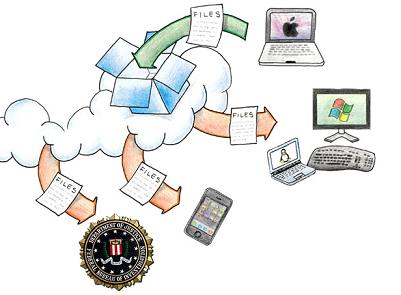 A colleague apparently suggested that the nice people at Dropbox should email me with an invitation to use their services. The concept appears simple enough—remote storage that makes users’ files available on any laptop, desktop, or phone.
I was intrigued by it because it’s a discrete example of a “cloud” computing service. How do they handle some of the key privacy challenges? A cloud over remote computing and storage is the likelihood that governments will use it to discover private information with dubious legal justification, or without any at all. (Businesses likewise can rightly worry that competitors working with governments might access trade secrets.)
Well, it turns out they don’t handle these challenges. Dropbox is a privacy black box.
I homed right in on their “Policies” page, looking for assurance that they would protect the legal rights of users to control information placed in the care of their service. There’s precious little to be found.
There’s no promise that they would limit information they share with authorities to what is required by valid legal process. There’s no promise that they would notify users of a warrant or subpoena. They do reserve the right to monitor access and use of their site “to comply with applicable law or the order or requirement of a court, administrative agency or other governmental body.”
Is there protection in the fact that files are stored encrypted on their service? The site—though not the terms of service—says “All files stored on Dropbox servers are encrypted (AES-256) and are inaccessible without your account password.” Not if Dropbox is willing to monitor the use of the site on behalf of law enforcement. They can simply gather your password and hand it over.
National Security Letter authority and the impoverished “third party doctrine” in Fourth Amendment law puts cloud-user privacy on pretty weak footing. Dropbox’s policies do nothing to shore that up. It’s not alone, of course. It’s just a nice discrete example of how “the cloud” exposes your data to risks that local storage doesn’t.
There are a few other problems with it. They don’t promise to notify users directly of changes to the privacy policy. (“[W]e will notify you of any material changes by posting the new Privacy Policy on the Site…”) And they reserve the right to change their terms of service any time—without giving you the right to access and remove your files. When they decide to make their free service a paid service, they could hold your files hostage unless you sign up for
x years. Data liberation is an important term of services like this.
Golly, even as I’ve been writing this, friends have tweeted that they like Dropbox. It sounds like a fine service for what it is. I just wouldn’t put anything on there that you wanted to keep private or that you really wanted to be sure you could access.

 The Technology Liberation Front is the tech policy blog dedicated to keeping politicians' hands off the 'net and everything else related to technology.