So, do I need to remind everyone of my ongoing rants about Jonathan Zittrain’s misguided theory about the death of digital generativity because of the supposed rise of “sterile, tethered” devices? I hope not, because even I am getting sick of hearing myself talk about it. But here again anyway is the obligatory listing of all my tirades: 1, 2, 3, 4, 5, 6, 7, 8 + video and my 2-part debate with Lessig and him last year.
You will recall that the central villain in Zittrain’s drama
The Future of the Internet and How to Stop It is big bad Steve Jobs and his wicked little iPhone. And then, more recently, Jonathan has fretted over those supposed fiends at Facebook. Zittrain’s worries that “we can get locked into these platforms” and that “markets [will] coalesce [around] these tamer gated communities,” making it easier for both corporations and governments to control us. More generally, Zittrain just doesn’t seem to like that some people don’t always opt for the same wide open general purpose PC experience that he exalts as the ideal. As I noted in my original review of his book, Jonathan doesn’t seem to appreciate that it may be perfectly rational for some people to seek stability and security in digital devices and their networking experiences—even if they find those solutions in the form of “tethered appliances” or “sterile” networks, to use his parlance.
Every once and awhile I find a sharp piece by someone out there who is willing to admit that they see nothing wrong with such “closed”
platforms or devices, or they even argue that those approaches can be superior to the more “open” devices and platforms out there. That’s the case with this Harry McCracken rant over at Technologizer today with the entertaining title, “The Verizon Droid is a Loaf of Day-Old Bread.” McCracken goes really hard on the Droid — which hurts because I own one! — and I’m not sure I entirely agree with his complaint about it, but what’s striking is how it represents the antithesis of Zittrainianism: Continue reading →
I’ve always generally agreed with the conventional wisdom about micropayments as a method of funding online content or services: Namely, they won’t work. Clay Shirky, Tim Lee, and many others have made the case that micropayments face numerous obstacles to widespread adoption. The primary issue seems to be the “mental transaction cost” problem: People don’t want to be diverted–even for just a few seconds–from what they are doing to pay a fee, no matter how small. [That is why advertising continues to be the primary monetization engine of the Internet and digital services.]
 That being said, I keep finding examples of how micropayments do work in some contexts and it has kept me wondering if there’s still a chance for micropayments to work in other contexts (like funding media content). For example, I mentioned here before how shocked I was when I went back and looked at my eBay transactions for the past couple of years and realized how many “small-dollar” purchases I had made via PayPal (mostly dumb stickers and other little trinkets). And the micropayment model also seems to be doing reasonably well in the online music world. In January 2009, Apple reported that the iTunes Music Store had sold over 6 billion tracks.
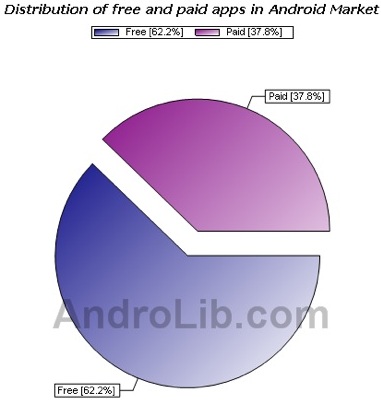
And then there are mobile application stores. Just recently I picked up a Droid and I’ve been taking advantage of the rapidly growing Android marketplace, which recently hit the 20,000 apps mark. Like Apple’s 100,000-strong App Store, there’s a nice mix of paid and free apps, and even though I’m downloading mostly freebies, I’ve started buying more paid apps. Many of them are “upsells” from free apps I downloaded. In most cases, they are just 99 cents. A few examples of paid apps I’ve downloaded or considered buying: Stocks Pro, Mortgage Calc Pro, Currency Guide, Photo Vault, Weather Bug Elite, and Find My Phone. And there are all sorts of games, clocks, calendars, ringtones, heath apps, sports stuff, utilities, and more that are 99 cents or $1.99. Some are more expensive, of course.
Continue reading →
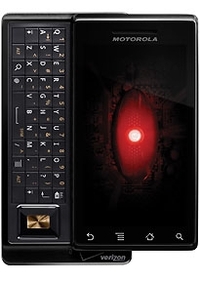 Seems like everywhere I turn someone is gushing about their new Droid phone, including my TLF colleagues Berin Szoka, Braden Cox, and Ryan Radia, who all had great fun rubbing their new toys in my nose over the past couple of days. And why not, it’s a very cool little device. It makes my HTC Touch seems positively archaic in some ways, and it’s only a year old. Apparently, 100,000 people already picked up a Droid in just its first weekend on the market.
But here’s the first thing that pops in my mind every time I see someone showing off their new Droid: How can a device like this even exist when America’s leading cyberlaw experts have been telling us that the whole digital world is increasingly going to hell because of “closed” devices, proprietary code, and managed networks? I’m speaking, of course, about the lamentations of Harvard professors Lawrence Lessig, Jonathan Zittrain, and their many disciples. As faithful readers will recall, I have relentlessly hammered this crew for their unwarranted cyber-Chicken Little-ism and hyper techno-pessimism. (See my many battles with Zittrain [1, 2, 3, 4, 5, 6 + video] and my 2-part debate with Lessig earlier this year).
“Left to itself,” Lessig warned in Code, “cyberspace will become a perfect tool of control.” He went on to forecast a dystopian future in which nefarious corporate schemers would quash our digital liberties unless benevolent public philosopher kings stepped in to save our poor souls. Code was the Old Testament of cyber-collectivism. The New Testament arrived last year with Zittrain’s
The Future of the Internet and How to Stop It. In it, we hear the grim prediction that “sterile and tethered” digital technologies and networks will triumph over the more “open and generative” devices and systems of the past. The iPhone and TiVo are cast as villains in Zittrain’s drama since they apparently represent the latest manifestations of Lessig’s “perfect control” paranoia.
Apple’s “Angel of Death”
How completely out-of-control has this thinking gotten? Well, here’s David Weinberger — another Harvard Berkman Center worrywart — talking about that supposed satanic font of all evil, the Apple AppStore: Continue reading →

 The Technology Liberation Front is the tech policy blog dedicated to keeping politicians' hands off the 'net and everything else related to technology.