Here’s the first of two essays I’ve recently penned making “The Case for Internet Optimism.” This essay was included in the book, The Next Digital Decade: Essays on the Future of the Internet (2011), which was edited by Berin Szoka and Adam Marcus of TechFreedom. In these essays, I identify two schools of Internet pessimism: (1) “Net Skeptics,” who are pessimistic about the Internet improving the lot of mankind; and (2) “Net Lovers,” who appreciate the benefits the Net brings society but who fear those benefits are disappearing, or that the Net or openness are dying. (Regular readers of this blog will be familiar with these themes since I sketched them out in previous essays here such as, “Are You an Internet Optimist or Pessimist?” and “Two Schools of Internet Pessimism.”) The second essay is here.
This essay focuses on the first variant of Internet pessimism, which is rooted in general skepticism about the supposed benefits of cyberspace, digital technologies, and information abundance. The proponents of this pessimistic view often wax nostalgic about some supposed “good ‘ol days” when life was much better (although they can’t seem to agree when those were). At a minimum, they want us to slow down and think twice about life in the Information Age and how it’s personally affecting each of us. Occasionally, however, this pessimism borders on neo-Ludditism, with some proponents recommending steps to curtail what they feel is the destructive impact of the Net or digital technologies on culture or the economy. I identify the leading exponents of this view of Internet pessimism and their major works. I trace their technological pessimism back to Plato but argue that their pessimism is largely unwarranted. Humans are more resilient than pessimists care to admit and we learn how to adapt to technological change and assimilate new tools into our lives over time. Moreover, were we really better off in the scarcity era when we were collectively suffering from information poverty? Generally speaking, despite the challenges it presents society, information abundance is a better dilemma to be facing than information poverty. Nonetheless, I argue, we should not underestimate or belittle the disruptive impacts associated with the Information Revolution. But we need to find ways to better cope with turbulent change in a dynamist fashion instead of attempting to roll back the clock on progress or recapture “the good ‘ol days,” which actually weren’t all that good.
Down below, I have embedded the entire chapter in a Scribd reader, but the essay can also be found on the TechFreedom website for the book as well as on SSRN. I have also includes two updated tables that appeared in my old “optimists vs. pessimists” essay. The first lists some of the leading Internet optimists and pessimists and their books. The second table outlines some of the major lines of disagreement between these two camps and I divided those disagreements into (1) Cultural / Social beliefs vs. (2) Economic / Business beliefs.
Continue reading →
Somewhere between Nick Carr’s “Typology of Network Strategies” and Chris Anderson’s “Four Kinds of Free” is the secret to understanding our new economy:
Carr’s “Typology of Network Strategies”:
- Network effect
- Data mining
- Digital sharecropping, or “user-generated content”
- Complements
- Two-sided markets
- Economies of scale, economies of scope, and experience
Anderson’s “Four Kinds of Free”:
- Direct cross-subsidy (get one thing free, pay for another)
- Ad-supported (third-party subsidizes second party)
- “Freemium” (a few people subsidize everyone else)
- “Gift economy” (people give away things for non-monetary rewards)
Of course, both Carr and Anderson are building on theories and business models previously articulated by many others. A few that come to mind:
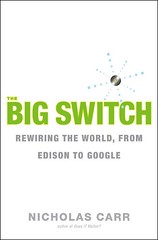 I just finished reading through The Economist’s new 14-page special report on cloud computing, “Let It Rise” in which Ludwig Siegele provides an outstanding overview of cloud computing and why it is so important:
The rise of the cloud is more than just another platform shift that gets geeks excited. It will undoubtedly transform the information technology (IT) industry, but it will also profoundly change the way people work and companies operate. It will allow digital technology to penetrate every nook and cranny of the economy and of society, creating some tricky political problems along the way.
Even if you are very familiar with cloud computing, I recommend you take a look at the article. Anyway, while I was reading it, I was unsurprised to come across some comments from Nicholas Carr, whose new book
The Big Switch: Rewiring the World, from Edison to Google, is essentially an early history of cloud computing and an investigation into its effects on our economy, culture, and society. And that also reminded me that, even though I have mentioned Carr’s book here several times since it was released earlier this year, I have failed to give it a dedicated review. And it certain deserves one because “The Big Switch” is easily one of the most important technology policy books of 2008.
Continue reading →
[Note: I updated this discussion and chart in a subsequent essay. See: “Are You An Internet Optimist or Pessimist? The Great Debate over Technology’s Impact on Society.”]
A number of very interesting books have been released over the past year or two which debate how the Internet is reshaping our culture and the economy. I’ve reviewed a couple of them here but I have been waiting to compile a sort of mega-book review once I found a sensible way to conceptually group them together. I’m not going to have time to cover each of them here in the detail they deserve, but I think I have at least found a sensible way to categorize them. For lack of better descriptors, I’ve divided these books and thinkers into two camps: “Internet optimists” versus “Internet Pessimists.” Here’s a list of some of the individuals and books (or other articles and blogs) that I believe epitomize these two camps of thinking:
Adherents & Their Books / Writings
|
Internet Optimists
|
Internet Pessimists
|
|
Yochai Benkler, The Wealth of Networks
|
Andrew Keen, The Cult of the Amateur
|
|
Chris Anderson, The Long Tail and “Free!”
|
Lee Siegel, Against the Machine
|
|
Clay Shirky, Here Comes Everybody
|
Nick Carr, The Big Switch
|
|
Cass Sunstein, Infotopia
|
Cass Sunstein, Republic.com
|
|
Don Tapscott, Wikinomics
|
Todd Gitlin, Media Unlimited
|
|
Kevin Kelly & Wired mag in general
|
Alex Iskold, “The Danger of Free”
|
|
Mike Masnick & TechDirt blog
|
Mark Cuban
|
And here’s a rough sketch of the major beliefs or key themes that separate these two schools of thinking about the impact of the Internet on our culture and economy:
Beliefs / Themes
|
Internet Optimists
|
Internet Pessimists
|
|
Culture / Social
|
|
Net is Participatory
|
Net is Polarizing
|
|
Net yields Personalization
|
Net yields Fragmentation
|
|
a “Global village”
|
Balkanization
|
|
Heterogeneity
/ Diversity of Thought
|
Homogeneity
/ Close-mindedness
|
|
Net breeds pro-democratic tendencies
|
Net breeds anti-democratic tendencies
|
|
Tool of liberation & empowerment
|
Tool of frequent misuse & abuse
|
|
|
|
Economics / Business
|
|
Benefits of “free”
(“Free” = future of media / business)
|
Costs of “free”
(“Free” = end of media / business)
|
|
Increasing importance of “Gift economy”
|
Continuing importance of property rights, profits, firms
|
|
“Wiki” model = wisdom of crowds; power of collective intelligence
|
“Wiki” model = stupidity of crowds; errors of collective intelligence
|
|
Mass collaboration
|
Individual effort
|
So, what to make of this intellectual war? Who’s got the story right?
Continue reading →

 The Technology Liberation Front is the tech policy blog dedicated to keeping politicians' hands off the 'net and everything else related to technology.