by Adam Thierer & Andrea Castillo
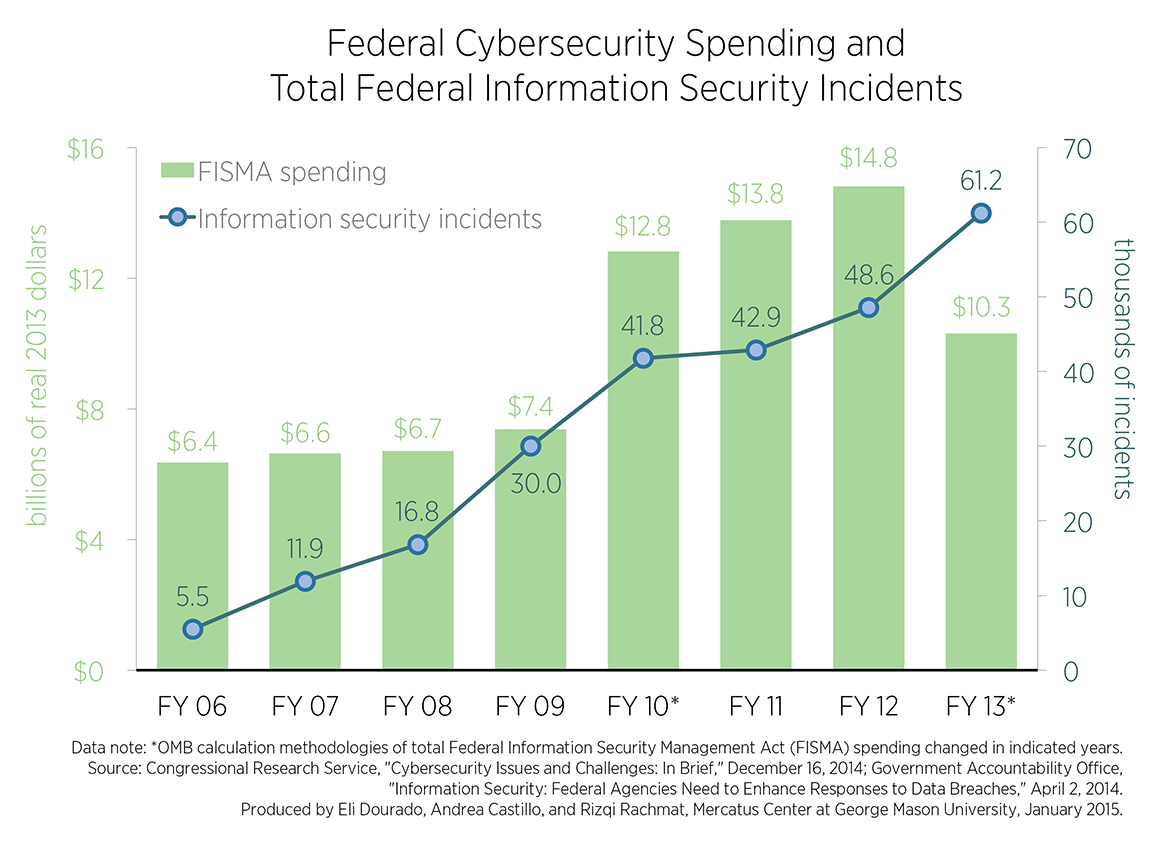
Cybersecurity policy is a big issue this year, so we thought it be worth reminding folks of some contributions to the literature made by Mercatus Center-affiliated scholars in recent years. Our research, which can be found here, can be condensed to these five core points:
1)
Institutions, societies, and economies are more resilient than we give them credit for and can deal with adversity, even cybersecurity threats.
See: Sean Lawson, “Beyond Cyber-Doom: Assessing the Limits of Hypothetical Scenarios in the Framing of Cyber-Threats,” December 19, 2012.
2)
Companies and organizations have a vested interest in finding creative solutions to these problems through ongoing experimentation and they are pursing them with great vigor.
See: Eli Dourado, “Internet Security Without Law: How Service Providers Create Order Online,” June 19, 2012.
3)
Over-arching, top-down “cybersecurity frameworks” threaten to undermine dynamism in cybersecurity and Internet governance, and could promote rent-seeking and corruption. Instead, the government should foster continued dynamic cybersecurity efforts through the development of a robust private-sector cybersecurity insurance market.
See: Eli Dourado and Andrea Castillo, “Why the Cybersecurity Framework Will Make Us Less Secure,” April 17, 2014.
4)
The language sometimes used to describe cybersecurity threats sometimes borders on “techno-panic” rhetoric that is based on “threat inflation.
See the Lawson paper already cited as well as: Jerry Brito & Tate Watkins “Loving the Cyber Bomb? The Dangers of Threat Inflation in Cybersecurity Policy,” April 10, 2012; and Adam Thierer, “Technopanics, Threat Inflation, and the Danger of an Information Technology Precautionary Principle,” January 25, 2013.
5) Finally, taking these other points into account, our
scholars have conclude that academics and policymakers should be very cautious about how they define “market failure” in the cybersecurity context. Moreover, to the extent they propose new regulatory controls to address perceived problems, those rules should be subjected to rigorous benefit-cost analysis.
See: Eli Dourado, “Is There a Cybersecurity Market Failure,” January 23, 2012.
Continue reading →

 Congress has become a less important player in the field of technology policy. Why did that happen, and what are the ramifications for technological governance efforts going forward?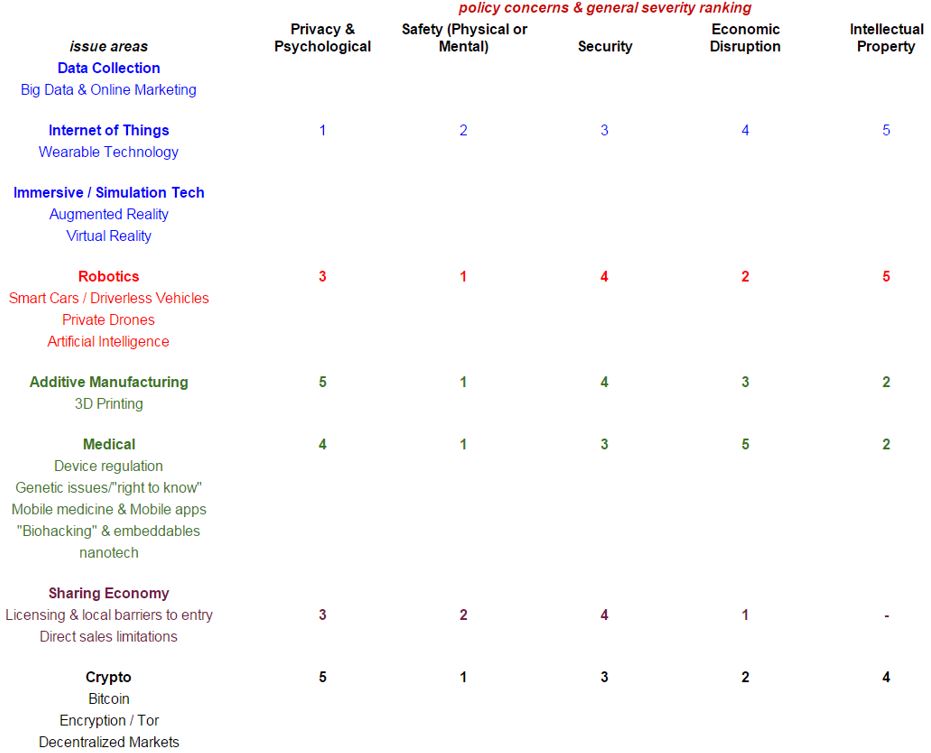

 The Technology Liberation Front is the tech policy blog dedicated to keeping politicians' hands off the 'net and everything else related to technology.