Stefan Krappitz, writer of the book Troll Culture: A Comprehensive Guide, discusses the phenomenon of internet trolling. For Krappitz trolling is disrupting people for personal amusement. Trolling is largely a positive phenomenon argues Krappitz. While it can become very negative in some cases, for the most part trolling is simply an amusing practice that is no different than playing practical jokes. Krappitz believes that trolling has been around since before the age of the internet. He notes that the behavior of Socrates is reminiscent of trolling because he pretended to be a student and then used his questioning to mock people who did not know what they were talking about. Krappitz also discusses anonymity and how it contributes and takes away from trolling as well as discussing where the line is between good trolling and cyber-bullying.
Download
Related Links
Sen. Amy Klobuchar just released a letter to Facebook demanding the site require “a prominent safety button or link on the profile pages of users under the age of 18″—akin to the so-called “panic button” app launched earlier this week by the UK’s Child Exploitation & Online Protection Centre (CEOP). She doesn’t seem to realize that this app is available to all Facebook users, not just those in the UK. But her focus on empowerment tools and education is admirable, and it’s certainly a fair question to ask what sites like Facebook and MySpace are doing in these areas.
Unfortunately, Klobuchar’s letter also engages in blatant fear-mongering:
Recent research has shown that one in four American teenagers have been victims of a cyber predator. And when teens experience abusive behavior online, only ten percent discuss it with their parents and even fewer report the misconduct to law enforcement. It’s clear that teenagers need to know how to respond to a cyber attack and I believe we need stronger reporting mechanisms to keep our kids safe.
Klobuchar doesn’t actually
cite anything, so it’s not clear what research she’s relying on. The 25% statistic is particularly incendiary, suggesting a nationwide cyber-predation crisis—perhaps leading the public to believe 8 or 9 million teens have been lured into sexual encounters offline. Perhaps the Senator considers every cyber-bully a cyber predator—which might get to the 25% number. But there are two serious problem with that moral equivalence.
First, to equate child predation with peer bullying is to engage in a dangerous game of defining deviancy down. Predation and bullying are
radically different things. The first (sexual abuse) is a clear and heinous crime that can lead to long-term psychological damage. The second might be a crime in certain circumstances, but generally not. And it is even less likely to be a crime when it occurs among young peers, which research shows constitutes the vast majority of cases. As Adam Thierer and I noted in our Congressional testimony last year, there are legitimate concerns about cyberbullying, but it’s something best dealt with by parents and schools rather than prosecutors (like Klobuchar in her pre-Senate career).
Second, a series of official taskforces have concluded that the cyberpredator technopanic is vastly overblown. Continue reading →
Bob Barr, the four term Republican Georgia congressman turned ACLU activist and 2008 Libertarian Presidential candidate, has denounced Rep. Linda Sánchez‘s (D-CA) “Megan Meier Cyber Bullying Prevention Act” (H.R. 1966) in particularly harsh terms:
This legislation represents an exercise in overcriminalization and poor draftsmanship not often seen, even in the Congress. A term as broad and as vague as “intent to . . . cause substantial emotional distress to a person” invites constitutional challenge as being violative of the Fifth Amendment due process guarantee, as well as the First Amendment’s language protecting speech (including political and news media speech). Sending an e-mail or a blog, or even posting a Twitter message that might be particularly insensitive or even downright mean about another person, including perhaps a candidate for office or an incumbent, could land you in jail if Rep. Sanchez’ bill were to become law.
Barr touches on many of the key points Adam Thierer and I raised in the written testimony we submitted to House Judiciary Committee’s hearing on this subject back in September—summarized here. At the hearing, Sanchez declared her intention to revise the bill to incorporate constitutional criticisms. Stay tuned for an update on that front…
But as we noted in our testimony, the constitutional problems with criminalization cannot beeasily remedied, especially since Sanchez seems unwilling to limit her bill to cyberharassment of children by adults (such as allegedly happened in the Megan Meier case)—relying instead on existing cyberstalking laws (a much more narrowly defined crime involving “true threats”) to govern conduct among adults, and educational and counseling-based approaches to govern true cyberbullying among children.
Why we haven’t heard the last of Sanchez’s bill, the more serious threat is likely to be efforts to deputize online intermediaries to “deal with the problem” by chipping away at the broad immunity under Section 230 that has allowed the great flourishing of online content and services involving user generated content and participation. As we noted: Continue reading →
 OnGuardOnline.gov is a project of a dozen federal agencies and several private child safety organizations who have collaborated to create a website which “provides practical tips from the federal government and the technology industry to help you be on guard against Internet fraud, secure your computer, and protect your personal information.” The Federal Trade Commission (FTC) is particularly instrumental in maintaining and promoting the site but it works closely with those other agencies and organizations to craft messages and programs.
OnGuardOnline has just released a terrific new online safety resource called
Net Cetera: Chatting with Kids about Being Online. This 54-page document is an outstanding resource for parents. The report’s advice and recommendations are spot on across the board and I particularly want to highlight the important section right at the front of the document entitled, “Talk to Your Kids.” It begins: “The best way to protect your kids online? Talk to them. Research suggests that when children want important information, most rely on their parents.” Quite right. And the NetCetra report goes on to offer the following excellent advice:
- Start early. After all, even toddlers see their parents use all kinds of devices. As soon as your child is using a computer, a cell phone or any mobile device, it’s time to talk to them about online behavior, safety, and security. As a parent, you have the opportunity to talk to your kid about what’s important before anyone else does.
- Create an honest, open environment. Kids look to their parents to help guide them. Be supportive and positive. Listening and taking their feelings into account helps keep conversation afloat. You may not have all the answers, and being honest about that can go a long way.
Continue reading →
The House Judiciary Committee’s Crime subcommittee yesterday held a hearing yesterday on the painful issues of cyberbullying (webcast). Rep. Linda Sánchez (D-CA) talked about her bill, the “Megan Meier Cyber Bullying Prevention Act” (H.R. 1966), which would create of a new federal felony to punish cyberharassment, including fines and jail time for violators. Rep. Debbie Wasserman Schultz (D-FL) talked about her bill, the “Adolescent Web Awareness Requires Education Act (AWARE Act)” (H.R. 3630), which would instead allocate $125 million over five years in grants for education and awareness-building about these problems. Without endorsing any particular approach, Adam and I discussed the general advantages of education over criminalization in our “Cyberbullying Legislation: Why Education is Preferable to Regulation” paper published by PFF in June, which we updated and submitted as written testimony. But we really couldn’t have done a better job at making this point than Ranking Member Louie Gohmert (R-TX), who powerfully articulated his opposition to the run-away growth of federal criminal law. Chairman Scott (D-VA) also expressed a commendable reluctance to just pass another law and assume that fixes the problem.
Problems with Criminalization
Three lawyers on the panel generally agreed on the thorny speech and due process concerns raised by criminalization and agreed that the Sánchez bill would require serious revision to pass constitutional muster. UVA Law Prof. Robert O’Neil (testimony) suggested that of the exceptions to free speech protection recognized by the Supreme Court, the only one that could likely be used to do what advocates of cyberbullying criminalization want to accomplish is the intentional infliction of emotional distress. But O’Neill emphasized that this is generally a tort, not a criminal action—which seems like a pretty big distinction to me, especially when the criminal sanction might involve a felony conviction, as Sánchez has proposed. Felony convictions are the “Mark of Cain” in modern life, exceeded only in their lasting effect by being required to register on a sex offender registry. Cato Adjunct Fellow and civil rights lawyer Harvey Silverglate (testimony) highlighted the serious problems raised by vagueness and over-breadth in attempting to define harassment—as evidenced by speech codes at many universities. Harvard Law Prof. John Palfrey (testimony) generally echoed these concerns.
Criminalizing what is mostly child-on-child behavior simply will not solve the age-old problem of kids mistreating each other, a problem that has traditionally been dealt with through counseling and rehabilitation at the local level. For all the talk of how to craft a criminal law (especially its definitions) to minimize constitutional problems, I was very surprised that no one at the hearing raised the critical issue of just
who it is we’re trying to protect and from whom. Continue reading →
Cyberbullying constitutes one of the largest growth categories of recent cyberlaw legislative proposals, and many state legislatures have already enacted measures aimed at combating this problem using a variety of approaches. Those attempting to monitor ongoing developments in this field might find it useful to examine this National Conference of State Legislatures (NCSL) compendium of recent state cyberbullying bills.
In June, Berin Szoka and I published a PFF white paper, “Cyberbullying Legislation: Why Education is Preferable to Regulation.” That paper mostly address federal legislation and, in particular, we contrasted the approaches set forth in Rep. Linda Sánchez’s (D-CA) “Megan Meier Cyberbullying Prevention Act,” versus the “School and Family Education about the Internet (SAFE Internet) Act,” which was introduced in the Senate by Sen. Robert Menendez (D-NJ) and in the House by Rep. Debbie Wasserman Schultz (D-FL). Whereas the Sánchez bill would create a new federal felony to address these problems, the SAFE Internet Act proposes an education-based approach to the issue.
Generally speaking, Berin and I favor the latter approach, to the extent federal legislators feel the need to act. But we argued that state experimentation on this front may be the better way to go at this time. As the NCSL survey suggests, states
are pursing a variety of strategies and will continue to do so. In light of that, I’m not sure why any federal legislation is needed at this time. If the feds are really eager to push something at the national level, perhaps a generic public awareness / PSA campaign would make the most sense while more tailored state-based experimentation continues. This is rare example of where state-based experimentation with a cyberlaw issue actually makes a lot of sense.
Just caught this LA Times editorial from a couple of days ago on the “Overreaction to Online Harassment.” The piece makes many of the same points that Berin Szoka and I stress in our PFF paper on “Cyberbullying Legislation: Why Education is Preferable to Regulation.” [Also, here’s a video of a debate on these issues that I took part in up on Cap Hill this summer.]
The
Times editorial notes that, “Because of a past tragedy, lawmakers and prosecutors are becoming overzealous in combating noxious behavior on the Web.” Specifically, they are referring to the tragic case of Megan Meier, the teen who committed suicide after being harassed on MySpace. “Members of Congress often try to expand the powers of federal prosecutors and courts when state law doesn’t produce the results they seek, especially when confronted with cases as heart-wrenching as Meier’s,” the Times noted. For example, in may 2008, Rep. Linda Sánchez (D-CA) introduced H.R. 1966 (originally H.R. 6123), the “Megan Meier Cyberbullying Prevention Act,” which would create a new federal felony to deal with this concern.
But creating a federal crime for something that is mostly peer-on-peer activity seems like overkill. Moreover, the
Times notes, “the bill is so vaguely written” that it “would have a hard time withstanding a 1st Amendment challenge if it ever became law.” As you’ll see in our paper, Berin and I agree, but we also point out that cyberbullying is a very serious matter since evidence suggests the cyberbullying is on the rise and that it can have profoundly damaging consequences for children.
Continue reading →
On July 27th, The Progress & Freedom Foundation hosted a Capitol Hill panel discussion entitled “Online Child Safety, Privacy, and Free Speech: An Overview of Challenges in Congress & the States.” The event featured remarks from:
- Parry Aftab, Executive Director, WiredSafety.org
- Todd Haiken, Senior Manager of Policy, Common Sense Media
- Jim Halpert, Partner, DLA Piper
- Berin Szoka, Senior Fellow, The Progress & Freedom Foundation
We’ve just released the transcript of the event, which I have also pasted down below the fold in a Scribd document reader. Also, the audio for this event can be heard by clicking below:
Download mp3
Here is the full event description: Continue reading →
 My friend Larry Magid, the co-director of ConnectSafely.org (with Anne Collier) and founder of SafeKids.com, has a sharp new piece up at CBS News.com entitled, “Stop Cyberbullying with Education,” in which he rightly points out how “we need to be careful with legislation that would outlaw cyberbullying.” He points out that although cyberbullying is “not an epidemic and it’s not killing our children”:
Bullying has always been a problem among adolescents and, sadly, so has suicide. In the few known cases of suicide after cyberbullying, there are other contributing factors. That’s not to diminish the tragedy or suggest that the cyberbullying didn’t play a role but–as with all online youth risk, we need to look at what else was going on in the child’s life. Even when a suicide or other tragic event doesn’t occur, cyberbullying is often accompanied by a pattern of offline bullying and sometimes there are other issues including long-term depression, problems at home, and self-esteem issues.
He goes on to provide some solid advice:
Continue reading →
In an earlier post, I mentioned an important new online child safety task force report that has just been released from the “Point Smart. Click Safe.” Blue Ribbon Working Group. It’s a great report and I encourage you to read the whole thing. It was my great pleasure to serve on this task force, and as we started finalizing our conclusions and recommendations, I started thinking about how much of what we were finding and recommending was consistent with what past online safety task forces had also concluded.
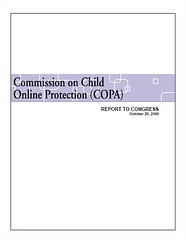
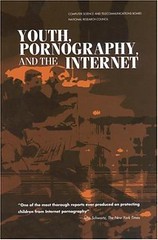
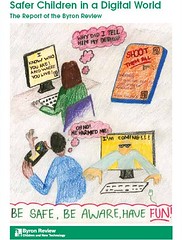
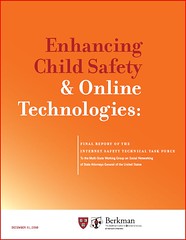
By way of background, over the past decade, five major online safety task forces or blue ribbon commissions have been convened to study online safety issues. Two of these task forces were convened in the United States and issued reports in 2000 (“COPA Commission”) and 2002 (“Thornburgh Commission“). Another was commissioned by the British government in 2007 and issued in a major report in March 2008 (“Byron Review“). Finally, two additional online safety task forces were formed in the U.S. in 2008 and concluded their work, respectively, in January (“Internet Safety Technical Task Force“) and July (“Point Smart. Click Safe.“) of 2009. [And yet another task force — the Online Safety Technology Working Group — was recently formed and has now gotten underway.]
In a new PFF white paper, ”
Five Online Safety Task Forces Agree: Education, Empowerment & Self-Regulation Are the Answer,” I walk through a chronological summary of each of these past task forces [click on covers of each report below to read them in their entirety] and highlight some of the similar themes and recommendations from them.
 Continue reading →

 The Technology Liberation Front is the tech policy blog dedicated to keeping politicians' hands off the 'net and everything else related to technology.