The Federal Trade Commission (FTC) today announced the release of an 18-page Request for Public Comment (embedded below) on its implementation of the Children’s Online Privacy Protection Act or 1998 (COPPA), which governs online sharing by, and collection of information from, children under age 13. The FTC had previously announced that it would accelerate the review, which had been planned for 2015, particularly because of concerns about the mobile marketplace, as noted in the FTC’s report on that topic released in February.
COPPA has undoubtedly succeeded in its primary goal of enhancing parental involvement in their child’s online activities in order to protect the privacy and safety of children online. Yet these benefits have come at a price, as COPPA’s considerable compliance costs (estimated at $45/child, which can be crushing in the era of “free”) have likely reduced the digital media choices available for children. So I’m glad to see the Commission recognize these trade-offs by asking about the costs and benefits of COPPA and any proposed changes right off the bat (Questions 1-5). Such trade-offs are an inevitable part of life and policymakers can’t simply ignore them, even when it’s “for the children.”
The Potential for COPPA Expansion
I look forward to seeing comments on the important questions raised by the Commission about precisely how best to implement the framework enacted by Congress. But I do worry that the Commission has explicitly invited proposals for legislative changes to the statute itself. In particular:
6. Do the definitions set forth in Part 312.2 of the Rule accomplish COPPA’s goal of protecting children’s online privacy and safety? …
28. Does the commenter propose any modifications to the Rule that may conflict with the statutory provisions of the COPPA Act? For any such proposed modification, does the commenter propose seeking legislative changes to the Act?
Note that question #6 does
not include the critical limitation “consistent with the Act’s requirements,” which appears no less than 17 times in subsequent questions about specific aspects of the current rules. Whatever the FTC intended, this will omission, combined with question #28, will be taken as an open invitation by many to propose not just changes in how the COPPA rules are implemented, but wholesale revisions to the COPPA statute itself. Continue reading →
That’s basically what FTC Chairman Jon Leibowitz told the Association of National Advertisers when he spoke to their “Advertising Law & Public Policy” conference last Thursday. As I noted last week, there’s intense pressure in Congress to pass a financial regulatory overhaul and, unfortunately, the version passed by the House in December—Rep. Barney Frank’s “Wall Street Reform and Consumer Protection Act of 2009” (H.R. 4173)—would also grant the Federal Trade Commission vast new powers for all its regulations, not just those relating to the non-bank financial institutions it currently regulates. In particular, HR 4173 would:
- Make it far easier (and not just faster) for the FTC to issue all kinds of new regulations on its own, without a specific Congressional mandate to do so and instead of relying on case-by-case enforcement to punish “unfair” or “deceptive” acts and practices;
- Reduce public input into those regulations;
- Impose heavy civil penalties on companies before notifying them that a practice might be “unfair” or “deceptive”;
- Prosecute those who merely provided “substantial assistance” to someone engaged in “unfair” or “deceptive” acts or practices; and
- Sue on its own authority, instead of through DOJ (as now).
I summarized my concerns about this bill in this short interview with PFF’s new communications director, Mike Wendy, last week:
[display_podcast]
Leibowitz has lobbied hard to have his agency put on steroids (as former FTC Chairman Jim Miller put it), asking for all these things, as well as more funding, at the first Senate hearing on Hr 4173 back in February. (Conveniently, he was the only witness!) He repeated his calls for these powers on Thursday but tried to allay fears about how they’d be used. Continue reading →
by Adam Thierer & Berin Szoka, Progress Snaphot 6.1
Stephanie Clifford of the
New York Times posted a very interesting article this week summarizing a recent “on-the-record chat” the Times staff had with Federal Trade Commission (FTC) chairman Jon Leibowitz and FTC Bureau of Consumer Protection chief David Vladeck. The interview [discussed by Braden here] is profoundly important in that it reveals an alarming disconnect regarding the relationship between “privacy” regulation and the future of media, which were the subjects of their discussion with Times staff. Namely, Leibowitz and Vladeck apparently fail to appreciate how the delicate balance between commercial advertising and journalism is at risk precisely because of the sort of regulations they apparently are ready to adopt. Because the value of online advertising depends on data about its effectiveness and consumers’ likely interests, and because advertising is indispensable to funding media, what’s ultimately at stake here is nothing short of the future of press freedom.
The “Day of Reckoning” Is Upon Us
Leibowitz and Vladeck spend the first half of
The Times interview wringing their hands about “privacy policies,” the declarations made by websites and advertising networks about their data collection and use practices (for which the FTC can and must hold them accountable). But the two feel that privacy policies don’t adequately inform consumers. Chairman Leibowitz claims that online companies “haven’t given consumers effective notice, so they can make effective choices.” And Mr. Vladeck states that advise-and-consent models “depended on the fiction that people were meaningfully giving consent.” But he and the FTC seem ready to abandon the notice and choice model because the “literature is clear” that few people read privacy policies, Vladeck told the Times. He and Leibowitz continue:
“Philosophically, we wonder if we’re moving to a post-disclosure era and what that would look like,” Mr. Vladeck said. “What’s the substitute for it?” He said the commission was still looking into the issue, but it hoped to have an answer by June or July, when it plans to publish a report on the subject. Mr. Leibowitz gave a hint as to what might be included: “I have a sense, and it’s still amorphous, that we might head toward opt-in,” Mr. Leibowitz said.
This clearly foreshadows the regulatory endgame we have long suspected was coming. When the FTC released its “Self-Regulatory Principles for Online Behavioral Advertising” eleven months ago, we asked: “What’s the Harm & Where Are We Heading?” Their answers to both questions have become clearer with each new calculated comment—all apparently intended to slowly “turn up the heat” on the advertising industry so that the proverbial frog will stay in the pot until the water finally boils. Leibowitz’s FTC has simply dodged the “harm” question with a four-part strategy: Continue reading →
On July 27th, The Progress & Freedom Foundation hosted a Capitol Hill panel discussion entitled “Online Child Safety, Privacy, and Free Speech: An Overview of Challenges in Congress & the States.” The event featured remarks from:
- Parry Aftab, Executive Director, WiredSafety.org
- Todd Haiken, Senior Manager of Policy, Common Sense Media
- Jim Halpert, Partner, DLA Piper
- Berin Szoka, Senior Fellow, The Progress & Freedom Foundation
We’ve just released the transcript of the event, which I have also pasted down below the fold in a Scribd document reader. Also, the audio for this event can be heard by clicking below:
Download mp3
Here is the full event description: Continue reading →
What Unites Advocates of Speech Controls & Privacy Regulation? [pdf]
by Adam Thierer & Berin Szoka
The Progress & Freedom Foundation,
Progress on Point No. 16.19
Anyone who has spent time following debates about speech and privacy regulation comes to recognize the striking parallels between these two policy arenas. In this paper we will highlight the common rhetoric, proposals, and tactics that unite these regulatory movements. Moreover, we will argue that, at root, what often animates calls for regulation of both speech and privacy are two remarkably elitist beliefs:
- People are too ignorant (or simply too busy) to be trusted to make wise decisions for themselves (or their children); and/or,
- All or most people share essentially the same values or concerns and, therefore, “community standards” should trump household (or individual) standards.
While our use of the term “elitism” may unduly offend some understandably sensitive to populist demagoguery, our aim here is not to launch a broadside against elitism as
Time magazine culture critic William H. Henry once defined it: “The willingness to assert unyieldingly that one idea, contribution or attainment is better than another.”[1] Rather, our aim here is to critique that elitism which rises to the level of political condescension and legal sanction. We attack not so much the beliefs of some leaders, activists, or intellectuals that they have a better idea of what it in the public’s best interest than the public itself does, but rather the imposition of those beliefs through coercive, top-down mandates.
That sort of elitism—elitism enforced by law—is often the objective of speech and privacy regulatory advocates. Our goal is to identify the common themes that unite these regulatory movements, explain why such political elitism is unwarranted, and make it clear how it threatens individual liberty as well as the future of free and open Internet. As an alternative to this elitist vision, we advocate an empowerment agenda: fostering an environment in which users have the tools and information they need to make decisions for themselves and their families. Continue reading →
The new Maine law I blogged about on Sunday is much worse than I thought based on my initial reading. If allowed to stand, it would constitute a sweeping age verification mandate introduced through the back door of “child protection.”
The law, which goes into effect in September, would extend the approach of the Children’s Online Privacy Protection Act (COPPA) of 1998 by requiring “verifiable parental consent” before the collection of kids “personal information” about kids, not just those under 13, but also adolescents age 13-17. Unlike other state-level proposals in New Jersey, Illinois, Georgia and North Carolina, Maine’s “COPPA 2.0” law would also cover health information, but would only govern the collection and use of data for marketing purposes (while the FTC has interpreted COPPA to cover to essentially any capability for communicating personal information among users).
But the Maine law would go much further than these proposals or COPPA itself by banning transfer or use of such data in anything other than de-identified, aggregate form. Still I took some comfort in the fact that the Maine law, unlike COPPA or these other proposals, lacked the second of COPPA’s two prongs: (i) collection from kids and (ii) collection on sites that are directed at kids. It’s because of the second prong that COPPA applies not only when a site operator knows that it’s collecting information from kids (or merely allowing them to share information with other users), but also when the operator’s site is (like, say, Club Penguin) targeted to kids in terms of its subject matter, branding, interface,
etc. Because I initially concluded that the Maine law would apply only to knowing collection, I supposed that it would be less likely to require age verification of all users, as other COPPA 2.0 proposals would—something that would be unlikely to survive a First Amendment challenge based on the harm to online anonymity.
But I was quite wrong. During the PFF Capitol Hill briefing Adam and I held on Monday, Jim Halpert, one of our panelists, noted that the bill imposed “strict liability.” Continue reading →
Maine has just enacted a law severely restricting marketing to kids: the Act To Prevent Predatory Marketing Practices against Minors, summarized by Covington & Burling. Adam and I released a major paper in June about such laws: COPPA 2.0: The New Battle over Privacy, Age Verification, Online Safety & Free Speech. Maine is following the lead of several other states that have tried to expand the Children’s Online Privacy Protection Act (COPPA) of 1998 to cover nost just kids under 13 but adolescents as well and potentially all social networking sites. We discussed at length the problems such laws create, particularly the possibility that large numbers of adults would, for the first time, be subject to age verification mandates before accessing (or participating in) the growing range of sites with social networking capabilities. This, in turn, would significantly “chill” free speech online by undermining anonymity.
Like COPPA 2.0 proposals in New Jersey (simply extending COPPA to cover adolescents) and Illinois (applying COPPA to most social networking sites), the Maine law tries to build on COPPA’s “verifiable parental consent” requirement for the 13-17 audience as well as those under 13.
On the one hand, the Maine law goes much further than these other COPPA 2.0 proposals. While the original bill was limited to the Internet and wireless communications, the final bill’s scope applies to all communications. The bill also covers “health-related” information (HRI) as well as “personal information” (PI). On the other hand, the Maine law is thus somewhat narrower than other COPPA 2.0 proposals and COPPA itself in that it applies only to “marketing or advertising products, goods or services.” While COPPA is commonly misunderstood to cover only marketing, it actually covers essentially any “collection” (broadly defined) of personal information from kids for any purpose—including merely giving kids access to communications functionality that might let them share personal information with other users (even if the site itself is not “collecting” that information in the commonly understood sense).
Continue reading →
In an earlier post, I mentioned an important new online child safety task force report that has just been released from the “Point Smart. Click Safe.” Blue Ribbon Working Group. It’s a great report and I encourage you to read the whole thing. It was my great pleasure to serve on this task force, and as we started finalizing our conclusions and recommendations, I started thinking about how much of what we were finding and recommending was consistent with what past online safety task forces had also concluded.
By way of background, over the past decade, five major online safety task forces or blue ribbon commissions have been convened to study online safety issues. Two of these task forces were convened in the United States and issued reports in 2000 (“COPA Commission”) and 2002 (“Thornburgh Commission“). Another was commissioned by the British government in 2007 and issued in a major report in March 2008 (“Byron Review“). Finally, two additional online safety task forces were formed in the U.S. in 2008 and concluded their work, respectively, in January (“Internet Safety Technical Task Force“) and July (“Point Smart. Click Safe.“) of 2009. [And yet another task force — the Online Safety Technology Working Group — was recently formed and has now gotten underway.]
In a new PFF white paper, ”
Five Online Safety Task Forces Agree: Education, Empowerment & Self-Regulation Are the Answer,” I walk through a chronological summary of each of these past task forces [click on covers of each report below to read them in their entirety] and highlight some of the similar themes and recommendations from them.
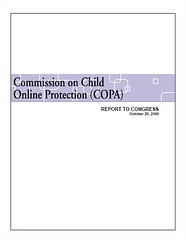

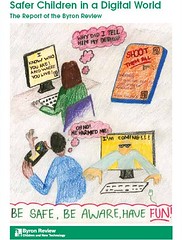
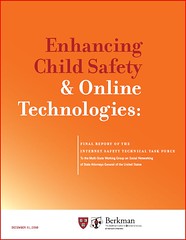
 Continue reading →
The painful issue of cyberbullying has recently taken center stage in the ongoing debate about online child safety. Last week I wrote about Lori Drew’s acquittal on charges related to Megan Meier’s tragic suicide, suggesting that the judge in the case was right to overturn her conviction on a very expansive reading of the federal anti-hacking statute. While I think that decision was necessary on legal grounds, it’s sure to add “fuel to the fire” of calls for “action” in Congress. Thus, I emphasized that observers of the case need to separate their understandable outrage from the from the questions of (1) whether that statute was properly applied and (2) how the law should treat such cases in the future.
On the second question, Adam and I recently released a major entitled, “Cyberbullying Legislation: Why Education is Preferable to Regulation.” We distinguish among:
- Cyberbullying: kid-on-kid abuse online
- Cyberharassment generally: people of all ages using the Internet to harass each other
- Adult-on-kid cyberharassment: For example, Lori Drew’s alleged (but still unclear) role in the Megan Meier case
In a nutshell, we argue that education is the better approach to cyberbullying (Problem #1)—an approach taken by a bill introduced in the Senate by Sen. Robert Menendez (D-NJ) and in the House by Rep. Debbie Wasserman Schultz (D-FL) . We go on to argue that, while it would be difficult to create criminal sanctions for cyberharassment generally (Problem #2) without infringing free speech and due process rights, it might be possible to craft laws narrowly tailored to cyberharassment of kids by adults (Problem #3). Continue reading →
The Gawker offers a fascinating discussion of the legal right to anonymity:
“There is clearly a moral case that some people should be able to join the public debate and retain their anonymity,” Tench told Gawker. “And I think this will have a chilling effect. Blogs like this can only exist anonymously, and I imagine that anyone who wanted to set one up is thinking about this case.”
As well they should. But the notion that anonymous publishers have a right, in perpetuity, to keep their identities a secret—or that people who learn their identities are honor-bound not to reveal them—is nonsense.
Amen! One can resist, fiercely, government efforts to reduce online anonymity through age verification or identity authentication mandates, as Adam Thierer have argued most recently in our work about efforts to expand COPPA to cover adolescents (“COPPA 2.0,” which would indirectly mandate age verification for large numbers of adults for the first time). One might even argue that there are moral reasons to resist the urge to out pseudonymous/anonymous bloggers (just as one might avoid outing closeted gays out of respect for their privacy). But one need not accept the pernicious idea that the government should punish the outing of peusodonymous/anonymous writers, which is simply a restraint on legitimate free speech.
This exchange, cited by the Gawker article, is particularly interesting, and demonstrates how one can distinguish the question of whether outing is “right” or “appropriate” from the question of whether it should be punished by law:
When the National Review‘s Ed Whelan revealed Publius, who writes for Obsidian Wings, to be a professor of law at the South Texas College of Law named John F. Blevins earlier this month, the palpable online outrage forced Whelan to apologize.

 The Technology Liberation Front is the tech policy blog dedicated to keeping politicians' hands off the 'net and everything else related to technology.