I’ve been floating around in conservative policy circles for 30 years and I have spent much of that time covering media policy and child safety issues. My time in conservative circles began in 1992 with a 9-year stint at the Heritage Foundation, where I launched the organization’s policy efforts on media regulation, the Internet, and digital technology. Meanwhile, my work on child safety has spanned 4 think tanks, multiple blue ribbon child safety commissions, countless essays, dozens of filings and testimonies, and even a multi-edition book.
During this three-decade run, I’ve tried my hardest to find balanced ways of addressing some of the legitimate concerns that many conservatives have about kids, media content, and online safety issues. Raising kids is the hardest job in the world. My daughter and son are now off at college, but the last twenty years of helping them figure out how to navigate the world and all the challenges it poses was filled with difficulties. This was especially true because my daughter and son faced completely different challenges when it came to media content and online interactions. Simply put, there is no one-size-fits-all playbook when it comes to raising kids or addressing concerns about healthy media interactions. Continue reading →
On December 13th, I will be participating in an Atlas Network panel on, “Big Tech, Free Speech, and Censorship: The Classical Liberal Approach.” In anticipation of that event, I have also just published a new op-ed for The Hill entitled, “Left and right take aim at Big Tech — and the First Amendment.” In this essay, I expand upon that op-ed and discuss the growing calls from both the Left and the Right for a variety of new content regulations. I then outline the classical liberal approach to concerns about free speech platforms more generally, which ultimately comes down to the proposition that innovation and competition are always superior to government regulation when it comes to content policy.
In the current debates, I am particularly concerned with calls by many conservatives for more comprehensive governmental controls on speech policies enforced by various private platforms, so I will zero in on those efforts in this essay. First, here’s what both the Left and the Right share in common in these debates: Many on both sides of the aisle desire more government control over the editorial decisions made by private platforms. They both advocate more political meddling with the way private firms make decisions about what types of content and communications are allowed on their platforms. In today’s hyper-partisan world,” I argue in my
Hill column, “tech platforms have become just another plaything to be dominated by politics and regulation. When the ends justify the means, principles that transcend the battles of the day — like property rights, free speech and editorial independence — become disposable. These are things we take for granted until they’ve been chipped away at and lost.”
Despite a shared objective for greater politicization of media markets, the Left and the Right part ways quickly when it comes to the underlying objectives of expanded government control. As I noted in my
Hill op-ed:
there is considerable confusion in the complaints both parties make about “Big Tech.” Democrats want tech companies doing more to limit content they claim is hate speech, misinformation, or that incites violence. Republicans want online operators to do less, because many conservatives believe tech platforms already take down too much of their content.
This makes life very lonely for free speech defenders and classical liberals. Usually in the past, we could count on the Left to be with us in some free speech battles (such as putting an end to “indecency” regulations for broadcast radio and television), while the Right would be with us on others (such as opposition to the “Fairness Doctrine,” or similar mandates). Today, however, it is more common for classical liberals to be fighting with both sides about free speech issues.
My focus is primarily on the Right because, with the rise of Donald Trump and “national conservatism,” there seems to be a lot of soul-searching going on among conservatives about their stance toward private media platforms, and the editorial rights of digital platforms in particular. Continue reading →
Over at Discourse magazine I’ve posted my latest essay on how conservatives are increasingly flirting with the idea of greatly expanding regulatory control of private speech platforms via some sort of common carriage regulation or new Fairness Doctrine for the internet. It begins:
Conservatives have traditionally viewed the administrative state with suspicion and worried about their values and policy prescriptions getting a fair shake within regulatory bureaucracies. This makes their newfound embrace of common carriage regulation and media access theory (i.e., the notion that government should act to force access to private media platforms because they provide an essential public service) somewhat confusing. Recent opinions from Supreme Court Justice Clarence Thomas as well as various comments and proposals of Sen. Josh Hawley and former President Trump signal a remarkable openness to greater administrative control of private speech platforms.
Given the takedown actions some large tech companies have employed recently against some conservative leaders and viewpoints, the frustration of many on the right is understandable. But why would conservatives think they are going to get a better shake from state-regulated monopolists than they would from today’s constellation of players or, more importantly, from a future market with other players and platforms?
I continue on to explain why conservatives should be skeptical of the administrative state being their friend when it comes to the control of free speech. I end by reminding conservatives what President Ronald Reagan said in his 1987 veto of legislation to reestablish the Fairness Doctrine: “History has shown that the dangers of an overly timid or biased press cannot be averted through bureaucratic regulation, but only through the freedom and competition that the First Amendment sought to guarantee.”
Read more at
Discourse, and down below you will find several other recent essays I’ve written on the topic.
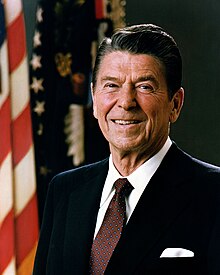 With many conservative policymakers and organizations taking a sudden pro-censorial turn and suggesting that government regulation of social media platforms is warranted, it’s a good time for them to re-read President Ronald Reagan’s 1987 veto of Fairness Doctrine legislation. Here’s the key line:
History has shown that the dangers of an overly timid or biased press cannot be averted through bureaucratic regulation, but only through the freedom and competition that the First Amendment sought to guarantee.
That wisdom is just as applicable today when some conservatives suggest that government intervention is needed to address what they regardless as “bias” or “unfair” treatment on Twitter, Facebook, YouTube, or whatever else. Ignoring the fact that such meddling would likely violate property rights and freedom of contract — principles that most conservatives say they hold dear — efforts to empower the Federal Communications Commission, the Federal Trade Commission, or other regulators would be hugely misguided on First Amendment grounds.
President Reagan understood that there was a better way to approach these issues that was rooted in innovation and First Amendment protections. Here’s hoping that conservatives remember his sage advice. Read his entire veto message here.
Additional Reading:
by Andrea O’Sullivan & Adam Thierer
This essay originally appeared on The Bridge on September 25, 2019.
It is quickly becoming one of the iron laws of technology policy that by attempting to address one problem (like privacy, security, safety, or competition), policymakers often open up a different problem on another front. Trying to regulate to protect online safety, for example, might give rise to privacy concerns, or vice versa. Or taking steps to address online privacy through new regulations might create barriers to new entry, thus hurting online competition.
In a sense, this is simply a restatement of the law of unintended consequences. But it seems to be occurring with greater regularity in the technology policy today, and it serves as another good reminder why humility is essential when considering new regulations for fast-moving sectors.
Consider a few examples.
Privacy vs security & competition
Many US states and the federal government are considering data privacy regulations in the vein of the European Union’s wide-reaching General Data Privacy Regulation (GDPR). But as early experiences with the GDPR and various state efforts can attest, regulations aimed at boosting consumer privacy can often butt against other security and competition concerns. Continue reading →
Thirteen years ago I penned an essay entitled, “Your Soapbox is My Soapbox!” It was condensed from a 2005 book I had released at the same time called Media Myths. My research and writing during that period and for fifteen years prior to that was focused on the dangers associated with calls by radical Left-leaning media scholars and policy activists for a veritable regulatory revolution in the way information and communication technology (ICT) platforms were operated. They pushed this revolution using noble-sounding rhetoric like “fairness in coverage,” “right of reply,” “integrity of public debate,” “preserving the public square,” and so on. Their advocacy efforts were also accompanied by calls for a host of new regulatory controls including a “Bill of Media Rights” to grant the public a litany of new affirmative rights over media and communications providers and platforms.
But no matter how much the so-called “media access” movement sought to sugarcoat their prescriptions, in the end, what those Left-leaning scholars and advocates were calling for was sweeping state control of media and communications technologies and platforms. In essence, they wanted to socialize private soapboxes and turn them into handmaidens of the state.
Here’s the way I began my old “soapbox” essay:
Imagine you built a platform in your backyard for the purpose of informing or entertaining your friends of neighbors. Now further imagine that you are actually fairly good at what you do and manage to attract and retain a large audience. Then one day, a few hecklers come to hear you speak on your platform. They shout about how it’s unfair that you have attracted so many people to hear you speak on your soapbox and they demand access to your platform for a certain amount of time each day. They rationalize this by arguing that it is THEIR rights as listeners that are really important, not YOUR rights as a speaker or the owner of the soapbox.
That sort of scenario could never happen in America, right? Sadly, it’s been the way media law has operated for several decades in this country. This twisted “media access” philosophy has been employed by federal lawmakers and numerous special interest groups to justify extensive and massively unjust regime of media regulation and speech redistributionism. And it’s still at work today.
That was 2005. What’s amazing today is that this same twisted attitude is still on display, but it is
conservatives who are now the ring-leaders of the push to socialize soapboxes! Continue reading →
In a post here last month on “Two Paradoxes of Privacy Regulation,” I discussed some of the interesting — and to me, troubling — similarities between rising calls for online privacy regulation and ongoing attempts to enact various types of controls on online speech or expression. In that essay, I argued that while most privacy advocates are First Amendment supporters as it pertains to content regulation, they abandon their free speech values and corresponding constitutional tests when it comes to privacy regulation. When the topic of debate shifts from concerns about potentially objectionable content to the free movement of personal information, personal responsibility and self-regulation become the last option, not the first. Privacy advocates typically ignore, downplay, or denigrate user-empowerment tools, even though many of those same advocates endorse “self-help” efforts as the superior method of dealing with objectionable speech or media content. In essence, therefore, they are claiming self-help is the right answer in one context, but not the other. Ironically, therefore, privacy advocates and moral conservatives actually share much in common in that they are using the same playbook to advance their goals: They are rejecting personal responsibility and user-empowerment tools and techniques in favor or government control for their respective issues.
Keeping that insight in mind, I want to take this comparison a step further and suggest that what really unites these two movements is a general conservatism about how our online lives and online business should be governed. For the moral conservatives, that instinct is well-understood. They want hold the line against what they believe is a decaying moral order by restricting access to potentially objectionable speech or content — dirty words, violent video games, online porn, or whatever else. The conservatism of the modern privacy movement is less obvious at first blush. I suspect that many privacy conservatives would not consider themselves “conservative” at all, and they might even be highly offended at being grouped in with moral conservatives who seek to wield government power to control online speech and expression. Nonetheless, the two groups share a common trait —
an innate hostility to the impact of technological / social change within the realm of “rights” or values they care about. In their respective arenas, they both rejected the evolutionary dynamism of the free marketplace and they long for a return to a simpler and supposedly better time. Continue reading →
Ben Edelman of the Harvard Business School has just released an interesting new study in the Journal of Economic Perspectives entitled, “Red Light States: Who Buys Online Adult Entertainment?” Using data he obtained from a top-10 seller of adult entertainment, Edelman examined adult website subscriptions on the zip code level and found that conservatives seem to be every bit as interested in pornography as liberals. In fact, “Subscriptions [to adult entertainment sites] are slightly more prevalent in states that have enacted conservative legislation on sexuality” and “subscriptions are also more prevalent in states where surveys indicate conservative positions on religion, gender roles, and sexuality.” He also finds that:
In states where more people agree that “Even today miracles are performed by the power of God” and “I never doubt the existence of God,” there are more subscriptions to this service. Subscriptions are also more prevalent in states where more people agree that “I have old-fashioned values about family and marriage” and “AIDS might be God’s punishment for immoral sexual behavior.”
Even more interesting is the fact that, on a state-by-state basis, Utah* residents topped all other Americans in terms of subscriptions to online adult entertainment websites. Finally, Edelman concludes:
On the whole, these adult entertainment subscription patterns show a remarkable consistency: all but eleven states have between two and three subscribers to this service per thousand broadband households, and all but four have between 1.5 and 3.5. With interest in online adult entertainment relatively constant across regions, there’s little sign of a major divide.
But it’s not just Internet porn where we see this trend at work. As I noted in my law review article, “Why Regulate Broadcasting?” we’ve seen a similar trend at work with television. When you look at some of the TV shows that conservatives and religious groups gripe most about, you might be surprised to know that it is conservatives who make those shows as popular as they are!
Continue reading →
I was over at the Federal Communications Commission (FCC) the other day chatting with someone about various regulatory issues and Rush Limbaugh’s WSJ editorial came up. The person I was speaking with made a comment about how conservatives have really been energized and unified in opposition to the re-imposition to the Doctrine. I reminded them, however, that it wasn’t always the case that conservatives stood together in the fight over the Fairness Doctrine. In fact, when I first came to town almost 20 years ago, there were still plenty of conservatives who actually favored it. I was reminded of that fact when reading a new piece in Engage about “Broadcast ‘Fairness’ in the Twenty-First Century” by my friend Robert Corn-Revere. Bob is one America’s great First Amendment defenders and his new essay offers an excellent history of efforts to micro-manage speech on the broadcast airwaves over the years. In it, he reminds us that:
Given the recent vocal opposition to the Fairness Doctrine in the interest of preserving conservative talk radio, it is easy to forget that many prominent conservatives championed the doctrine before its demise. Phyllis Schlafly was a vocal proponent of the Fairness Doctrine because of what she described as “the outrageous and blatant anti-Reagan bias of the TV network newscasts,” and she testified at the FCC in the 1980s in support of the policy “to serve as a small restraint on the monopoly power wielded by Big TV Media.” Senator Jesse Helms was another long-time advocate of the Fairness Doctrine, and conservative groups Accuracy in Media and the American Legal Foundation actively pursued fairness complaints at the FCC against network newscasts.
Likewise, in our book, A Manifesto for Media Freedom, Brian Anderson and I note that some other prominent right-leaning politicians, such as Sen. Trent Lott, favored the Fairness Doctrine. Moreover, even though most of those conservative individuals and groups have now turned against the Fairness Doctrine, some Republicans still defend (or even seek to expand) the same underlying regulatory concepts that served as the foundation of the Fairness Doctrine. As Corn-Revere notes: Continue reading →

 The Technology Liberation Front is the tech policy blog dedicated to keeping politicians' hands off the 'net and everything else related to technology.