Corbin Barthold invited me on Tech Freedom’s “Tech Policy Podcast” to discuss the history of antitrust and competition policy over the past half century. We covered a huge range of cases and controversies, including: the DOJ’s mega cases against IBM & AT&T, Blockbuster and Hollywood Video’s derailed merger, the Sirius-XM deal, the hysteria over the AOL-Time Warner merger, the evolution of competition in mobile markets, and how we finally ended that dreaded old MySpace monopoly!
What does the future hold for Google, Facebook, Amazon, and Netflix? Do antitrust regulators at the DOJ or FTC have enough to mount a case against these firms? Which case is most likely to have legs?
Corbin and I also talked about the of progress more generally and the troubling rise of more and more Luddite thinking on both the left and right. I encourage you to give it a listen:
In my latest column for The Hill, I consider that dangers of government gambling our tax dollars on risky industrial policy programs. I begin by noting:
Roll the dice at a casino enough times, and you are bound to win a few games. But knowing the odds are not in your favor, how much are you willing to risk losing by continuing to gamble?
This is the same issue governments confront when they gamble taxpayer dollars on industrial policy efforts, which can best be described as targeted and directed efforts to plan for specific future industrial outputs and outcomes. Throwing enough money at risky ventures might net a few wins, but at what cost? Could those resources have been better spent? And do bureaucrats really make better bets than private investors?
I continue on to note that, while the US is embarking on a major new industrial policy push, history does not provide us with a lot of hope regarding Uncle Sam’s betting record when he starts rolling those industrial policy dice. “How much tolerance should the public have for government industrial policy gambling?” I ask. I continue on:
Generally speaking, “basic” support (broad-based funding for universities and research labs) is wiser than “applied” (targeted subsidies for specific firms or sectors). With basic R&D funding, the chances of wasting resources on risky investments can be contained, at least as compared to highly targeted investments in unproven technologies and firms.
I also argue that “The riskiest bets on new technologies and sectors are better left to private investors,” and note how, “America’s venture capital industry remains the envy of the world because it continues to power world-beating advanced technology.” Accordingly, I conclude: Continue reading →
Here’s a new animated explainer video that I narrated for the Federalist Society’s Regulatory Transparency Project. The 3-minute video discusses how earlier “tech giants” rose and fell as technological innovation and new competition sent them off to what the New York Times once appropriately called “The Hall of Fallen Giants.” It’s a continuing testament to the power of “creative destruction” to upend and reorder markets, even as many pundits insist that there’s no possibility change can happen.
Congress is considering reforming television laws and solicited comment from the public last month. On Friday, I submitted a letter encouraging the reform effort. I attached the paper Adam and I wrote last year about the current state of video regulations and the need for eliminating the complex rules for television providers.
As I say in the letter, excerpted below, pay TV (cable, satellite, and telco-provided) is quite competitive, as this chart of pay TV market share illustrates. In addition to pay TV there is broadcast, Netflix, Sling, and other providers. Consumers have many choices and the old industrial policy for mass media encourages rent-seeking and prevents markets from evolving.
If there is one thing I have learned in almost 23 years of covering communications and media regulation it is this: No matter how well-intentioned, regulation often has unintended consequences that hurt the very consumers the rules are meant to protect. Case in point: “universal service” mandates that require a company to serve an entire area as a condition of offering service at all. The intention is noble: Get service out to everyone in the community, preferably at a very cheap rate. Alas, the result of mandating that result is clear: You get less competition, less investment, less innovation, and less consumer choice. And often you don’t even get everyone served.
U.S. policy long favored extending service to all. AT&T touted its “universal service” in advertisements more than a century ago. The concept was codified in a 1934 law requiring nationwide “wire and radio services” to reach everyone at “reasonable charges.” In exchange for wiring a community, telecommunications providers often gained a monopoly. Cities made similar deals with cable-TV providers beginning in the 1960s.
The problem, of course, is that while this model allowed for the slow spread of service to
most communities, it came at a very steep cost: Monopoly and plain vanilla service. I documented this in a 1994 essay entitled, “Unnatural Monopoly: Critical Moments in the Development of the Bell System Monopoly.” As well-intentioned regulatory mandates started piling up, competition slowly disappeared. And a devil’s deal was eventually cut between regulators and AT&T to adopt the company’s advertising motto — “One Policy, One System, Universal Service” — as the de facto law of the land. Continue reading →
Shortly after Tom Wheeler assumed the Chairmanship at the Federal Communications Commission (FCC), he summed up his regulatory philosophy as “competition, competition, competition.” Promoting competition has been the norm in communications policy since Congress adopted the Telecommunications Act of 1996 in order to “promote competition and reduce regulation.” The 1996 Act has largely succeeded in achieving competition in communications markets with one glaring exception: broadcast television. In stark contrast to the pro-competitive approach that is applied in other market segments, Congress and the FCC have consistently supported policies that artificially limit the ability of TV stations to compete or innovate in the communications marketplace. Continue reading →
The Federal Communications Commission (FCC) recently sought additional comment on whether it should eliminate its network non-duplication and syndicated exclusivity rules (known as the “broadcasting exclusivity” rules). It should just as well have asked whether it should eliminate its rules governing broadcast television. Local TV stations could not survive without broadcast exclusivity rights that are enforceable both legally and practicably.
The FCC’s broadcast exclusivity rules “do not create rights but rather provide a means for the parties to exclusive contracts to enforce them through the Commission rather than the courts.” (Broadcast Exclusivity Order, FCC 88-180 at ¶ 120 (1988)) The rights themselves are created through private contracts between TV stations and video programming vendors in the same manner that MVPDs create exclusive rights to distribute cable network programming.
Local TV stations typically negotiate contracts for the exclusive distribution of national broadcast network or syndicated programming in their respective local markets in order to preserve their ability to obtain local advertising revenue. The FCC has long recognized that, “When the same program a [local] broadcaster is showing is available via cable transmission of a duplicative [distant] signal, the [local] broadcaster will attract a smaller audience, reducing the amount of advertising revenue it can garner.” (Program Access Order, FCC 12-123 at ¶ 62 (2012)) Enforceable broadcast exclusivity agreements are thus necessary for local TV stations to generate the advertising revenue that is necessary for them to survive the government’s mandatory broadcast television business model.
The FCC determined nearly fifty years ago that it is an anticompetitive practice for multichannel video programming distributors (MVPDs) to import distant broadcast signals into local markets that duplicate network and syndicated programming to which local stations have purchased exclusive rights. (
See First Exclusivity Order, 38 FCC 683, 703-704 (1965)) Though the video marketplace has changed since 1965, the government’s mandatory broadcast business model is still required by law, and MVPD violations of broadcast exclusivity rights are still anticompetitive. Continue reading →
The Supreme Court hears oral arguments today in a case that will decide whether Aereo, an over-the-top video distributor, can retransmit broadcast television signals online without obtaining a copyright license. If the court rules in Aereo’s favor, national programming networks might stop distributing their programming for free over the air, and without prime time programming, local TV stations might go out of business across the country. It’s a make or break case for Aereo, but for broadcasters, it represents only one piece of a broader regulatory puzzle regarding the future of over-the-air television.
If the court rules in favor of the broadcasters, they could still lose at the Federal Communications Commission (FCC). At a National Association of Broadcasters (NAB) event earlier this month, FCC Chairman Tom Wheeler focused on “the opportunity for broadcast licensees in the 21st century . . . to provide over-the-top services.” According to Chairman Wheeler, TV stations shouldn’t limit themselves to being in the “television” business, because their “business horizons are greater than [their] current product.” Wheeler wants TV stations to become over-the-top “information providers”, and he sees the FCC’s role as helping them redefine themselves as a “growing source of competition” in that market segment. Continue reading →
Last December, it was my pleasure to take part in a great event, “The Disruptive Competition Policy Forum,” sponsored by Project DisCo (or The Disruptive Competition Project). It featured several excellent panels and keynotes and they’ve just posted the video of the panel I was on here and I have embedded it below. In my remarks, I discussed:
the contrast between Europe and America’s approach to data & privacy issues (referencing this testimony of mine);
the problem of “technopanics” in information policy debates (building on this law review article);
the difficulty of information control efforts in various tech policy debates (which I wrote about in this law review article and these two blog posts: 1, 2);
the possibility of less-restrictive approaches to privacy & security concerns (which I have written about here as well in those other law review articles);
the rise of the Internet of Things and the unique challenges it creates (see this and this as well as my new book); and,
the possibility of a splintering of the Internet or the rise of “federated Internets.”
The panel was expertly moderated by Ross Schulman, Public Policy & Regulatory Counsel for CCIA, and also included remarks from John Boswell, SVP & Chief Legal Officer at SAS, and Josh Galper, Chief Policy Officer and General Counsel of Personal, Inc. (By the way, you should check out some of the cool things Personal is doing in this space to help consumers. Very innovative stuff.) The video lasts one hour. Here it is:
The Mercatus Center at George Mason University has released a new working paper by Daniel A. Lyons, professor at Boston College Law School, entitled “Innovations in Mobile Broadband Pricing.”
In 2010, the FCC passed net neutrality rules for mobile carriers and ISPs that included a “no blocking” provision (since struck down in FCC v. Verizon). The FCC prohibited mobile carriers from blocking Internet content and promised to scrutinize carriers’ non-standard pricing decisions. These broad regulations had a predictable chilling effect on firms trying new business models. For instance, Lyons describes how MetroPCS was hit with a net neutrality complaint because it allowed YouTube but not other video streaming sites on its budget LTE plan (something I’ve written on). Some critics also allege that AT&T’s Sponsored Data program is a net neutrality violation.
In his paper, Lyons explains that the FCC might still regulate mobile networks but advises against a one-size-fits-all net neutrality approach. Instead, he encourages regulatory humility in order to promote investment in mobile networks and devices and to allow new business models. For support, he points out that several developing and rich countries have permitted commercial arrangements between content companies and carriers that arguably violate principles of net neutrality. Lyons makes the persuasive argument that these “non-neutral” service bundles and pricing decisions on the whole, rather than harming consumers, expand online access and ease non-connected populations into the Internet Age. As Lyons says,
The wide range of successful wireless innovations and partnerships at the international level should prompt U.S. regulators to rethink their commitment to a rigid set of rules that limit flexibility in American broadband markets. This should be especially true in the wireless broadband space, where complex technical considerations, rapid change, and robust competition make for anything but a stable and predictable business environment.
Further,
In the rapidly changing world of information technology, it is sometimes easy to forget that experimental new pricing models can be just as innovative as new technological developments. By offering new and different pricing models, companies can provide better value to consumers or identify niche segments that are not well-served by dominant pricing strategies.
Despite the January 2014 court decision striking down the FCC’s net neutrality rules, it’s an issue that hasn’t died. Lyons’ research provides support for the position that a fixation on enforcing net neutrality, however defined, distracts policymakers from serious discussion of how to expand online access. Rules should be written with consumers and competition in mind. Wired ISPs get the lion’s share of scholars’ attention when discussing net neutrality. In an increasingly wireless world, Lyon’s paper provides important research to guide future US policies.
The Technology Liberation Front is the tech policy blog dedicated to keeping politicians' hands off the 'net and everything else related to technology. Learn more about TLF →

 In my latest column for The Hill, I consider that dangers of government gambling our tax dollars on risky industrial policy programs. I begin by noting: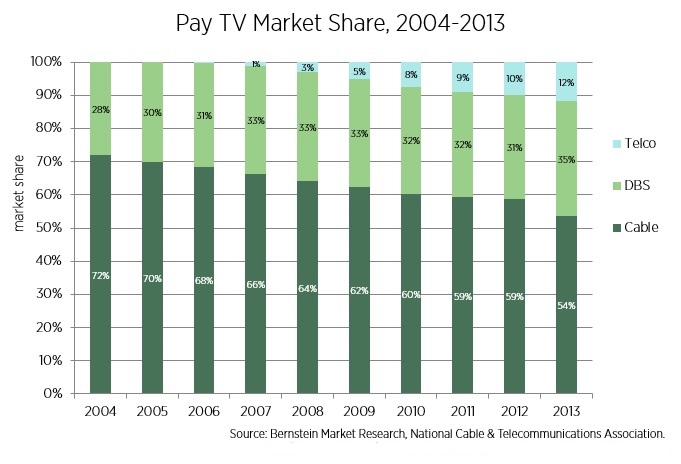
 The Technology Liberation Front is the tech policy blog dedicated to keeping politicians' hands off the 'net and everything else related to technology.