This week I was pleased to join a diverse collection of think tanks and public interest groups in submitting joint comments to the FCC opposing the proposed content filtering mandate that would be part of a future AWS-3 auction. That’s the proposed auction that would create a “free” nationwide wireless broadband service. As part of the deal, the company would need to need to take steps to provide a “clean” Internet connection by filtering content. This joint filing points out why that is a bad idea:
- the reach of the filtering mandate is extraordinarily broad, and would attempt to censor content far beyond any content regulation regime that has been previously upheld in the face of constitutional challenge.
- even if the scope of the filtering mandate were more narrowly focused, it would conflict with the First Amendment analysis that the Supreme Court applied to Internet access in the seminal
Reno v. ACLU decision.
- even if the Commission were to require filtering on an “opt out” or “opt in” basis, the Constitutional problems would not be avoided. Opt-out filtering would impose an unconstitutional burden on listeners and recipients of Internet communications, and both opt-out and opt-in filtering would violate the First Amendment rights of speakers and other content providers on the Internet. Simply put, the First Amendment does not allow a government mandated “blacklist” of websites to be blocked.
- would also violate the terms and intent of two federal statutes – 47 U.S.C. § 326 (which prohibits the Commission from “interfer[ing] with the right of free speech”) and 47 U.S.C. § 230 (which promotes user control over content and limits burdens on service providers).
- would also limit what people could do online using the free AWS-3 service so dramatically that the usefulness of the service would be radically reduced.
- would also certainly lead to legal challenges that would delay the implementation of the proposed access service.
Continue reading →
PFF has just releasing an updated edition of my booklet on “Parental Controls and Online Child Protection: A Survey of Tools & Methods.” The new version, Version 3.0, includes two new appendixes and updates to each section to reflect new parental control tools and programs developed in the last nine months.
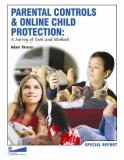
The updated report is timely as it comes on the heels of the recently-announced Internet Safety Technical Task Force, which is being chaired by the Berkman Center for Internet & Society at Harvard Law School. I am privileged to serve as a member of the Task Force, which is evaluating various online safety technologies and strategies and then reporting back to state attorneys general with our findings.
Those issues and much more are covered in the latest edition of my report. The report explores the market for parental control tools, rating schemes, education efforts, and initiatives aimed at promoting online child safety. I believe that the parental controls and content management tools cataloged in the report represent a better, less restrictive alternative to government regulation. As I conclude after evaluating that state of the market: “There has never been a time in our nation’s history when parents have had more tools and methods at their disposal to help them decide what constitutes acceptable media content in their homes and in the lives of their children.”
Version 3.0 of the special report, now over 200 pages, contains over fifty exhibits and numerous updates in all five sections of the book. Major updates have been made to the Internet, social networking, and mobile media sections, reflecting the growing importance of those sectors and issues. A greatly expanded section on video empowerment technologies has also been included. Finally, two appendices have also been added: a comprehensive legislative index cataloging over thirty bills introduced in Congress on these issues (complied with John Morris of Center for Democracy & Technology), and a glossary of 35 relevant terms and cases.
The report is available free-of-charge on the PFF website, as are the previous editions. And I am happy to provide hard copies to those who are interested.
http://documents.scribd.com/ScribdViewer.swf?document_id=2887320&access_key=key-um5xjvf98bfnuu8811v&page=&version=1&auto_size=true
PFF has just released my latest paper entitled “Parental Control Perfection? The Impact of the DVR and VOD Boom on the Debate over TV Content Regulation.” In the report, I focus on the extent to which new video technologies, such as digital video recorders (DVRs) and video on demand (VOD) services, are changing the way households consume media and are helping parents better tailor viewing experiences to their tastes and values. I provide evidence showing the rapid spread of these technologies and discuss how parents are using these tools in their homes. Finally, I argue that these developments will have profound implications for debates over the regulation of video programming. As parents are given the ability to more effectively manage their family’s viewing habits and experiences, it will lessen—if not completely undercut—the need for government intervention on their behalf.
This 16-page report can be found at: http://www.pff.org/issues-pubs/pops/pop14.20DVRboomcontentreg.pdf

 The Technology Liberation Front is the tech policy blog dedicated to keeping politicians' hands off the 'net and everything else related to technology.