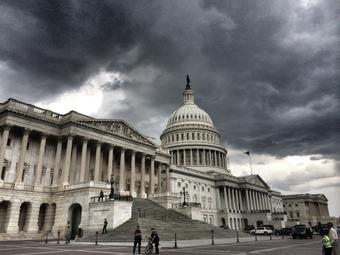
 Congress has become a less important player in the field of technology policy. Why did that happen, and what are the ramifications for technological governance efforts going forward?
I’ve spent almost 30 years covering technology policy. There was a time in my life when I spent almost all my time as a policy analyst preoccupied with developments in the federal legislative arena. I lived in the trenches of Capitol Hill and interacted with lawmakers and their staff morning, noon, and night.
In recent years, however, I have spent very little time focused on the Legislative Branch because it has effectively become a non-actor on technology policy. It is not that congressional lawmakers stopped caring about tech policy. Interest actually remains quite high—perhaps higher than ever before. Congress also continues to introduce lots of bills, host plenty of hearings, and issue mountains of press releases related to tech policy issues.
Nonetheless, all that interest and activity has not really translated into much important legislation. Continue reading →
Ken Ferree and I just filed an amicus brief with the D.C. Circuit in what could be among the most important First Amendment cases involving economic regulation in years: Comcast’s challenge to the FCC’s cap on the maximum size of a cable operator’s nationwide subscriber-audience. While few may feel righteous indignation at limitations targeted at large corporations such as Comcast or Time Warner, the larger principle at stake here is deeply important: Will the First Amendment provide a meaningful check on what USC law professor Chris Yoo has called “architectural censorship” (i.e., so-called “structural” regulations that “have the unintended consequence of reducing the quantity, quality, and diversity of media content”).
In a nutshell, we argue that that:
- The provisions of the 1992 Cable Act authorizing the FCC to impose a “cable cap” are outdated in world of media abundance and vibrant platform competition.
- Because cable is no longer the unique “bottleneck” or “gatekeeper” that it was in 1992, these statutory provisions (not just the FCC’s 30% rule) must be subject to strict scrutiny under the First Amendment as a limitation on free speech.
- Because there are “less restrictive means” of ensuring cable operators do not impede the flow of video programming to consumers, the court should strike down these provisions.
- Even if the court upholds the statute, it should nonetheless strike down the cap issued by the FCC in December 2007 (30% of all Multichannel Video Programming (MVPD) subscribers as based on an outdated model of the video marketplace.
I encourage you to read our brief (below). I’ve provided a summary below, along with some additional commentary we just couldn’t cover under our 3500 word limit.
Strict Scrutiny. Yoo’s article Architectural Censorship and the FCC is essential reading for anyone who believes that government regulations on the size and shape of the “soapbox” can have huge effects on speech itself. Yoo argues that the First Amendment should check this kind of regulation–however “content-neutral” it might seem–under “strict scrutiny”, which requires that the government show that a regulation is the “least restrictive means” available for advancing a “compelling government interest.” But Yoo ultimately concludes (pp. 713-718, PDF pp. 45-50) that, under existing precedent, most “architectural censorship will be effectively insulated from meaningful judicial review.” Continue reading →

 The Technology Liberation Front is the tech policy blog dedicated to keeping politicians' hands off the 'net and everything else related to technology.