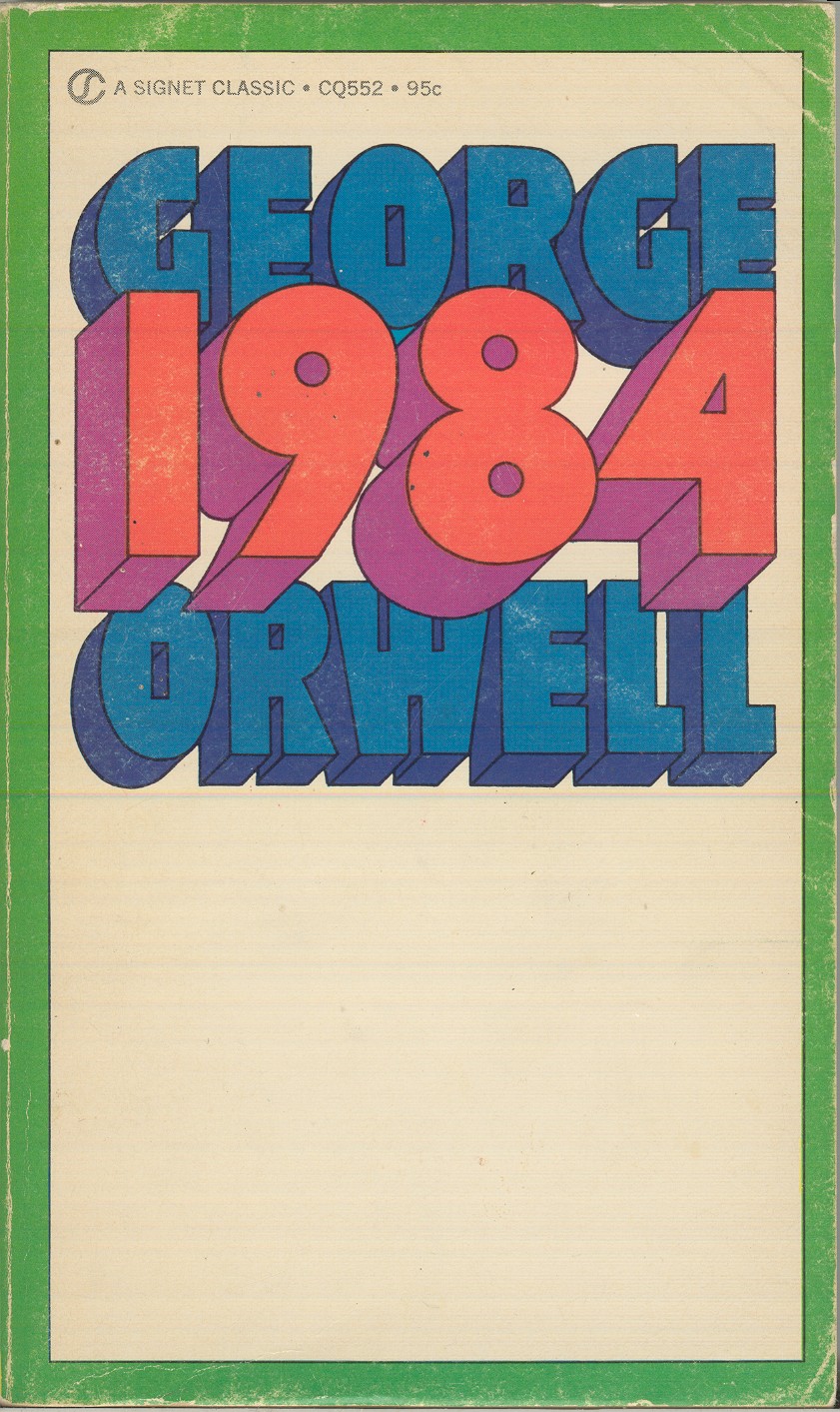
This Book is NOT about the Net
My latest Forbes column takes a look at Andrew Keen’s latest book, Digital Vertigo: How Today’s Online Social Revolution Is Dividing, Diminishing, and Disorienting Us. It’s an interesting book, and a much better one than his previous screed, Cult of the Amateur. Andrew raises valid concerns about the sheer volume of over-sharing taking place online today. As I note in my review:
Keen is on solid ground when outlining the many downsides of over-sharing, beginning with the privacy and reputational consequences for each of us. “Social media is the confessional novel that we are not only all writing but also collectively publishing for everyone else to read,” he says. That can be a problem because the Internet has a very long memory. A youngster’s silly pranks or soul-searching self-revelations may seem like a fun thing to upload when such juvenile antics or angst will win praise (and plenty of pageviews) from teen peers. Your 34-year-old self, however, will likely have a very different view of that same rant, picture, or video. Yet, that content will likely still be around for the world to see when you do reach adulthood.
And Keen offers many other reasons why we should be concerned about a world of over-sharing and “hypervisibility.” The problem is that Keen drowns out these valid concerns by assaulting the reader with layers of over-the-top pessimistic prognostications and apocalyptic rhetoric. In particular, again and again and again in the book he comes back to George Orwell and his dystopian novel, 1984. Keen insists that some sort of Orwellian catastrophe is set to befall humanity because of social media over-sharing. (See this other Forbes column on Keen’s book, “Why 1984 Is Upon Us,” to see just how far this theme can be pushed). Continue reading →
There are few things I find more annoying in the Net neutrality wars than the silly assertion by groups like Free Press and other regulatory radicals that “Net neutrality is the Internet’s First Amendment.” It’s utter rubbish as I have documented here many times before. But now Sen. Al Franken is running around sputtering such nonsense, as he did in this recent CNN.com editorial, claiming that “Net neutrality is foremost free speech issue of our time.” The folks at CNN invited me to response and below you will find the piece PFF press director Mike Wendy and I submitted.
“Big Government the Real Threat to Internet“
by Adam Thierer & Mike Wendy
In his recent CNN.com opinion piece, “Net neutrality is foremost free speech issue of our time,” Sen. Al Franken claims that “our free speech rights are under assault — not from the government but from corporations seeking to control the flow of information in America.”
He alludes to potential corporate blocking of online products and speech and says, “If that scares you as much as it scares me, then you need to care about net neutrality.”
Chicken Little, call your office!
Such sky-is-falling scare tactics are all too common in the heated debate over net neutrality regulation, but actual evidence of such nefarious corporate scheming is nowhere to be found. Perhaps that’s why Franken resorts to such tall tales.
Moreover, his reading of the First Amendment is at odds with the one most of us learned about in civics class (“Congress shall make no law…”). His would empower regulators by converting the First Amendment from a shield against government action into a sword that bureaucrats could wield against private industry. Continue reading →
I’ve just released a new PFF white paper looking at the hysteria that has often accompanied major media mergers and then taking a look at the marketplace reality years after the fact. Here‘s the PDF, but I have also pasted the entire thing down below.
_____________________________
A Brief History of Media Merger Hysteria:
From AOL-Time Warner to Comcast-NBC
by Adam Thierer
Although the pending union of Comcast and NBC Universal has not yet made it to the altar, Chicken Little-esque wails about the marriage have already begun in earnest. For example, the pro-regulatory media organization Free Press has already set up a website to complain about the deal.[1] And Jeff Chester, executive director of the Center for Digital Democracy, has called it “an unholy marriage.”[2] The fever only promises to spread once the deal is formally announced, and a lengthy fight over the deal is expected at the Federal Communications Commission (FCC) and whichever antitrust agency reviews the deal.[3]
But reality tends to play out somewhat less dramatically than the script penned by the media worrywarts. It’s worth looking back at some of the more prominent examples of media merger hysteria in recent years to understand why such panic is unwarranted, and why a deal between Comcast and NBC Universal is unlikely to lead to the sort of problems that the pessimists suggest.[4] Continue reading →
WAR IS PEACE
FREEDOM IS SLAVERY
IGNORANCE IS STRENGTH
So declared the Party in George Orwell’s classic novel
1984. The corruption of language with a constant theme of Orwell’s work, most notably his 1946 essay “Politics and the English Language.” So Orwell would not have been surprised to see the term “Internet Freedom” captured by those who advocate an increased role for government (i.e., Big Brother) online. Nor would Orwell had been surprised to see these advocates claim Orwell for themselves, insisting that opponents of government regulation are the ones corrupting language. There is perhaps no better example of this than MSNBC’s Rachel Maddow’s comments in an interview with Boing Boing’s Xeni Jardin about the divisive issue of “Net Neutrality” regulations:
Rachel Maddow [dripping with sarcasm]: Sen. McCain’s bill, as you mentioned, is actually called the “Internet Freedom Act of 2009,” and he’s deriding the government effort to keep telecoms from walling off the Internet as “government intrusion” and “trying to regulate the Internet.” What that means is that he’s picked better branding, he’s picked better names. It doesn’t really relate the facts of what he’s doing. I’m wondering if it’s too late for a rebranding of the other side here. We need to get better about talking about this, because the language seems sort of corrupt at this point.
What makes Maddow’s comments so stunning is
not her view that corporate America, rather than government, is the real enemy of freedom. That view is simply part of the long-regnant political orthodoxy. No, what’s stunning is that she actually thinks that her side is losing the “war of words” just because Sen. McCain had the gall to use the term “Internet Freedom” as a rallying-cry for the outdated, bourgeois notion that “freedom” means the absence of coercion by the one entity that can enforce its commands at the point of a gun and call it “justice”: that coldest of all cold monsters, the State. That’s precisely what “liberalism” used to be about until people like Rachel appropriated that word and words like “liberty” and “freedom” as slogans for control. Xeni Jardin picks up where Rachel left off by appropriating the concept of rights, too:
Xeni Jardin: the Internet really is a basic right, it’s a necessity,such a fundamental way for communicating and accessing information now. Telecoms shouldn’t be able to throttle, to block, to slow down our access to something that might not be in their corporate interests.
This is pure, unadulterated cyber-socialism: Rights become not the sacred defense of the individual, but a positive assertion of entitlement to a vaguely defined principle of access: by guaranteeing this access through ever-expanding “neutrality regulation”, government gains unlimited control over the Internet itself.
As Adam Thierer and I have warned, that way lies madness: Inviting the government to regulate online content and services in the name of “neutrality” (or “privacy” or any of the many “glittering generalities” ending in “-y” Orwell would have denounced) would be the death of real
Internet Freedom, which requires a strict “Separation of Web and State.” Continue reading →
Just before the New Year, Mike Masnick reported:
It’s been well over five years since we first heard about a plan in Oregon to attach GPS devices to cars and tax drivers based on how much they drove and the idea hasn’t become any better in the intervening years… but apparently it’s still being pushed. Oregon’s governor is trying to move forward with the plan. One of the reasons behind the bill has nothing to do with a more efficient way to tax drivers, but because the state is gaining less revenue from its gas tax since there are more fuel-efficient cars on the roads these days. Of course, rather than reward drivers for driving more fuel efficient cars, this sort of tax punishes them, and actually encourages the use of less fuel efficient vehicles. And, of course, that doesn’t even begin to get into the potential (and likely) privacy problems brought about by any system whereby the government has full access to a GPS system on your car.
 This is a great example of the problems that often arise when trying to bring into the digital age areas of the economy monopolized or dominated by government. There’s a clear (if imperfect) analogy here to Obama’s ambitious goal of digitizing health records: both are great ideas that raise special privacy concerns because of the heavy involvement of government. These privacy concerns are certainly not unwarranted: I wouldn’t want the government to have access to my car’s location or my medical history at any given moment or a complete record of where I’ve driven or what doctors I’ve seen. But just as relying on paper health records is clearly stupid (and dangerous), it would make a hell of a lot more sense for drivers to pay for road use depending on “where, when and how far they drove”—as in a small pilot project in the UK.
Today, state and Federal taxes on every gallon of gasoline are intended to serve two conflicting purposes—but do a poor job with both. Continue reading →
 The Progress & Freedom Foundation has just launched the new Center for Internet Freedom. CIF offers an alternative to the proliferation of advocacy groups calling for government intervention online by offering timely analyses and critiques of proposals that diminish the vital role of free markets, free speech and property rights. We aim to drive the Internet policy debate in new directions by emphasizing a layered approach of technological innovation, user education, user self-help, industry self-regulation, and the enforcement of existing laws consistent with the First Amendment. Such an approach is a less restrictive—and generally more effective—alternative to increased regulation.
Here are some of the issues I’ll be working on as CIF’s Director in conjunction with my esteemed colleagues Adam Thierer, Adam Marcus, and adjunct fellows:
- Defending online advertising as the lifeblood of online content & services, especially in the “Long Tail”;
- Emphasizing market solutions to problems of privacy protection, especially regarding the use of cookies and packet inspection data;
- Protecting online speech and expression both in the U.S. and abroad;
- Defending Section 230 immunity for Internet intermediaries;
- Opposing online taxation and legal barriers to e-commerce and digital payments, especially at the state and local levels; and
- Ensuring that Internet governance remains transparent and accountable without hampering the evolution of the Internet.
By Berin Szoka & Adam Thierer
Progress Snapshot 4.19 (PDF)
Since the fall of 2008, a debate has raged in Washington over “targeted online advertising,” an ominous-sounding shorthand for the customization of Internet ads to match the interests of users. Not only are these ads more relevant and therefore less annoying to Internet users than untargeted ads, they are more cost-effective to advertisers and more profitable to websites that sell ad space. While such “smarter” online advertising scares some—prompting comparisons to a corporate “Big Brother” spying on Internet users—it is also expected to fuel the rapid growth of Internet advertising revenues from $21.7 billion in 2007 to $50.3 billion in 2011-an annual growth rate of more than 24%. Since this growing revenue stream ultimately funds the free content and services that Internet users increasingly take for granted, policymakers should think very carefully about what’s really best for consumers before rushing to regulate an industry that has thrived for over a decade under a layered approach that combines technological “self-help” by privacy-wary consumers, consumer education, industry self-regulation, existing state privacy tort laws, and Federal Trade Commission (FTC) enforcement of corporate privacy policies.
In an upcoming PFF
Special Report, we will address the many technical, economic, and legal aspects of this complicated policy issue-especially the possibility that regulation may unintentionally thwart market responses to the growing phenomenon of users blocking online ads.
We will also issue a three-part challenge to those who call for regulation of online advertising practices:
- Identify the harm or market failure that requires government intervention.
- Prove that there is no less restrictive alternative to regulation.
- Explain how the benefits of regulation outweigh its costs.
Continue reading →
By Berin Szoka & Adam Thierer
As we noted in our intro to this ongoing series, Google’s tenth anniversary has passed with Googlephobia reaching new heights of hysteria.
But is Google really too big and dangerous, or are people just too lazy to find other alternatives to each of the wonderful services that Google offers? If one is truly paranoid about the firm’s supposed dominance, it doesn’t take much effort to live a Google-free life. To prove it, we set out to find alternatives to each of the services that Google provides. After awhile, we got a little tired of compiling alternatives in each category and just provided links for the additional choices at your disposal. It’s tough to see what the fuss is about with the cornucopia of choices at our disposal. If you don’t like Google, then just don’t use it or any of its services. The choice is yours.
In each case, we’ve listed Google first, even though Google may not be the market leader (
e.g., Google’s relatively unknown social network Orkut).
Search Engines
Continue reading →
By Berin Szoka & Adam Thierer
as part of an
ongoing series

With Google celebrating its 10th anniversary this week, many panicky pundits are using the occasion to claim that Google has become the Great “Satan” of the Internet. Nick Carr wonders what the future holds for “The OmniGoogle.” The normally level-headed Mike Malone worries that Google is “turning into Big Brother.” And Washington Post’s Rob Dubbin says that he can’t escape Google’s “tentacles,” even for just 24 hours. Meanwhile, speculation abounds that the Justice Department is preparing a major antitrust lawsuit against Google concerning its advertising partnership with Yahoo! or perhaps even a broader suit concerning Google’s “dominance” of online advertising generally.
Carr quotes Google co-founder Sergey Brin’s now-famous 2003 interview:
I think people tend to exaggerate Google’s significance in both directions. Some say Google is God. Others say Google is Satan. But if they think Google is too powerful, remember that with search engines, unlike other companies, all it takes is a single click to go to another search engine. People come to Google because they choose to. We don’t trick them.
In the last five years, Google has become far more than just a search engine. As Google’s suite of suite of complementary products continues to grow, so too does the specter of Google as an all-knowing and therefore all-powerful economic colossus. Yet Google isn’t even close to being the sort of nefarious monopolist out to destroy user privacy at every turn, as some seem to imply—if not exclaim. Indeed, in our view, the Net is overall a far better place because of the existence of Google and the many free services it provides consumers.
Our point is not that Google should be immune from criticism. Indeed, healthy criticism of corporate actions plays a vital role in the free market by disciplining corporate policies and behavior—often thus providing an effective alternative to government regulation. This is particularly important in the area of consumer privacy protection, as demonstrated by Google’s quick response to public concern about its Chrome EULA. Continue reading →

 The Technology Liberation Front is the tech policy blog dedicated to keeping politicians' hands off the 'net and everything else related to technology.