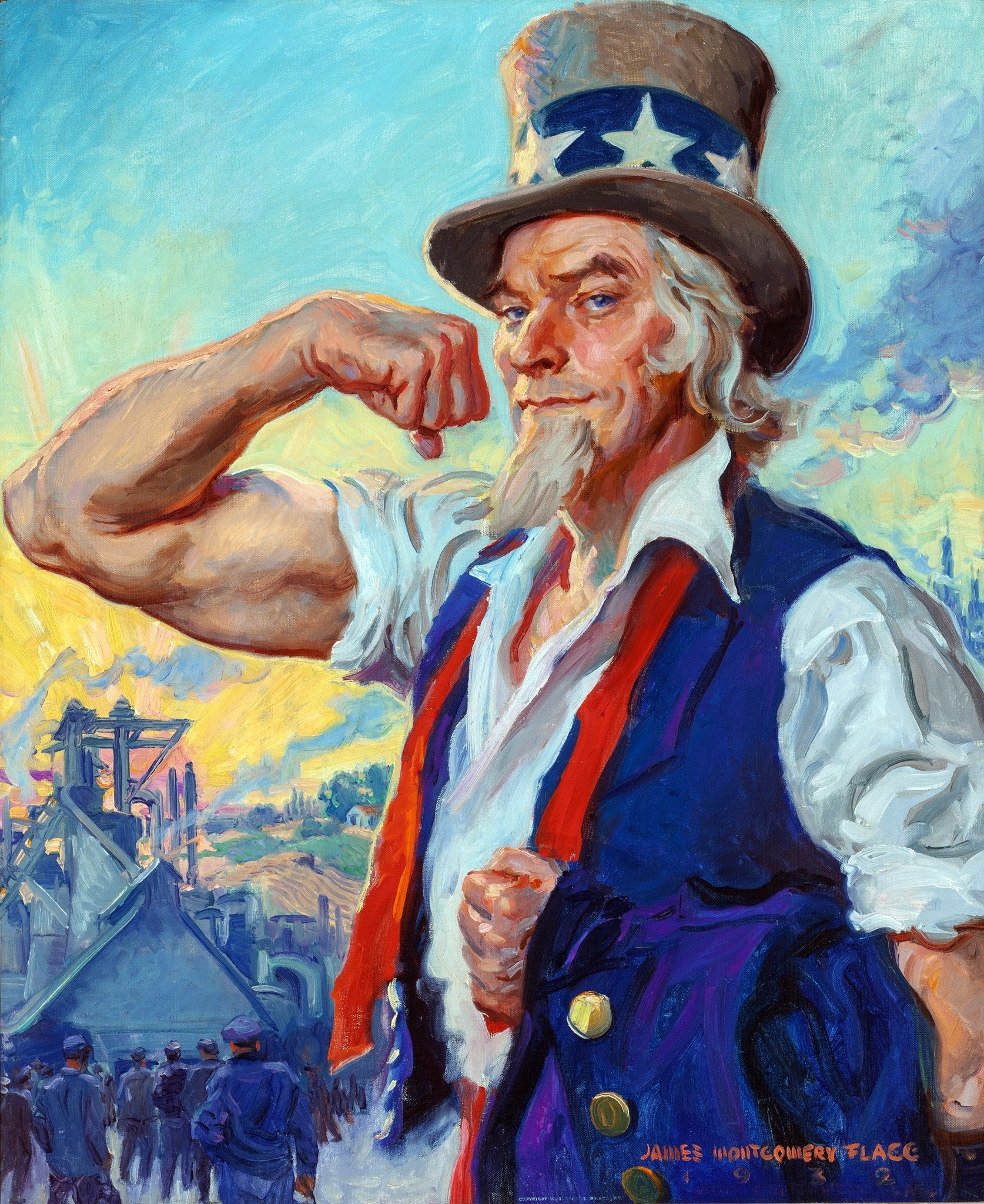
Industrial Policy is a red-hot topic once again with many policymakers and pundits of different ideological leanings lining up to support ambitious new state planning for various sectors — especially 5G, artificial intelligence, and semiconductors. A remarkably bipartisan array of people and organizations are advocating for government to flex its muscle and begin directing more spending and decision-making in various technological areas. They all suggest some sort of big plan is needed, and it is not uncommon for these industrial policy advocates to suggest that hundreds of billions will need to be spent in pursuit of those plans.
Others disagree, however, and I’ll be using this post to catalog some of their concerns on an ongoing basis. Some of the criticisms listed here are portions of longer essays, many of which highlight other types of steps that governments can take to spur innovative activities. Industrial policy is an amorphous term with many definitions of a broad spectrum of possible proposals. Almost everyone believes in
some form of industrial policy if you define the term broadly enough. But, as I argued in a September 2020 essay “On Defining ‘Industrial Policy‘,” I believe it is important to narrow the focus of the term such that we can continue to use the term in a rational way. Toward that end, I believe a proper understanding of industrial policy refers to targeted and directed efforts to plan for specific future industrial outputs and outcomes.
The collection of essays below is merely an attempt to highlight some of the general concerns about the most ambitious calls for expansive industrial policy, many of which harken back to debates I was covering in the late 1980s and early 1990s, when I first started a career in policy analysis. During that time, Japan and South Korea were the primary countries of concern cited by industrial policy advocates. Today, it is China’s growing economic standing that is fueling calls for ambitious state-led targeted investments in “strategic” sectors and technologies. To a lesser extent, grandiose European industrial policy proposals are also prompting new US counter-proposals.
All this activity is what has given rise to many of the critiques listed below. If you have suggestions for other essays I might add to this list, please feel free to pass them along. FYI: There’s no particular order here.
In a post earlier this week, I discussed Randy Cohen’s “guideline” for anonymous blogging. Specifically, Cohen argued in a recent New York Times piece that, “The effects of anonymous posting have become so baleful that it should be forsworn unless there is a reasonable fear of retribution. By posting openly, we support the conditions in which honest conversation can flourish.” While sympathetic to that guideline, I noted I agreed with it as an ethical principle, not a legal matter. In others words, what might make sense as a “best practice” for the Internet and its users would not make sense as a regulatory standard. I prefer using social norms and public pressure to drive these standards, not regulation that could have an unintended chilling effect on beneficial forms of anonymous online speech.
One of the norms we’d be wise to establish is this: People who don’t stand behind their words deserve, in almost every case, no respect for what they say. In many cases, anonymity is a hiding place that harbours cowardice, not honour. The more we can encourage people to use their real names, the better. But if we try to force this, we’ll create more trouble than we fix. But we don’t want, in the end, to turn everything over to the lawyers. The rest of us — the audience, if you will — need to establish some new norms as well.
Specifically, Gillmor argues that, ” We need to readjust our internal BS meters in a media-saturated age,” because “We are far too prone to accepting what we see and hear.” I think Gillmor has too little faith in most digital denizens; most of us take anonymous comments with a grain of salt and assume that the ugliest of those comments are often untrue. And that’s generally the “principle” he recommends each of us adopt going forward: Continue reading →
Randy Cohen, who pens “The Ethicist” column for The New York Times Magazine, wrote this week about the “skank case,” or the controversy surrounding the recent legal outing for an anonymous blogger who called fashion model Liskula Cohen a “psychotic, lying, whoring … skank.” Thanks to a recent court decision, we now know that the blogger who uttered those words is Rosemary Port, a 29-year-old Fashion Institute of Technology student. And she now apparently plans to sue Google for revealing her identity to the court. [As a shameful aside, can I just say that there has never been a nerdy Internet legal battle that involved two more smokin’ hot women than this! Sorry, I couldn’t resist pointing out the obvious.]
Has anonymous posting, though generally protected by law, become so toxic that it should be discouraged? It has. To promote the social good of lively conversation and the exchange of ideas, transparency should be the default mode. […]
Here is a guideline. The effects of anonymous posting have become so baleful that it should be forsworn unless there is a reasonable fear of retribution. By posting openly, we support the conditions in which honest conversation can flourish.
But Mr. Cohen never specifies whether he is talking about an
ethical guideline or a legal guideline. There is a world of difference, of course. As a matter of social or personal ethics, I think many of us would agree that anonymity “should be forsworn” and we should encourage people to “post openly.” I always live by that rule myself when blogging or posting comments on other sites, whether they are blogs, discussion boards, or even shopping sites. But that is my choice. I would not want that choice forced by law upon others. Continue reading →
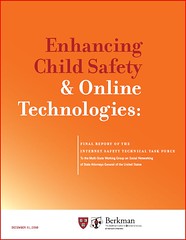
In an earlier post, I mentioned an important new online child safety task force report that has just been released from the “Point Smart. Click Safe.” Blue Ribbon Working Group. It’s a great report and I encourage you to read the whole thing. It was my great pleasure to serve on this task force, and as we started finalizing our conclusions and recommendations, I started thinking about how much of what we were finding and recommending was consistent with what past online safety task forces had also concluded.
By way of background, over the past decade, five major online safety task forces or blue ribbon commissions have been convened to study online safety issues. Two of these task forces were convened in the United States and issued reports in 2000 (“COPA Commission”) and 2002 (“Thornburgh Commission“). Another was commissioned by the British government in 2007 and issued in a major report in March 2008 (“Byron Review“). Finally, two additional online safety task forces were formed in the U.S. in 2008 and concluded their work, respectively, in January (“Internet Safety Technical Task Force“) and July (“Point Smart. Click Safe.“) of 2009. [And yet another task force — the Online Safety Technology Working Group — was recently formed and has now gotten underway.]
The Technology Liberation Front is the tech policy blog dedicated to keeping politicians' hands off the 'net and everything else related to technology. Learn more about TLF →





 The Technology Liberation Front is the tech policy blog dedicated to keeping politicians' hands off the 'net and everything else related to technology.