On July 27th, The Progress & Freedom Foundation hosted a Capitol Hill panel discussion entitled “Online Child Safety, Privacy, and Free Speech: An Overview of Challenges in Congress & the States.” The event featured remarks from:
- Parry Aftab, Executive Director, WiredSafety.org
- Todd Haiken, Senior Manager of Policy, Common Sense Media
- Jim Halpert, Partner, DLA Piper
- Berin Szoka, Senior Fellow, The Progress & Freedom Foundation
We’ve just released the transcript of the event, which I have also pasted down below the fold in a Scribd document reader. Also, the audio for this event can be heard by clicking below:
Download mp3
Here is the full event description: Continue reading →
I’ve just had a new article published by the American Legislative Exchange Council (ALEC) in which I make the case against “techno-panics,” which refers to public and political crusades against the use of new media or technologies by the young. The article is entitled “Parents, Kids & Policymakers in the Digital Age: Safeguarding Against ‘Techno-Panics‘” and it appears in the July 2009 Inside ALEC newsletter. This is something I have spent a lot of time writing about here in recent years (See 1, 2, 3, 4, 5) and I finally got around to putting it altogether in a concise essay here. I have pasted the full text below. [And I just want to send a shout-out to my friend Anne Collier of Net Family News.org, whose work on this topic has been very influential on my thinking.]
“Parents, Kids & Policymakers in the Digital Age: Safeguarding Against ‘Techno-Panics‘”
by Adam Thierer
A cursory review of the history of media and communications technologies reveals a reoccurring cycle of “techno-panics” — public and political crusades against the use of new media or technologies by the young. From the waltz to rock-and-roll to rap music, from movies to comic books to video games, from radio and television to the Internet and social networking websites, every new media format or technology has spawned a fresh debate about the potential negative effects they might have on kids.
Inevitably, fueled by media sensationalism and various activist groups, these social and cultural debates quickly become political debates. Indeed, each of the media technologies or outlets mentioned above was either regulated or threatened with regulation at some point in its history. And the cycle continues today. During recent sessions of Congress, countless hearings were held and bills introduced on a wide variety of media and content-related issues. These proposals dealt with broadcast television and radio programming, cable and satellite television content, video games, the Internet, social networking sites, and much more. State policymakers, especially state Attorneys General (AGs), have also joined in such crusades on occasion. The recent push by AGs for mandatory age verification for all social networking sites is merely the latest example.
What is perhaps most ironic about these techno-panics is how quickly yesterday’s boogeyman becomes tomorrow’s accepted medium, even as the new villains replace old ones. For example, the children of the 1950s and 60s were told that Elvis’s hip shakes and the rock-and-roll revolution would make them all the tools of the devil. They grew up fine and became parents themselves, but then promptly began demonizing rap music and video games in the ‘80s and ‘90s. And now those aging Pac Man-era parents are worried sick about their kids being abducted by predators lurking on MySpace and Facebook. We shouldn’t be surprised if, a decade or two from now, today’s Internet generation will be decrying the dangers of virtual reality.
Continue reading →
In an earlier post, I mentioned an important new online child safety task force report that has just been released from the “Point Smart. Click Safe.” Blue Ribbon Working Group. It’s a great report and I encourage you to read the whole thing. It was my great pleasure to serve on this task force, and as we started finalizing our conclusions and recommendations, I started thinking about how much of what we were finding and recommending was consistent with what past online safety task forces had also concluded.
By way of background, over the past decade, five major online safety task forces or blue ribbon commissions have been convened to study online safety issues. Two of these task forces were convened in the United States and issued reports in 2000 (“COPA Commission”) and 2002 (“Thornburgh Commission“). Another was commissioned by the British government in 2007 and issued in a major report in March 2008 (“Byron Review“). Finally, two additional online safety task forces were formed in the U.S. in 2008 and concluded their work, respectively, in January (“Internet Safety Technical Task Force“) and July (“Point Smart. Click Safe.“) of 2009. [And yet another task force — the Online Safety Technology Working Group — was recently formed and has now gotten underway.]
In a new PFF white paper, ”
Five Online Safety Task Forces Agree: Education, Empowerment & Self-Regulation Are the Answer,” I walk through a chronological summary of each of these past task forces [click on covers of each report below to read them in their entirety] and highlight some of the similar themes and recommendations from them.
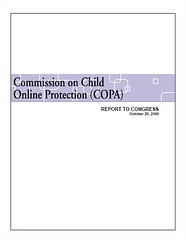
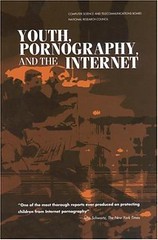
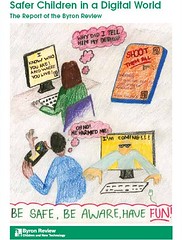
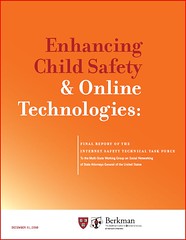
 Continue reading →
Adam Thierer & I have just released a detailed examination (PDF) of brewing efforts to expand the Children’s Online Privacy Protection Act of 1998 to cover adolescents and potentially all social networking sites—an approach we call “COPPA 2.0.”
As Adam explained on Larry Magid’s CNET podcast, COPPA mandates certain online privacy protections for children under 13, most importantly that websites obtain the “verifiable consent” of a child’s parent before collecting personal information about that child or giving that child access to interactive functionality that might allow the child to share their personal information with others. The law was intended primarily to “enhance parental involvement in a child’s online activities” as a means of protecting the online privacy and safety of children.
Yet advocates of expanding COPPA—or “COPPA 2.0″—see COPPA’s verifiable parental consent framework as a means for imposing broad regulatory mandates in the name of online child safety and concerns about social networking, cyber-harassment,
etc. Two COPPA 2.0 bills are currently pending in New Jersey and Illinois. The accelerated review of COPPA to be conducted by the FTC next year (five years ahead of schedule) is likely to bring to Washington serious talk of expanding COPPA—even though Congress clearly rejected covering adolescents age 13-16 when COPPA was first proposed back in 1998.
We’ll discuss some of the key points of our paper in a series of blog posts, but here are the top nine reasons for rejecting COPPA 2.0, in that such an approach would:
- Burden the free speech rights of adults by imposing age verification mandates on many sites used by adults, thus restricting anonymous speech and essentially converging—in terms of practical consequences—with the unconstitutional Children’s Online Protection Act (COPA), another 1998 law sometimes confused with COPPA;
- Burden the free speech rights of adolescents to speak freely on—or gather information from—legal and socially beneficial websites;
- Hamper routine and socially beneficial communication between adolescents and adults;
- Reduce, rather than enhance, the privacy of adolescents, parents and other adults because of the massive volume of personal information that would have to be collected about users for authentication purposes (likely including credit card data);
Continue reading →
Online child safety — especially the fear of predators lurking on social networking sites (SNS) — continues to spur calls by state and federal lawmakers for regulation. At first, some federal lawmakers advocated outright bans on SNS in schools and libraries via the Deleting Online Predators Act (DOPA). Meanwhile, state and local lawmakers — specifically state Attorneys General (AGs) — have been even more vociferous in their calls for regulation in the form of mandatory age verification for social networking sites, which would cover a broad swath of online sites and activities according to their definitions of SNS. But the question that ultimately gets lost in this debate is: Just how much risk do social networking sites really pose for teens? Which risks are real and which are overblown? And what’s the best way to deal with the risks that we find to be legitimate?
 Nancy Willard devotes her life to answering those questions. Willard is one of America’s leading experts on online safety and risk prevention. She runs the Center for Safe and Responsible Internet Use and she is the author of two outstanding books, Cyberbullying and Cyberthreats and Cyber-Safe Kids, Cyber-Savvy Teens. In my opinion, Willard’s general approach to online child safety is the most enlightened, level-headed, and likely to be effective. That’s because Willard focuses on putting fears in perspective, identifying the actual risks that kids face online, and devising sensible strategies to deal with risks and problems as they are discovered. Her approach is holistic and built upon sound data, targeted risk-identification strategies, and time-tested education and mentoring methods. For my money, it’s the most sensible approach to online safety issues. In fact, when other parents ask me for “just one thing” to read on the topic, I usually recommend Willard’s work — especially her amazing book Cyber-Safe Kids, Cyber-Savvy Teens. And her background in early childhood education, special education for “at risk” children with emotional and behavior difficulties, as well as experience in computer law, means she is uniquely suited to be analyzing these issues. In sum, this is woman we should all be closely listening to on these issues.
Recently, Willard has been responding to criticisms that state AGs have leveled against the Internet Safety Technical Task Force (ISTTF) and its final report. [Disclaimer: I was a member of the ISTTF.] I’ve already outlined the ISTTF’s work at length here, but the three key takeaways from the report were that:
- the risk of predation on social network sites has been over-stated; the data suggest that cyber-bullying is the bigger problem on SNS;
- there is no silver-bullet technical solution to online child safety concerns, and mandatory age verification, in particular, would not make kids safer online but could even create bigger problems in the long-run;
- education and empowerment are the real keys to keeping kids safer online.
Continue reading →
The Internet Safety Technical Task Force (ISTTF), which was formed a year ago to study online safety concerns and technologies, today issued its final report to the U.S. Attorneys General who authorized its creation. It was a great honor for me to serve as a member of the ISTTF and I believe this Task Force and its report represent a major step forward in the discussion about online child safety in this country.
The ISTTF was very ably chaired by John Palfrey, co-director of Harvard University’s Berkman Center for Internet & Society, and I just want to express my profound thanks here to John and his team at Harvard for doing a great job herding cats and overseeing a very challenging process. I encourage everyone to examine the full ISTTF report and all the submissions, presentations, and academic literature that we collected. [It’s all here.] It was a comprehensive undertaking that left no stone unturned.
Importantly, the ISTTF convened (1) a Research Advisory Board (RAB),which brought together some of the best and brightest academic researchers in the field of child safety and child development and (2) a Technical Advisory Board (TAB), which included some of America’s leading technologists, who reviewed child safety technologies submitted to the ISTTF. I strongly recommend you closely examine the RAB literature review and TAB assessment of technologies because those reports provide very detailed assessments of the issues. They both represent amazing achievements in their respective arenas.
There are a couple of key takeaways from the ISTTF’s research and final 278-page report that I want to highlight here. Most importantly, like past blue-ribbon commissions that have studied this issue, the ISTTF has generally concluded
there is no silver-bullet technical solution to online child safety concerns. The better way forward is a “layered approach” to online child protection. Here’s how we put it on page 6 of the final report:
The Task Force remains optimistic about the development of technologies to enhance protections for minors online and to support institutions and individuals involved in protecting minors, but cautions against overreliance on technology in isolation or on a single technological approach. Technology can play a helpful role, but there is no one technological solution or specific combination of technological solutions to the problem of online safety for minors. Instead, a combination of technologies, in concert with parental oversight, education, social services, law enforcement, and sound policies by social network sites and service providers may assist in addressing specific problems that minors face online. All stakeholders must continue to work in a cooperative and collaborative manner, sharing information and ideas to achieve the common goal of making the Internet as safe as possible for minors.
Continue reading →
Over the past year, I have been monitoring a very interesting trend with important ramifications for the future of Internet policy. State Attorneys General (AGs) — often in league with the National Center for Missing and Exploited Children (NCMEC) — have been striking a variety of “voluntary” agreements with various Internet companies that deal with child safety concerns or other online issues. These agreements require the companies involved to take various steps to alter site architecture and functionality, commit to stop certain practices, or take steps to block certain users (ex: predators; escort services) or types of content (ex: child porn; online “discrimination”) altogether.
To begin, let me be very clear about one thing: Some of these activities or types of content warrant a law enforcement response. That is certainly the case with child pornography or predation, for example. However, as I will note down below, there is a legitimate question about whether state officials and a non-profit private organization should be crafting legal or regulatory policies to address such concerns for a global medium like the Internet. Regardless, these agreements are creating a new layer of Internet regulation (almost extra-legal in character) that is worthy of exploration.
First, let me itemize some of these recent “voluntary” agreements between Internet companies and the AGs and/or NCMEC:
Continue reading →
This week, I have been up at Harvard University participating in another meeting of the Internet Safety Technical Task Force (ISTTF), of which I am a member. The ISTTF was organized earlier this year pursuant to an agreement between 49 state attorneys general (AGs) and social networking giant MySpace.com. A group of experts from academia, non-profit organizations, and industry were appointed to the Task Force, which is charged with evaluating the market for online child safety tools and methods and issuing a report on the matter to the AGs at the end of this year. ISTTF members have been meeting privately and publicly in both Cambridge, MA and Washington, D.C. The Task Force has been very ably chaired by John Palfrey, co-director of Harvard’s Berkman Center for Internet & Society.
Although the ISTTF is looking at a wide variety of tools and methods associated with online child protection (ex: filters, monitoring tools, educational campaigns, etc.), many of the AGs who crafted the agreement with MySpace that led to the Task Force’s formation have made it clear that they are
most interested in having the ISTTF evaluate age verification / online verification technologies. In fact, at the start of this week’s session at Harvard Law School, AGs Martha Coakely of Massachusetts and Richard Blumenthal of Connecticut both spoke and made it abundantly clear they expect the Task Force to develop age and identify-verification tools for social networking sites (SNS). AG Blumenthal said we need to deal with “the dangers of anonymity” and repeated his standard line about online age verification: “If we can put a man on the moon, we can make the Internet safe.” [Of course, putting a man on the moon took hundreds of billions of dollars and a decade to accomplish, but never mind that fact! Moreover, one could also argue that if we can put a man on the moon we can cure hunger, AIDS, and the common cold, but some things are obviously easier said than done. Finally, putting a man on the moon didn’t require all Americans or their kids to give up their anonymity or privacy rights in order to accomplish the feat!]
On many occasions here before, I have outlined various questions and reservations about proposals to mandate online age verification. Last year, I also published a lengthy white paper on the issue and hosted a lively debate on Capitol Hill [transcript here] about this. I also have discussed age verification in my book on parental controls and online child safety. [Braden Cox also talked about his experiences up at Harvard this week here, and CNet’s Chris Soghoian had a brutal assessment of this week’s proposals on his “Surveillance State” blog.]
In this essay, I will discuss the new fault lines in the debate over online age verification and outline where I think we are heading next on this front. I will argue:
- There is now widespread understanding that it is extraordinarily difficult to verify the ages and identities of minors online using the methods we typically use to verify adults. Because of this, age verification proponents are increasingly proposing two alternative models of verifying kids before they go online or visit SNS…
- First, for those who continue to believe that we must do whatever we can to verify kids themselves, schools and school records are increasingly being viewed as the primary mechanism to facilitate that. This raises two serious questions: Do we want schools to serve as DMVs for our children? And, do we want more school records or information about our kids being accessed or put online?
- Second, for those who are uncomfortable with the idea of verifying kids or using schools, or school records, to accomplish that task, parental permission-based forms of authentication are becoming the preferred regulatory approach. Under this scheme, which might build upon the regulatory model found in the Children’s Online Privacy Protection Act of 1998 (COPPA), parents or guardians would be verified somehow and then would vouch for their children before they were allowed on a SNS, however defined. But how do we establish a clear link between parents and kids? And will parents be willing to surrender a great deal more information (about themselves and their kids) before their kids can go online? And, is it sensible to use a law that was meant to protect the privacy and personal information of children to potentially gather a great deal more information about them, and their parents?
- It remains very unclear how either of those two verification methods would make children safer online. Indeed, that could actually make kids less safe by compromising their personal information and creating a false sense of security online for them and their parents.
- It is highly unlikely the Internet Safety Technical Task Force will be able to reach consensus on this complicated, controversial issue. A small camp will likely flock to the sort of proposals mentioned above. Another, larger camp (including me) will flock to education-based approaches to child safety as well increased reliance on other parental empowerment tools and strategies, industry self-regulatory efforts, social norms, and better intervention strategies for troubled youth. But the age verification debate will go on and, as was the case over the past two years, the legal battleground will be state capitals across America, with AGs likely pushing for age verification mandates regardless of what the Task Force concludes.
Continue reading if you are interested in the details.
Continue reading →
Facing threats of legal action from New York Attorney General Andrew Cuomo, many ISPs have curbed newsgroup access in the name of fighting child porn. Now, it looks like a big fish is holding out: Comcast.
Good for them. While it’s understandable that other ISPs elected to fold under intense pressure from an overzealous AG with a powerful bully pulpit, Comcast is entirely justified in standing its ground.
It’s not the responsibility of network providers to police their servers for potentially illegal files, as the Communications Decency Act makes clear. The only legal obligation of an ISP is to remove illegal content upon gaining knowledge of its existence on their network. But that hasn’t stopped Cuomo from sending a harsh letter to Comcast threatening to pursue “legal remedies to stop child pornography” if the cable giant doesn’t comply with his terms.
Cuomo wants ISPs to go far beyond merely removing illegal content as it’s discovered. The “voluntary agreement” that New York is pushing on ISPs has already resulted in many providers dropping newsgroup access completely, causing millions of subscribers to lose access to Usenet. Even among users who haven’t been completely cut off from newsgroups, the popular alt.* hierarchy has been disabled, making it nearly impossible to acquire anything larger than text files. The worst part is that the “bad guys” are unaffected by the crackdown on child porn—third-party Usenet servers with uncensored newsgroup access are a dime a dozen these days.
A legal battle with Cuomo might not be cheap, but it’d be worth fighting nevertheless. As I pointed out last month, suppressing speech through so-called “voluntary agreements” likely runs afoul of the First Amendment, and ISPs enjoy immunity under the Safe Harbor provisions of the Communications Decency Act.
Like his notorious predecessor, Andrew Cuomo seems bent on building his image as a crime-fighter through meaningless publicity stunts, even if it means extorting legitimate businesses to the detriment of consumers.
Let’s hope Comcast forces Cuomo to put his money where his mouth is—the future of free speech online may hang in the balance.
The USA Today editorial board published a nasty piece today belittling MySpace.com’s recent efforts to implement more safeguards for its users. Despite the fact that MySpace made over 70 promises to the Attorneys General as part of the agreement–the entire agreement is summarized here–that’s still not good enough for the USA Today’s editorial board, which wants full-blown identity verification before anyone is allowed on a social networking site:
“Even in the absence of a perfect software solution, interim steps are possible. How about using databases of drivers’ licenses to cross-check ages? In more than 20 states, they are public records. The point is, more effective safeguards are needed now, …. MySpace [should be] moving faster to set up age and ID verifications, not just study them.”
Well, where do I begin? I get so frustrated when I see comments like this because it is abundantly clear to me that people don’t think things through when it comes to age verification. As I pointed out in my lengthy PFF report, “Social Networking and Age Verification: Many Hard Questions; No Easy Solutions,” age verification is extremely complicated, and it would be even more complicated in this case because public officials are demanding the age verification of minors as well as adults, which presents a wide array of special challenges and concerns.
What Age Verification Really Is: The Death of Online Anonymity
We need to begin by understanding what age verification really is. By definition, mandatory age verification represents an effort to make online anonymity a crime. In simple terms, citizens would be forced to “show their papers” at the door of every website or else run the risk of being denied access–simply because they do not want to surrender their name or age.
Think about what that means. It’s easy to take the benefits of online anonymity for granted. There are millions of people who comment anonymously on blogs like this one every day, or write anonymous book or product reviews on Amazon.com or eBay, or who just chat with others about various topics under the cloak of anonymity. It is a wonderful thing.
Continue reading →

 The Technology Liberation Front is the tech policy blog dedicated to keeping politicians' hands off the 'net and everything else related to technology.