August 2011

I can’t help but think that there might be  a big advantage of having the AT&T-T-Mobile merger go to court.  For once, the high-profile action everyone pays attention to will occur in an antitrust forum where the decision criterion is the effects of the merger on consumer welfare, period.   Regardless of what one thinks about the merger, it’s [...]

[Cross posted at Truthonthemarket] As Josh noted, the DOJ filed a complaint today to block the merger. I’m sure we’ll have much, much more to say on the topic, but here are a few things that jump out at me from perusing the complaint: The DOJ distinguishes between the business (“Enterprise”) market and the consumer [...]

On the podcast this week, Gerald Faulhaber, Professor Emeritus at the Wharton School at the University of Pennsylvania and Penn Law School, discusses his new paper in Communications & Convergence Review entitled Economics of Net Neutrality: A Review. Faulhaber delves into the network neutrality debate noting that consumers do not want complete neutrality since they approve of ISPs blocking content such as child pornography or malware. He explains that there is little evidence that violations of net neutrality have actually occurred, so that consumers today getting as much neutrality as they want. Faulhaber submits that implementing prophylactic regulations will only stifle innovation and encourage rent seeking.

Republished from The Mark News Privacy advocates are attacking Google again, this time for requiring that field-testers of its new, invite-only Google+ social network use “the names they commonly go by in the real world.” After initially suspending Google+ accounts flagged as pseudonymous, Google has clarified that such users will be given four days to add their real names to their [...]

My new book, 100 Plus, is about how science and technology will allow us to live longer and healthier – and how that will change the world.  This topic may be newish for this site, but many of the key issues are not.  What happens to economic growth in this tech revolution?  How does innovation [...]

Hot-tempered police offers, pushover judges, and vague laws make for a dangerous combination. In July, a controversy erupted in Renton, Washington (a Seattle suburb) when the town’s police department launched a legal assault on an anonymous YouTube user for merely uploading a few sarcastic videos poking fun at the department’s scandals. In an op-ed in The Seattle Times, Nicole [...]

On the podcast this week, Adam Thierer, Senior Research Fellow at the Mercatus Center at George Mason University in the Technology Policy Program, discusses his new paper, Kids, Privacy, Free Speech & the Internet: Finding the Right Balance. For kids, using the Internet has become second nature, but when sites that track a child’s online activity can raise privacy concerns. A number of well-intentioned lawmakers are introducing regulatory measures that aim to expand the Children’s Online Privacy Protection Act (COPPA). Thierer discusses the unintended consequences that could result from regulations, like mandatory age verification and an Internet “eraser button.” He proposes an alternative to regulation, which includes education and empowerment, placing importance on personal and parental responsibility.

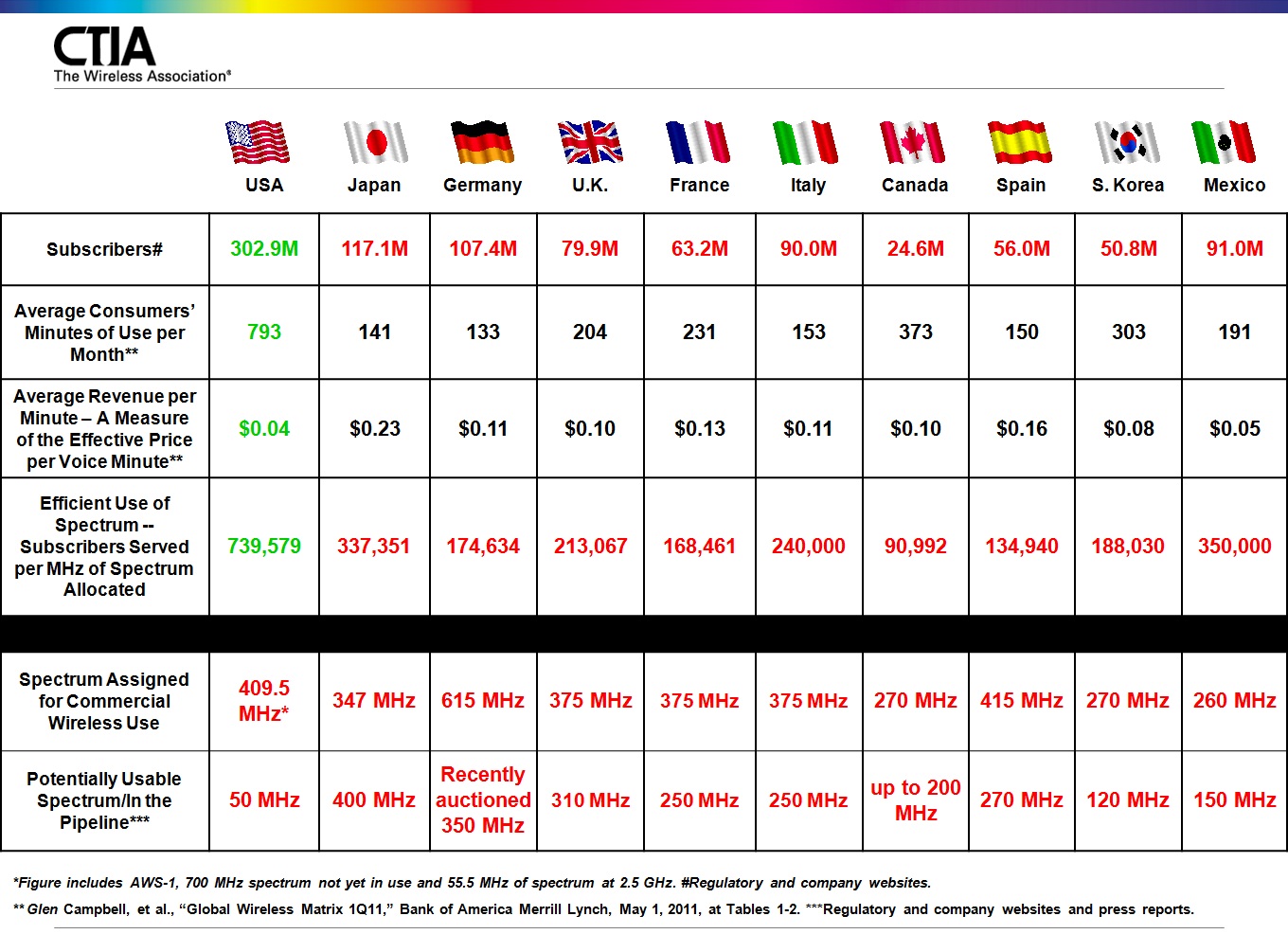
Here’s a terrifically useful chart from CTIA that offers some international wireless use and spectrum availability comparisons. [Click on chart to expand.] The average minutes of use and average revenue per minute differences are fairly staggering. But the really important takeaway from this chart is the last line, which depicts how little spectrum is dripping out [...]

My latest Mercatus Center white paper is entitled “Kids, Privacy, Free Speech & the Internet: Finding The Right Balance.” From the intro: Concerns about children’s privacy are an important part of [the ongoing privacy debate]. The Children’s Online Privacy Protection Act of 1998 (COPPA) already mandates certain online-privacy protections for children under the age of [...]

For CNET this morning, I offer five crucial corrections to the Protect IP Act, which was passed out of committee in the Senate back in May. Yesterday, Rep. Bob Goodlatte, co-chair of the Congressional Internet Caucus, told a Silicon Valley audience that the House was working on its own version and would introduce it in [...]