I’d like to recommend Sonia Arrison’s recent article on the need for updating the Electronic Privacy Communications Act (ECPA). She makes a good case why citizens should feel a bit worried about the ability of government to invade their privacy when they keep data in the cloud. And citizens are customers, so online businesses are worried if people may use less of their services. But here’s another angle for why we need to update ECPA…it’s to promote online safety. From an excellent analysis by Becky Burr, ECPA reform:
Would establish uniform, clear, and easily understood rules about when and what kind of judicial review is needed by law enforcement to access electronic content; and
Would, by clarifying the applicable rules, enable business to respond more quickly and with greater confidence to law enforcement requests and to avail themselves of hosted productivity technology.
Right now the law is muddled, and online services have a hard time determining legitimate requests from those that are overreaching. When the law is clarified, businesses and law enforcement can (with appropriate legal process) share information that can help find sexual predators and other online miscreants.
I’m sorry to report that the Progress & Freedom Foundation (PFF) announced today that it was concluding its 17-year run and ceasing all operations immediately. The organization had been through some tumultuous times recently with 5 presidents in 5 years and steadily declining support during that period. Thus, the decision was made to close the doors.
Founded in 1993, PFF’s mission was to study the digital revolution and its implications for public policy while advocating a philosophy of limited government, free markets, property rights, and individual sovereignty. The organization’s scholars and researchers penned tens of thousands of editorials, papers, special reports, books, filings, amicus briefs, and blog posts during that stretch. PFF also convened numerous policy fora, including its nationally recognized annual Aspen Summit, which brought together leading thinkers and policymakers in the field.
It’s been a great honor to be with PFF for the past five years and I’m extremely proud of everything the organization has accomplished. When PFF was formed, it was quite literally the only market-oriented institution focused on the digital revolution. Today, there are dozens of such institutions, many which PFF helped to inspire. Thus, in a sense, PFF has served its purpose by focusing both intellectuals and policymakers on the need to keep cyberspace free from excessive government control and interference and it’s my hope that the impact of PFF’s work will live on for many years to come.
As for me, well, as the old country song goes… “it’s time to stop thinkin’ and start drinkin’.” I’ll still be blogging here on occasion, but for now, I think I will enjoy a few weeks of unemployment and fill my time with bourbon, cigars, and marathon video game sessions. Or maybe I’ll get back to writing that book I just can’t seem to finish.
 Based on two (1, 2) previous cyber security bills, a draft bill that has been circulating around town backed by Senate Majority Leader Harry Reid would give the White House sweeping new powers over companies that operate “covered critical infrastructure” or (CCI). And more than that, the bill would eliminate a vital aspect of the governmental process: a right to a day in court.
People often think of critical infrastructure as power plants, dams, and public safety communication networks. On the Internet, modems, routers and other specific network equipment could be designated as CCI. But this bill is written broadly, so that the Administration could even designate online services—such as e-mail and cloud computing services—that use the Internet but are not themselves network infrastructure.
All businesses want to keep Americans safe and protect infrastructure that supports the American economy. But what happens if a company (or an industry) wants to challenge their CCI designation? Typically, what makes America work is that we can question authority and even challenge our government in court when we think it’s wrong. But this legislation explicitly denies businesses their right to challenge a CCI designation in court.
(4) Final appeal.—A final decision in any appeal under this subsection shall be a final agency action that shall not be subject to judicial review except as part of an enforcement action under section 306(b)(7). [emphasis added]
This part of the bill has to be amended to allow judicial appeals to make it fair for the businesses that will pay for it. Continue reading →
 If you follow the Tech Liberation Front, you’ll no doubt have run across the weekly podcast I post here on Mondays. It’s called Surprisingly Free and it features in-depth discussions with an eclectic mix of authors, academics, and entrepreneurs at the intersection of technology, policy, and economics–including some of the TLF gang.
We’ve now released over three dozen episodes and we couldn’t have done it without our listeners. For that, I want to thank you. We now want to redouble our efforts to improve the show so that we can grow our audience from hundreds to thousands. To do that, we need your help.
If you don’t subscribe to the show on iTunes, how about giving it a shot here. If you do already listen to it, I’d like to ask you to please take this two-minute survey. To make the show better, we need to know what you think. Do you like the topics? Do you like the guests? What do you think of the length? What would you change? Keep the same? Your feedback would mean the world to us. And again, the survey only takes two minutes (a bit more if you want to give us written comments, which we would appreciate).
So, thank you so much for listening to the Surprisingly Free podcast, and thanks for helping us spread the word and make it a better show.
Clear’s coverage map shows service in many cities and plans to expand to many more. Competition is rendering moot the call for public utility-style regulation of Internet service in the name of ‘net neutrality. I expect to hear soon about how unsatisfactory competition is under triopoly conditions.
If you blinked, you missed it. Heaven knows, I did. The OECD privacy guidelines celebrated their 30th birthday on Thursday last week. They were introduced as a Recommendation by the Council of the Organization for Economic Cooperation and Development on September 23, 1980, and were meant to harmonize global privacy regulation.
Should we fete the guidelines on their birthday, crediting how they have solved our privacy problems? Not so much. When they came out, people felt insecure about their privacy, and demand for national privacy legislation was rising, risking the creation of tensions among national privacy regimes. Today, people feel insecure about their privacy, and demand for national privacy legislation is rising, risking the creation of tensions among national privacy regimes. Which is to say, not much has been solved.
In 2002—and I’m still at this? Kill me now—I summarized the OECD Guidelines and critiqued them as follows on the “OECD Guidelines” Privacilla page.
The Guidelines, and the concept of “fair information practices” generally, fail to address privacy coherently and completely because they do not recognize a rather fundamental premise: the vast difference in rights, powers, and incentives between governments and the private sector. Governments have heavy incentives to use and sometimes misuse information. They may appropriately be controlled by “fair information practices.”
Private sector entities tend to have a balance of incentives, and they are subject to both legal and market-punishments when they misuse information. Saddling them with additional, top-down regulation in the form of “fair information practices” would raise the cost of goods and services to consumers without materially improving their privacy.
Not much has changed in my thinking, though today I would be more careful to emphasize that many FIPs
are good practices. It’s just that they are good in some circumstances and not in others, some FIPs are in tension with other FIPs, and so on.
The OECD Guidelines and the many versions of FIPs are a sort of privacy bible to many people. But nobody actually lives by the book, and we wouldn’t want them to. Happy birthday anyway, OECD guidelines.
An interesting and thought-provoking piece by Malcolm Gladwell over at
The New Yorker
this month takes a look at the intersection between true civic activism (the kind that could get you killed) and “social networking” activism (the kind that only takes a retweet or hitting the “like” button on Facebook).
Gladwell’s piece starts off retelling the story of how the Civil Rights “sit-in” movement of the early 1960s spread like wildfire among the younger set without the aid of, god forbid, Facebook or Twitter. Contrast that historical example with the more recent happenings in Iran and the Twitter Revolution, where it seemed that tens of thousands of Twitter users stood in solidarity with the protesting Iranians, some of who were literally dying in the streets. The point Gladwell is making, and one with which I concur, is that for all the hype regarding social networking tools, relying on said tools to advocate significant change will end up in a losing battle or inefficient result.
A big reason, Gladwell postulates, is that social networks are at their core good at increasing participation but inefficient at execution. It’s easy to hit the “like” button on Facebook to agree that “I support Darfur victims,” or “down with big government,” but it’s another thing to put your literal neck on the line — as the protestors in South Carolina and Iran did.
Continue reading →
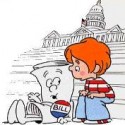 My article for CNET News.com this morning analyzes the “leaked” net neutrality bill from Rep. Henry Waxman, chair of the House Energy and Commerce Committee. I put leaked in quotes because so many sources came up with this document yesterday that its escape from the secrecy of the legislative process hardly seems dramatic. Reporters with sources inside Waxman’s office, including The Hill and The Washington Post, expect Waxman to introduce the bill sometime this week.
The CNET article goes through the bill in some detail, and I won’t duplicate the analysis here. It is a relatively short piece of legislation that makes limited changes to Title I of the Communications Act, giving the FCC only the authority it needs to implement “core” regulations that would allow the agency to enforce violations of the open Internet principles. Continue reading →
 I encourage tech policy wonks in Washington to attend next week’s (Oct. 5th) Information Technology and Innovation Foundation event on “A Guide to the Internet Political Landscape,” which will feature the release of Rob Atkinson’s new report, “Who’s Who in Internet Politics: A Taxonomy of Information Technology Policy Perspectives
.” The report identifies nine distinct groupings shaping Internet policy and how these groups view key Internet policy issues, including net neutrality, copyright, and privacy.
I encourage tech policy wonks in Washington to attend next week’s (Oct. 5th) Information Technology and Innovation Foundation event on “A Guide to the Internet Political Landscape,” which will feature the release of Rob Atkinson’s new report, “Who’s Who in Internet Politics: A Taxonomy of Information Technology Policy Perspectives
.” The report identifies nine distinct groupings shaping Internet policy and how these groups view key Internet policy issues, including net neutrality, copyright, and privacy.
Rob is one of my very favorite people in Washington and I always look forward to everything he does–even when I disagree with him! I remember a great debate we had a decade ago when he invited me to critique his paper on “The Failure of Cyber-Libertarianism: The Case for a National E-Commerce Strategy.” And at the end of the debate he conceded that I was correct and he immediately converted to the libertarian movement. No, not really! But it was a hell of a fun time.
I hope for a repeat for some of that fun as Rob was kind enough to ask me to comment on his new “Who’s Who in Internet Politics” paper as next week’s event along with Morgan Reed of the Association for Competitive Technology. Rob asked me to peer review an early draft of the study and I can assure you it will make a splash. Come on over to ITIF next Tuesday, October 5th at 9:30am to hear us discuss it. You can
RSVP here. Location is 1101 K Street NW, Suite 610.
On the podcast this week, Nick Bilton, Lead Technology Writer for The New York Times Bits blog and a reporter for the paper, discusses his new book, I Live in the Future & Here’s How It Works
. In the book, Bilton examines how technology is creatively disrupting society, business, and our brains. On the podcast, he talks about neuroplasticity and reading, a debate with George Packer about Twitter, innovators’ dilemmas in the porn industry, why many CEOs and movie producers bristle at how the future works, and “ricochet working.” He also discusses effects of combining human curation with computer algorithms, hyperpersonalization, informational veggies, and serendipity. He concludes with his theory about today’s news (and the reason he doesn’t worry about missing tweets): “If it’s important, it will find me.”
Related Readings
To keep the conversation around this episode in one place, we’d like to ask you to comment at the web page for this episode on Surprisingly Free. Also, why not subscribe to the podcast on iTunes?

 The Technology Liberation Front is the tech policy blog dedicated to keeping politicians' hands off the 'net and everything else related to technology.